
Enterprise AI Adoption Accelerates! Morgan Stanley Warns: Severe Compute Shortage to Create Multi-Year Bottleneck

Kevin Insights
2026年8月13日
GoGPT 為文章產生摘要
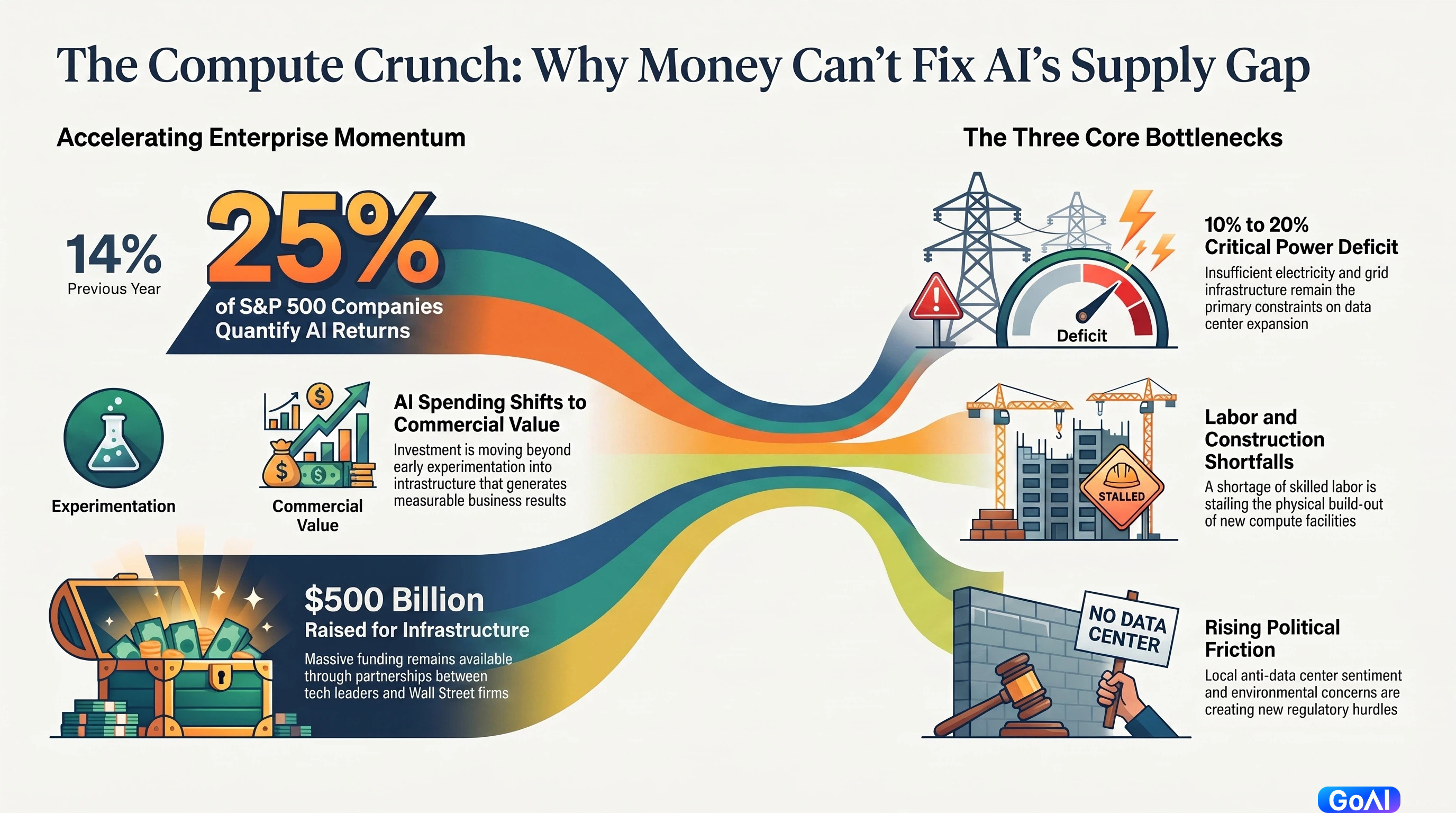
The AI boom faces a challenge money alone cannot solve: a severe compute shortage that threatens to constrain industry growth for years.
While markets recently panicked over "compute overcapacity" and unsustainable AI capital expenditure, Morgan Stanley strategists argue that demand remains insatiable—and supply is the real concern.
Michelle Weaver, U.S. Thematic Research Strategist at Morgan Stanley, noted that while corporate AI adoption is accelerating, constrained compute supply remains the primary growth bottleneck.
"There is a massive undersupply of compute right now. Compute is becoming a scarce resource," Weaver said in a Wednesday interview. "Power, political, and labor bottlenecks will continue to limit compute supply for years to come."
This comes as enterprise AI implementation gathers pace. Weaver noted that 25% of S&P 500 companies can now quantify measurable returns on their AI investments, up from 14% a year ago.
This shift signals that corporate AI spending is moving from early experimentation and infrastructure building to generating real commercial value.
Meanwhile, funding for AI infrastructure remains abundant. Weaver highlighted that data center financing channels are wide open, exemplified by Nvidia partnering with Wall Street firms to raise $500 billion for AI infrastructure.
Three Core Bottlenecks
Weaver attributed the compute bottleneck primarily to two factors: a shortage of labor to build data centers and insufficient power to run them.
AI data centers consume vast amounts of electricity, and building new power generation, transmission grids, and infrastructure takes years.
Even with workaround solutions like repurposing Bitcoin mining facilities and deploying fuel cells, Weaver estimates a 10% to 20% power deficit remains—meaning compute will stay a constrained, high-value resource for years.
In short, even with ample capital to buy chips and construct data centers, power or labor shortfalls could prevent actual compute capacity from coming online.
Beyond power and labor, political friction is also stalling compute expansion.
Weaver noted that rising anti-data center sentiment poses challenges as the midterm elections approach.
While operators can tweak construction and energy plans to ease consumer fears over rising electricity bills and environmental impacts, political debate surrounding data centers is likely to heat up in the final stretch of the midterms.
#Breaking Macro Events: Market Impact & Analysis