
How Long Can the Bull Market Last? BofA Warns of Autumn Stumble as Two Major Headwinds Loom

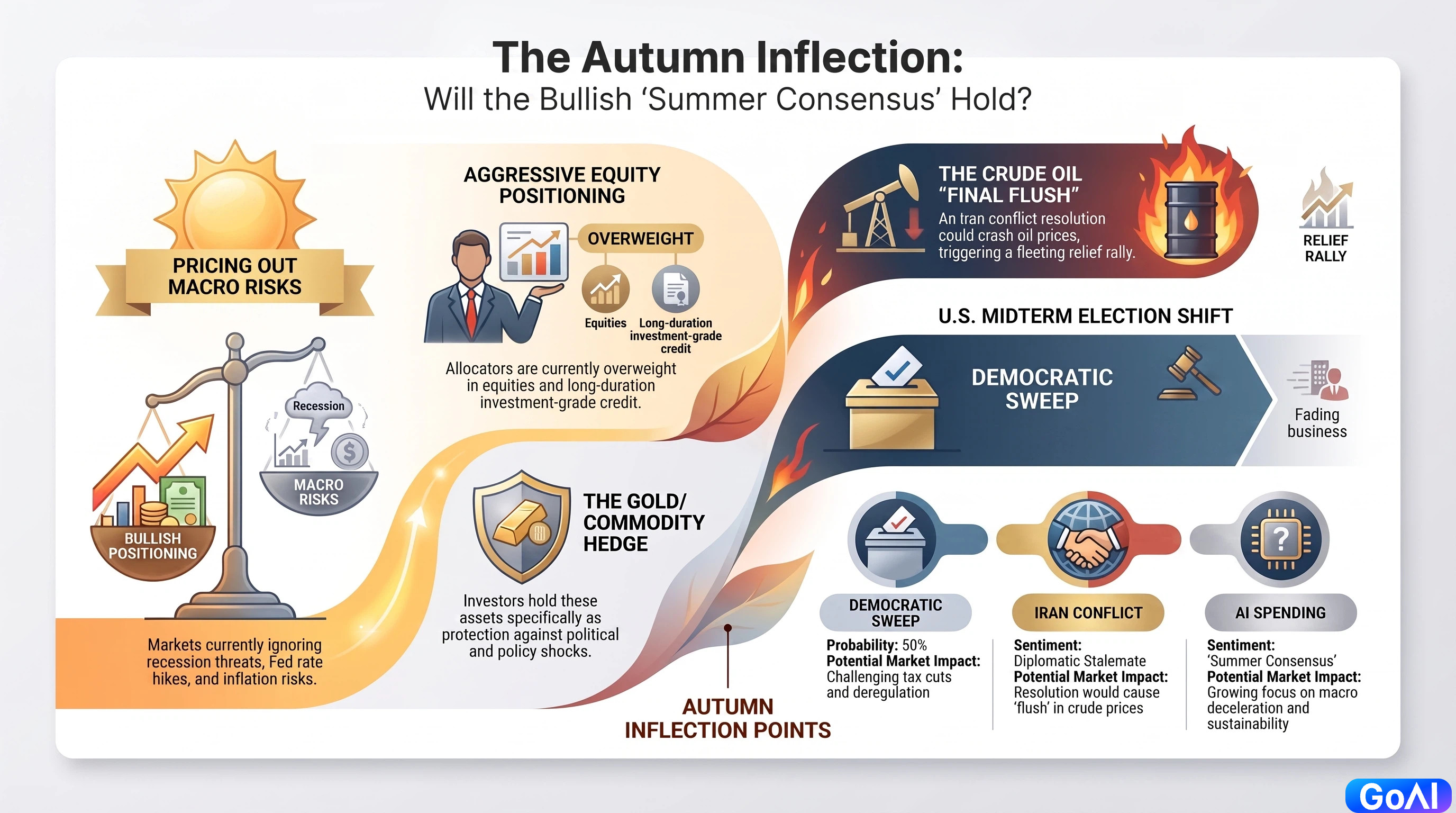
Investors have largely brushed aside geopolitical tensions and mid-year tech pullbacks to push U.S. equities toward fresh highs. However, Bank of America warns that market conditions could shift sharply this autumn.
According to a strategy team led by Michael Hartnett, contrarian investors will soon have a window to push back against stretched bullish sentiment. For now, the "summer consensus"—favoring risk-on assets like equities—remains dominant.
Hartnett's team noted that markets are currently pricing out recession risks, Fed rate hikes, hyperscaler capex reductions, and a potential Democratic sweep of Congress in November's midterm elections. Instead, investors are betting on solid earnings expansion, range-bound bond yields, and sustained economic growth despite persistent inflation risks.
This setup has led allocators to overweight equities and long-duration investment-grade credit, short front-end Treasuries, and maintain long U.S. dollar exposure. Meanwhile, investors hold gold and commodities primarily as hedges against political and policy shocks without leaning against broad market consensus.
Hartnett highlighted two catalysts over the coming months that could mark an inflection point for the rally:
1. A Resolution to the Iran Conflict and a "Final Flush" in Crude
With Washington and Tehran locked in diplomatic stalemate six months into the conflict, a resolution would theoretically send crude oil prices tumbling. While that would alleviate immediate inflation anxieties and provide a short-term boost to equities, BofA cautions the relief rally may prove fleeting as market focus quickly pivots back to underlying macro deceleration and AI spending sustainability.
2. U.S. Midterm Election Uncertainty
Polymarket data currently implies a 50% probability of Democrats taking control of both chambers of Congress. Strategists argue that if Republicans lose their Senate majority, it would signal voters prioritizing living costs and disinflation over corporate tax cuts and deregulation.
While equity markets have trended higher since President Donald Trump took office in 2024, a major defeat for Republicans in November would challenge Washington's pro-business policy momentum, presenting another distinct headwind for stocks into year-end.