
South Korean Equity Rebound Faces Momentum Shift: Retail Buying Wanes as Foreign Inflows Take Center Stage

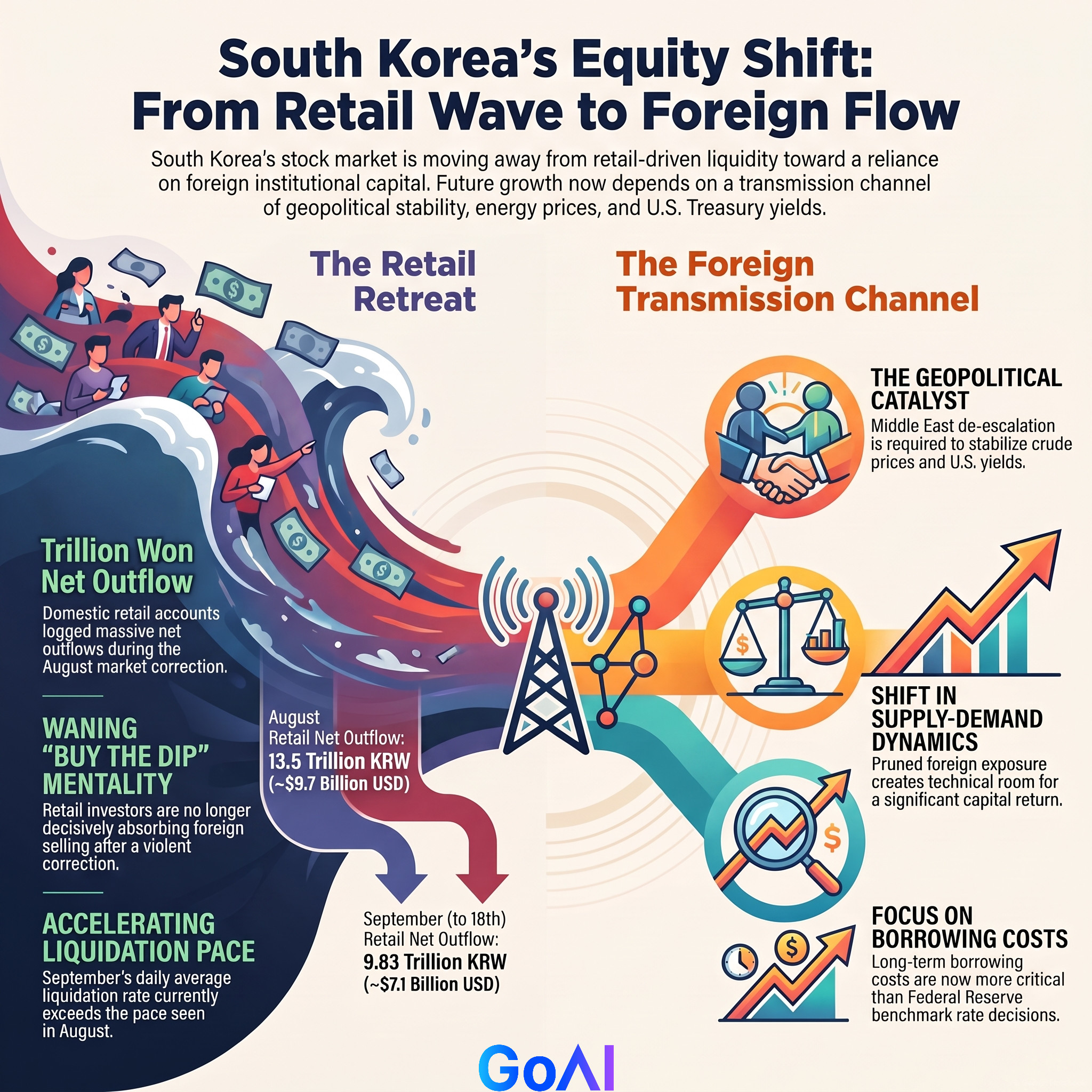
A nascent shift is underway in South Korea's equity market, where the retail-driven liquidity wave that propelled earlier gains has lost steam, leaving the trajectory of any sustained rebound increasingly dependent on the return of foreign institutional capital.
Market analysts note that should geopolitical tensions in the Middle East de-escalate, steadying global crude benchmarks and capping long-term U.S. Treasury yields, foreign investors could once again funnel capital back into domestic equities.
Foreign Flows Emerge as the Decisive Driver
Kim Hak-kyun, Head of Research at Shinyoung Securities, observed on Tuesday that while retail investors decisively absorbed aggressive foreign selling through the first half of the year, individual buyers are unlikely to stage another massive push from here.
"Foreign institutional participation will now be governed by a completely different supply-demand dynamic than what we saw in the first half," Kim noted.
According to Kim's estimates of real retail liquidity—which track uncleared transactions alongside margin financing—domestic retail accounts logged a net outflow of 13.5 trillion won (approx. $9.7 billion) from local bourses in August.
That retrenchment has persisted into September: net outflows totaled 9.83 trillion won (approx. $7.1 billion) through September 18, with the daily average pace of liquidation running ahead of August's clip.
Kim pointed out that unlike previous market dips where retail traders routinely bought the dip, individual investors have maintained persistent net selling following the recent drawdown—a reaction he attributes to the severe psychological and financial hit sustained during the swift, violent correction.
Looking ahead, Kim highlighted Middle Eastern geopolitical friction, international energy prices, and long-term U.S. yields as the primary variables that will dictate foreign asset allocators' next moves.
A de-escalation in Middle Eastern hostilities would likely stabilize crude benchmarks and ease upward pressure on long-duration U.S. yields, spurring global portfolio reallocation into non-dollar assets.
He added that stabilizing pressures on the Korean won, coupled with the fact that foreign funds have already significantly pruned their South Korean equity exposure, improve the technical odds of a favorable supply-demand turnaround.
Kim stressed that market participants should focus on market-determined long-term borrowing costs rather than fixating solely on whether the Federal Reserve implements additional benchmark rate increases.
The recent spike in long-term U.S. yields has been driven largely by widening fiscal deficits and the crude shock linked to the Middle East conflict, rather than underlying economic overheating or domestic demand-pull inflation.
The ultimate path of the Middle East conflict, Kim concluded, will dictate domestic stock performance through a clear transmission channel: energy prices, benchmark yields, and foreign capital flows.