
AI Future Trends from Google's Perspective

#aibubble In the first half of this year, capital expenditures by Microsoft, Google, Amazon, and Meta increased by 50%, reaching a total of over $100 billion, amounting to $106 billion. The main growth driver for NVIDIA at present is AI. So, who are the primary customers for its GPUs now, and for what purposes?
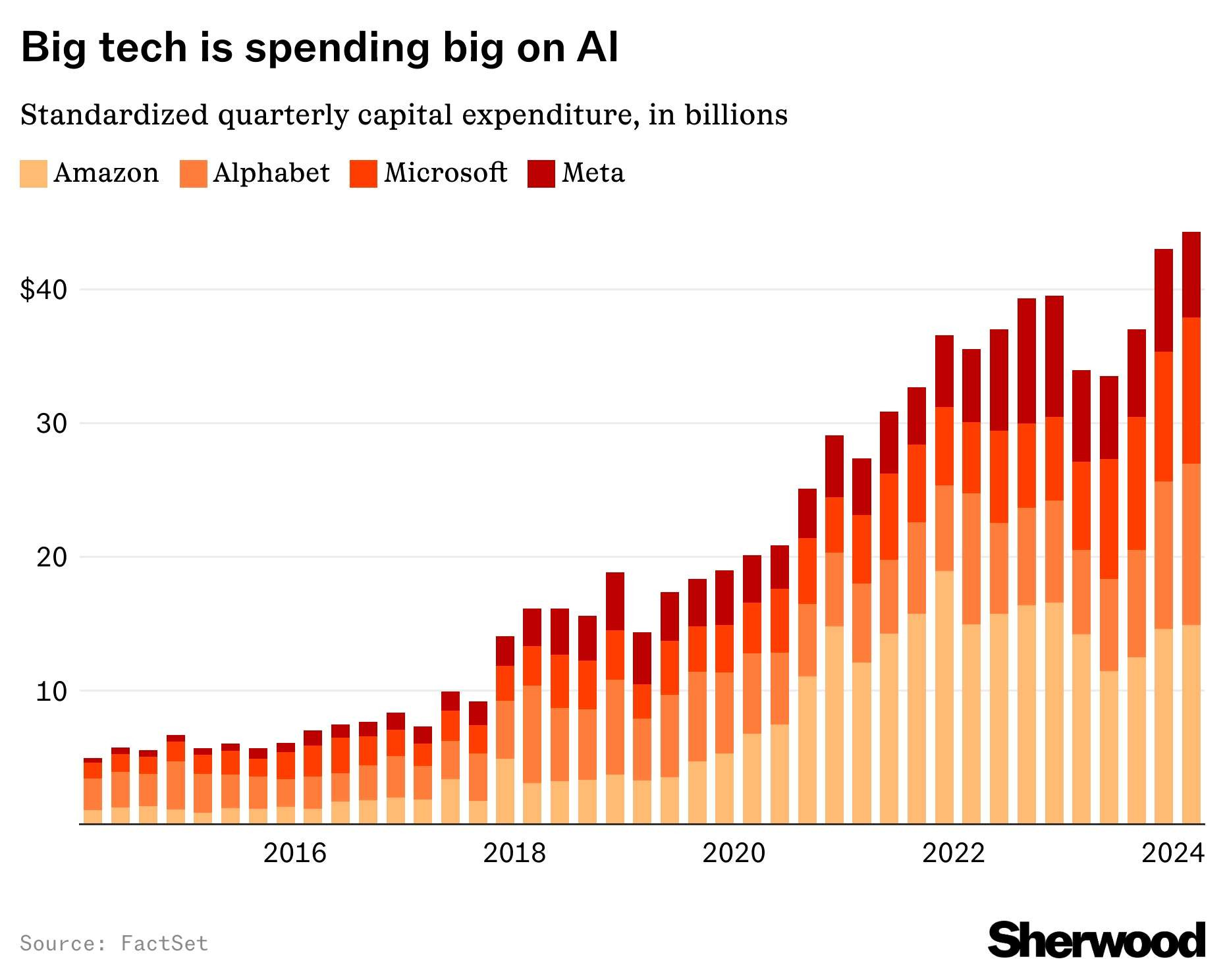
Microsoft alone accounts for 13% of NVIDIA's revenue. As a giant, NVIDIA has a very concentrated customer base and is currently engaged in B2B rather than B2C business. The biggest fear for AI giants now is not doing something wrong, but not doing it at all, because AI is a more reliable development direction compared to concepts like metaverse from previous years, and it can complement cloud services (especially Google Cloud and AWS). It is certain that AI giants will continue to invest in this direction; the question is the speed of investment.
To analyze NVIDIA's future performance, we must consider whether its customers are willing and able to continue expanding their spending. According to Google's second-quarter report, its cloud services generated $10.3 billion in revenue, with a growth rate of 28.5%, with billions of that attributed to AI. On the surface, this looks good, but who is actually using Google's AI-related services? Currently, it is mostly developers, meaning Google is also engaged in B2B business (please correct me if I'm wrong). People are willing to pay and invest in AI application development, which is why Google's AI cloud services are rented. In the second quarter, Google's capital expenditure was $13.2 billion, up 91% year-over-year, with revenue at $84.7 billion and net profit at $23.6 billion. So, how much room does it have to expand its capital expenditure? If we look at the year-on-year growth this year, a static P/E ratio of 60 for NVIDIA based on 2023's net profit is not exaggerated, because its customers have increased their capital expenditures by over 60% this year. But from a rolling perspective, if the market maintains this stock price for the year, with a P/E ratio of 30, will AI giants increase their AI investments by another 30% on top of this already high capital expenditure?
If tech giants, led by Google, change AI from an industry of accelerated investment to one of stable investment, it would mean no growth next year. Can the market still justify a P/E ratio of 30 then, or will NVIDIA's stock dip before rising again? Before AI becomes commercially viable, NVIDIA's revenue is essentially footed by primary market investors and tech giants. Will this slow down? I analyze that it's tough for NVIDIA to rise back to around $100 now because tech giants might slow down their capital investments. Of course, if there's a major technological breakthrough, such as humanoid robots entering factories or AI replacing an industry, the sector will enter a phase of accelerated expansion. Like the internet, this industry has a bright future, but whether it will come as quickly is uncertain.