
Asset Allocation: Finding Low-Correlation Assets


When it comes to building a solid investment portfolio, asset allocation is one of the most important strategies to manage risk and achieve steady returns. Most investors start by deciding on the allocation between broad asset classes, such as a 60/40 stock-bond portfolio or a more conservative 80/20 bond-heavy approach. However, the process doesn't end there. To truly optimize your portfolio, you need to dig deeper, dividing those broad classes into specific categories like sectors, styles, regions, and even bond durations.
In previous discussions, we've emphasized that the essence of asset allocation is finding low-correlation assets to build a diversified portfolio. Today, let's explore how combining such assets can improve your portfolio's risk-return profile.
Understanding Correlation
Correlation is a statistical measure that explains the relationship between two variables, showing how one moves in relation to the other. It's usually measured by a correlation coefficient, ranging from -1 to 1.
- A correlation of 1 means two assets are perfectly positively correlated; they move in the same direction.
- A correlation of 0 means no relationship; their movements are independent.
- A correlation of -1 means perfect negative correlation; they move in opposite directions.
The closer the correlation coefficient is to 1 or -1, the stronger the relationship. Conversely, the closer it is to 0, the weaker the correlation.
Correlation Between Financial Assets
Let's take the U.S. stock market as an example. Historically, stocks and bonds have shown a low or even negative correlation. Over the last few decades, when stocks have fallen, bonds often gained, and vice versa. This is why many investors turn to a stock-bond allocation, as bonds help stabilize portfolios during market downturns.
But what happens if you go beyond stocks and bonds? Global diversification offers even more opportunities to lower the overall risk. For example, the correlation between U.S. stocks and international stocks, such as those in Europe or emerging markets, is typically lower than the correlation between large-cap U.S. stocks and small-cap U.S. stocks.
The Benefits of Global Diversification
Using real-world examples, we can see the benefits of global diversification. U.S. stocks, such as those represented by the S&P 500, may have a strong positive correlation with U.S. small-cap stocks, but their correlation with international stocks is generally weaker. Emerging market equities, for instance, often have a correlation with U.S. equities of around 0.5, offering potential risk-reduction benefits.
Similarly, the correlation between U.S. bonds and global bonds is lower than the correlation between U.S. large-cap stocks and bonds. This means that including international assets in your portfolio can help diversify risk, reducing the impact of a downturn in any one market.
Simulating Different Stock-Bond Ratios
Let's look at the performance of different stock-bond allocation strategies using China markets. Suppose we examine portfolios that are allocated at 20/80, 50/50, 60/40, and 80/20 ratios between stocks and bonds from 2000 to 2023.
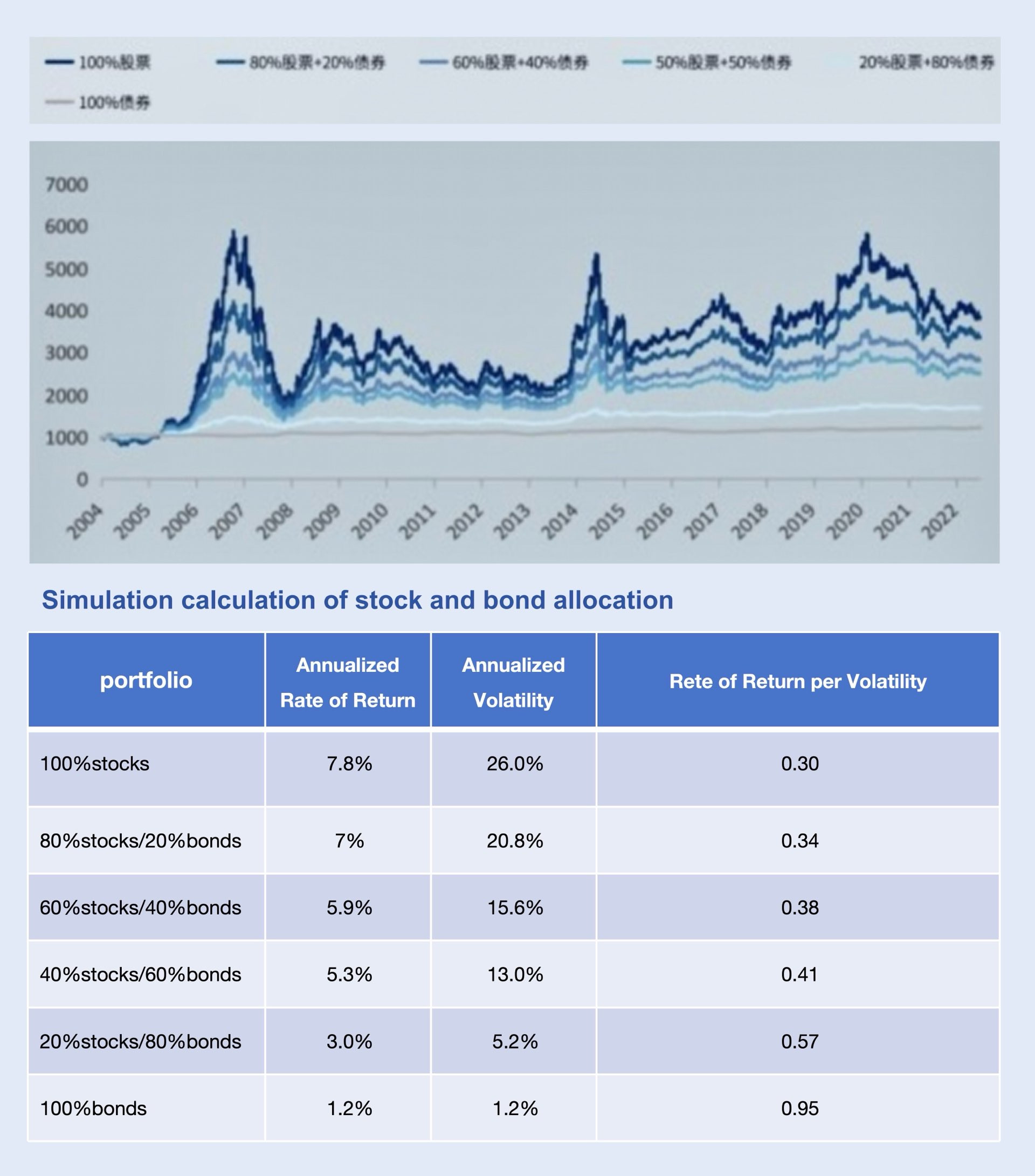
Historically, a 100% stock portfolio has the highest return but also the highest volatility. However, as you start adding bonds, the volatility decreases. While the overall return might slightly decline, the risk-adjusted return improves significantly.
For instance, in a 60/40 portfolio, the average annual return might be around 7%, but the volatility would be far lower than an all-stock portfolio. With bonds serving as a stabilizer, the portfolio offers a smoother ride, balancing both risk and reward.
Why Low-Correlation Assets Matter
The ultimate goal of asset allocation is to diversify risk without significantly compromising potential returns. By choosing assets with low or negative correlations, you create a portfolio that's better equipped to handle market volatility. When one part of the portfolio dips, the other may rise or stay steady, helping to smooth out overall performance.
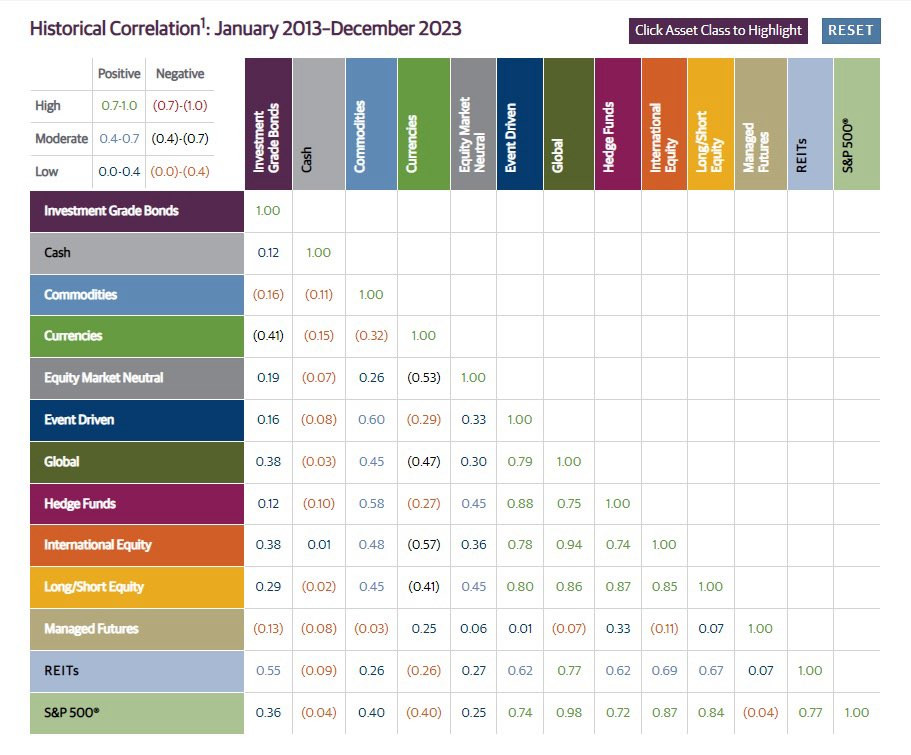
Here are the correlations between different assets (data from Guggenheim):
Conclusion
Finding and combining low-correlation assets is the heart of effective asset allocation. Whether you're diversifying between stocks and bonds or expanding into global markets, understanding correlation is key to building a robust portfolio. In our next article, we'll dive into the specific asset types and combinations that can further enhance your allocation strategy. Stay tuned!
#investingeducation #assetallocation #correlation
Do you know of any asset classes that have low or even negative correlations? Share and let’s discuss together!