
Fed Kicks Off Rate Cuts: What a 50-Basis Point Reduction Means for Global Markets and U.S. Stocks

The Federal Reserve has officially slashed interest rates by 50 basis points, and with another 50 basis point cut expected by year-end, global financial markets are bracing for significant shifts. As investors brace for the ripple effects, from bond yields to stock prices, understanding the broader implications of this rate cut is key. How will this bold move impact your investments? Let's dive into the historical context, examine the shifts in global assets, and explore what it means for U.S. stocks moving forward.
1. Market-Wide Impact of Rate Cuts
Rate cuts can have far-reaching effects across financial markets:
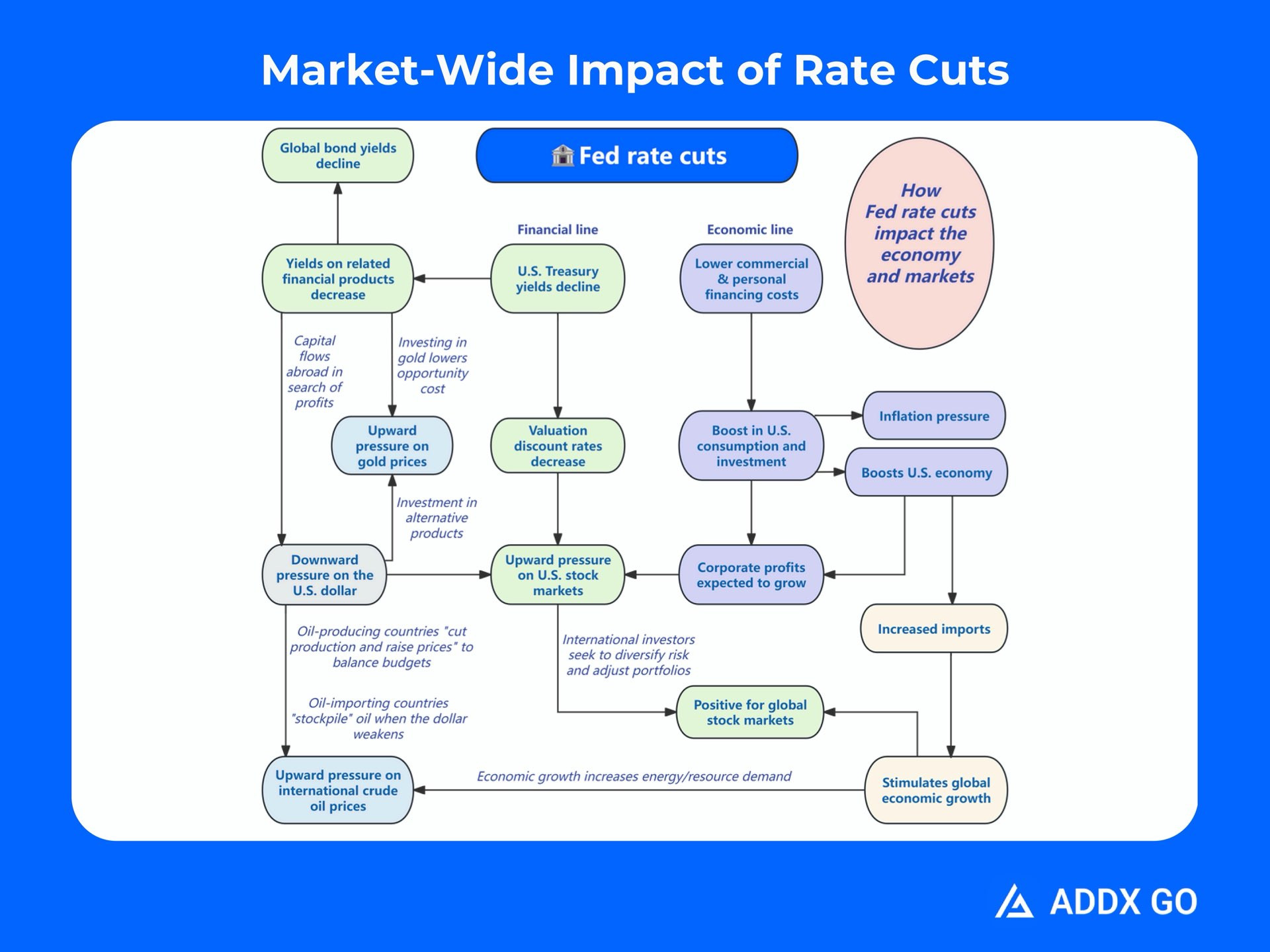
- Lower borrowing costs: Loans from banks and financial institutions become cheaper, making it easier for individuals and businesses to access credit.
- Stimulus for consumption and investment: With lower borrowing costs, spending and investment are likely to rise, potentially driving economic growth.
- Reduced savings returns: Savings and fixed deposit account yields tend to drop, lowering returns for savers.
- Bond price and yield dynamics: New bonds will have lower interest rates, making existing bonds more attractive, which could push bond prices up.
- Currency depreciation: Lower rates can weaken a country's currency, making exports cheaper but increasing import costs.
- Stock market fluctuations: While companies benefit from cheaper financing, stock market reactions can vary depending on how much the rate cuts are already priced in.
- Commodities surge: Investors may turn to commodities like oil and metals when rates are low, driving prices up.
- Inflation risks: Increased money flow could lead to higher inflation as demand for goods and services grows.
For investors, predicting asset price movements is crucial.
2. Fed Rate Cut History and Economic Goals
Since 1990, the Federal Reserve has initiated six major rate-cutting cycles: in 1990, 1995, 1998, 2001, 2007, and 2019. Each cycle varied in duration and frequency, but most aimed to combat economic downturns, stabilize financial markets, and enhance liquidity.
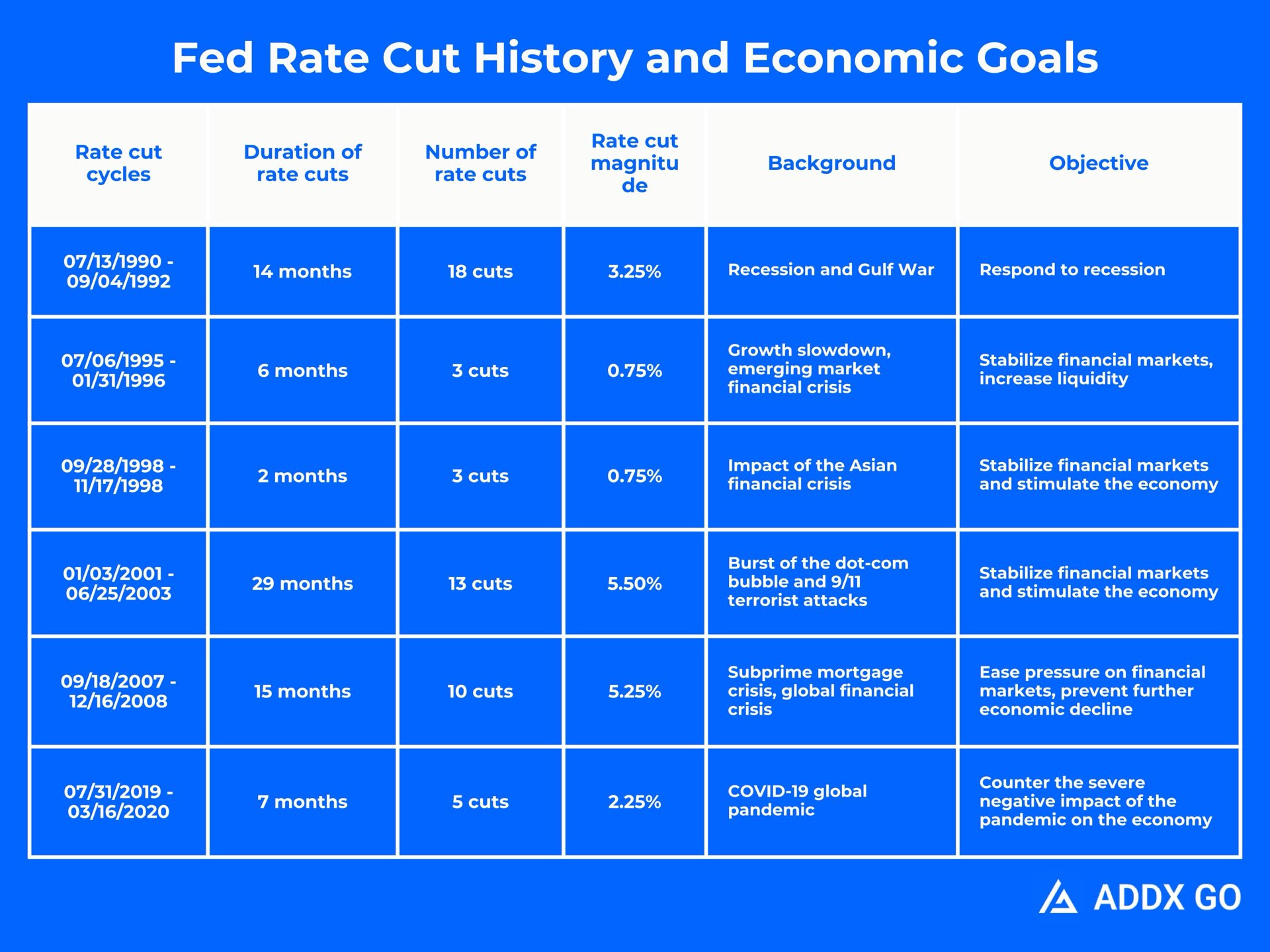
Rate cuts often coincide with other monetary policy tools, such as quantitative easing (QE) and forward guidance, to encourage economic recovery and stability.
3. Global Stock Market Response to Rate Cuts
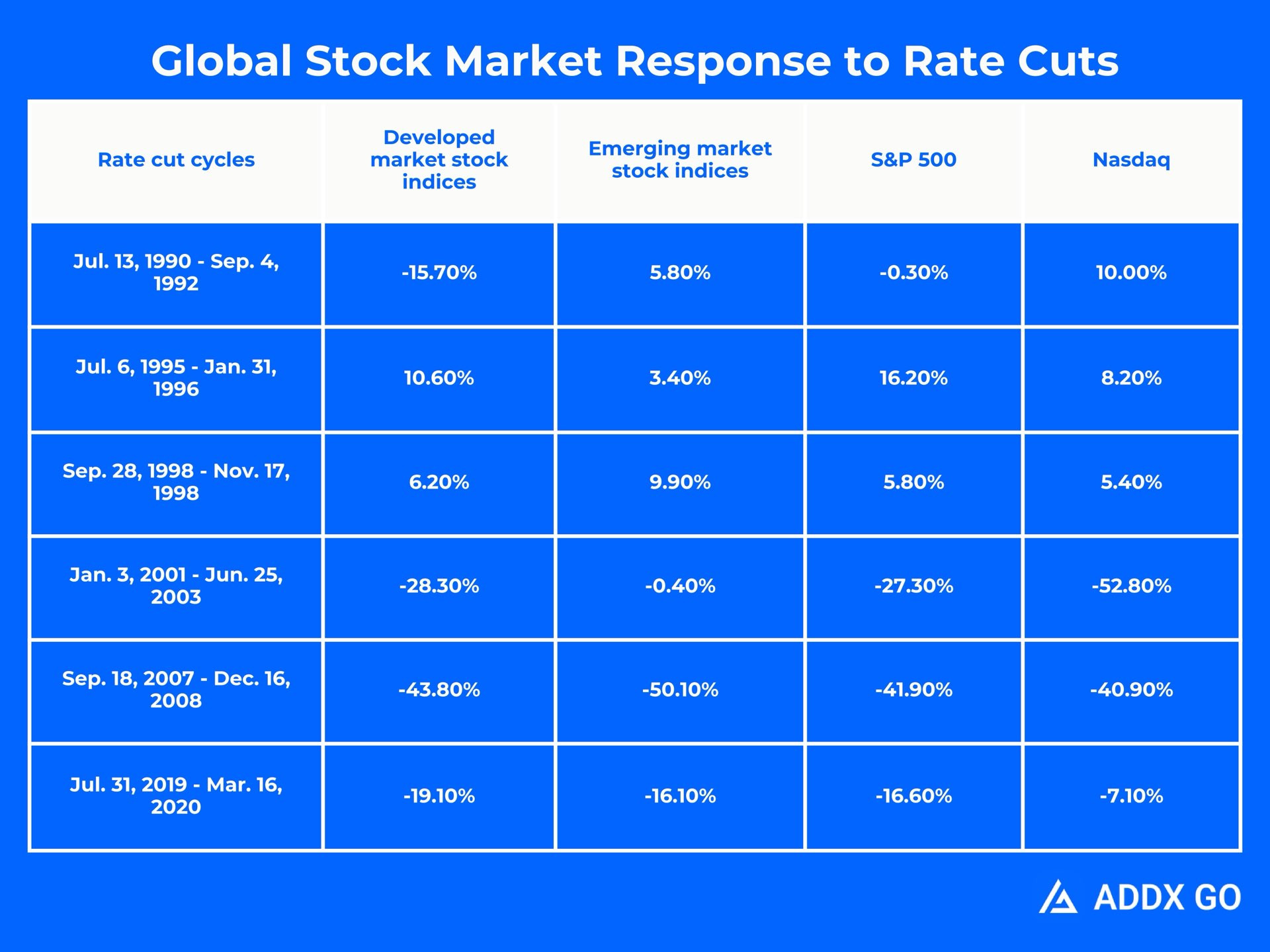
Historical data reveals that during previous rate-cutting cycles, developed markets experienced more volatility than emerging markets. Global stock markets typically show mixed results, with about half rising and half declining during these periods.
4. Dollar, Bonds, and Commodities During Rate Cuts
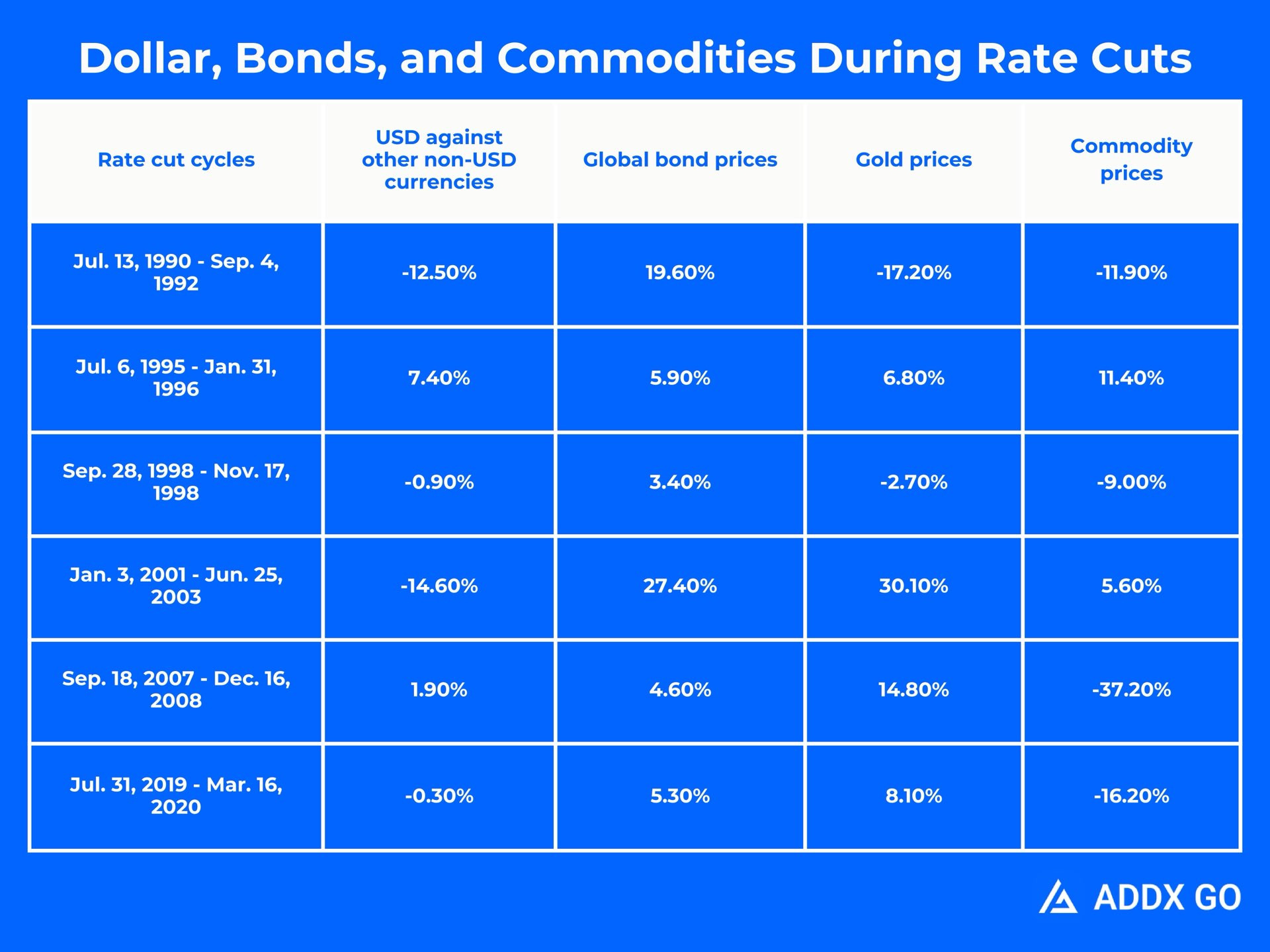
When the Fed cuts rates, the U.S. dollar tends to weaken against other currencies. Bonds, particularly ETFs like TMF and TLT, usually benefit from rising prices. Gold has historically shown a higher likelihood of gaining during rate-cutting periods, while other commodities often see declines.
5. S&P 500 Performance Post-Rate Cut
Data shows that following rate cuts, the S&P 500 generally trends upward over six months, one year, and two years. The notable exceptions were during the 2001 dot-com bubble burst and the 2007-2008 financial crisis.
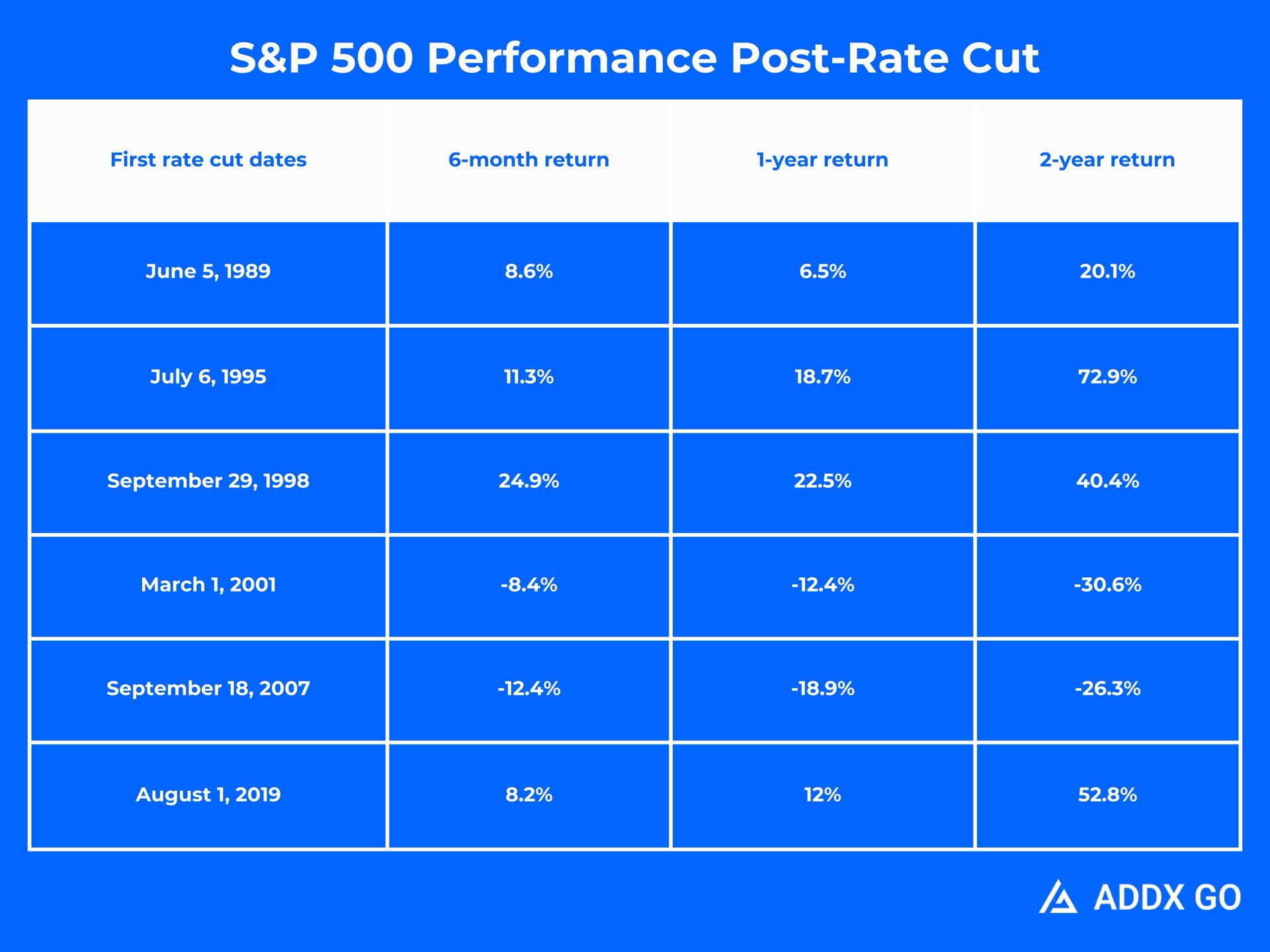
Assuming no major black swan events occur in 2024 or 2025, investors can expect U.S. equities to rise, making a compelling case for index fund investing.
6. Industries Poised to Benefit from Fed Rate Cuts
Lower rates reduce borrowing costs, affect currency fluctuations, and shift market liquidity preferences. Historically, rate cuts have favored specific sectors such as real estate, financials, and consumer discretionary industries.
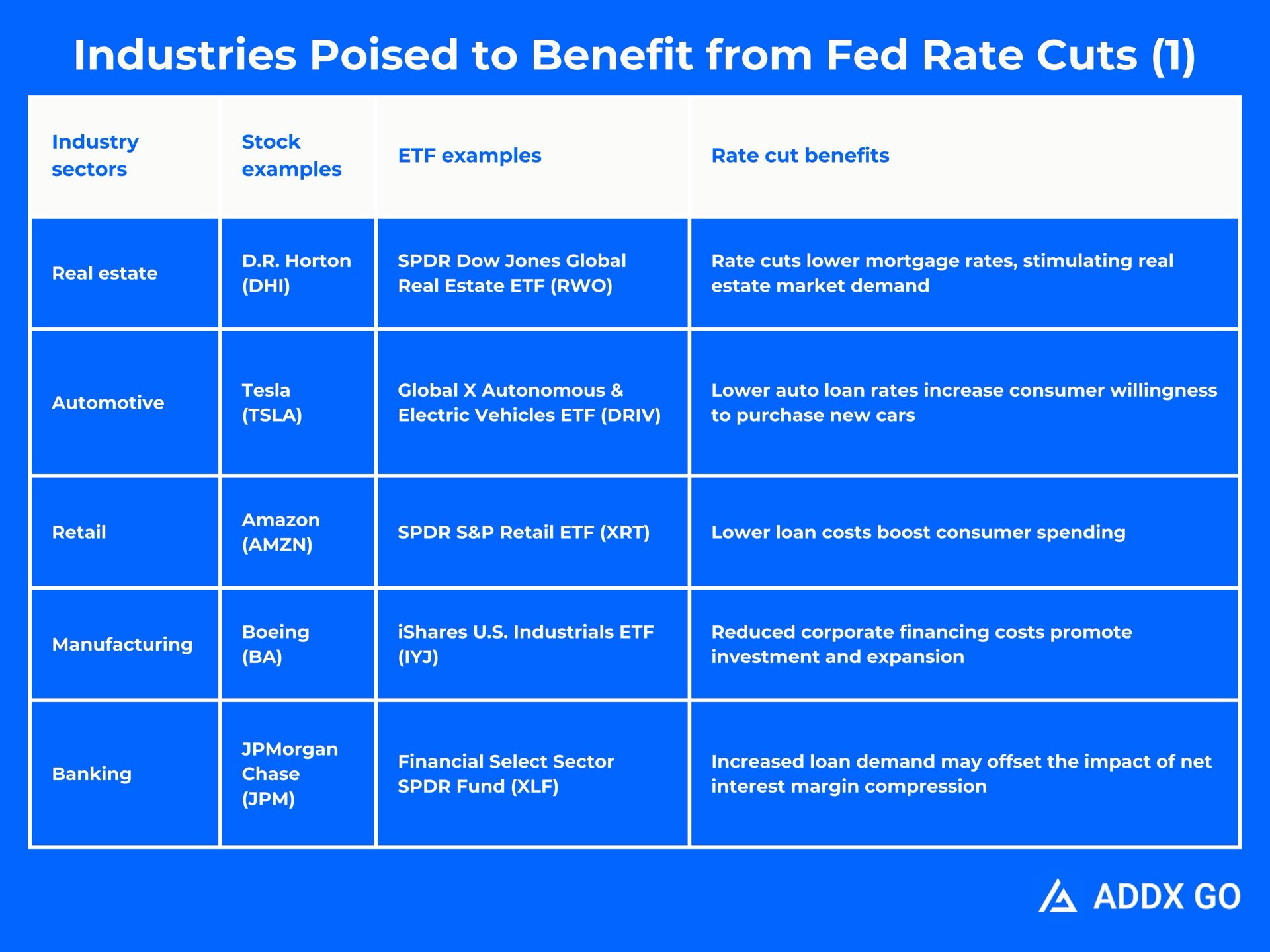

However, each cycle is unique, and further research is recommended before making investment decisions.
The Bottom Line
This article provides a snapshot of rate-cut history, its impact on global markets, and the potential benefits for U.S. stocks. While U.S. stocks historically benefit from such moves, every rate cut cycle presents its own unique challenges and opportunities. The data provided in this analysis is sourced from publicly available information, ensuring transparency and accuracy in our assessment. Remember, these are not direct investment recommendations—thorough research is essential before taking action.
#investingeducation #fed #ratecut #globalmarket
What's your take on the Fed's latest decision? How do you think it will impact your portfolio or the global economy? Share your thoughts and join the discussion in the comments below!