
How Do Holidays Impact the Stock Market: Should You Buy or Sell?

Have you ever wondered why the stock market seems to fluctuate around the holidays? As festive seasons approach, market dynamics shift, creating unique opportunities for savvy investors. Understanding these seasonal effects can be the key to unlocking greater returns. So, should you be buying or selling during these times? Let's dive into the fascinating interplay between holidays and stock performance!
The Psychology of Trading During Holidays
Investors often exhibit distinct behaviors as holidays approach. Many traders tend to lighten their portfolios ahead of long weekends due to uncertainties. This pre-holiday selling can lead to temporary dips in stock prices, presenting attractive buying opportunities. For instance, the well-known phrase "Sell in May and go away" reflects a broader trend of market slowdowns during the summer, encouraging some investors to divest before vacation season.
Historical Trends: Timing is Key
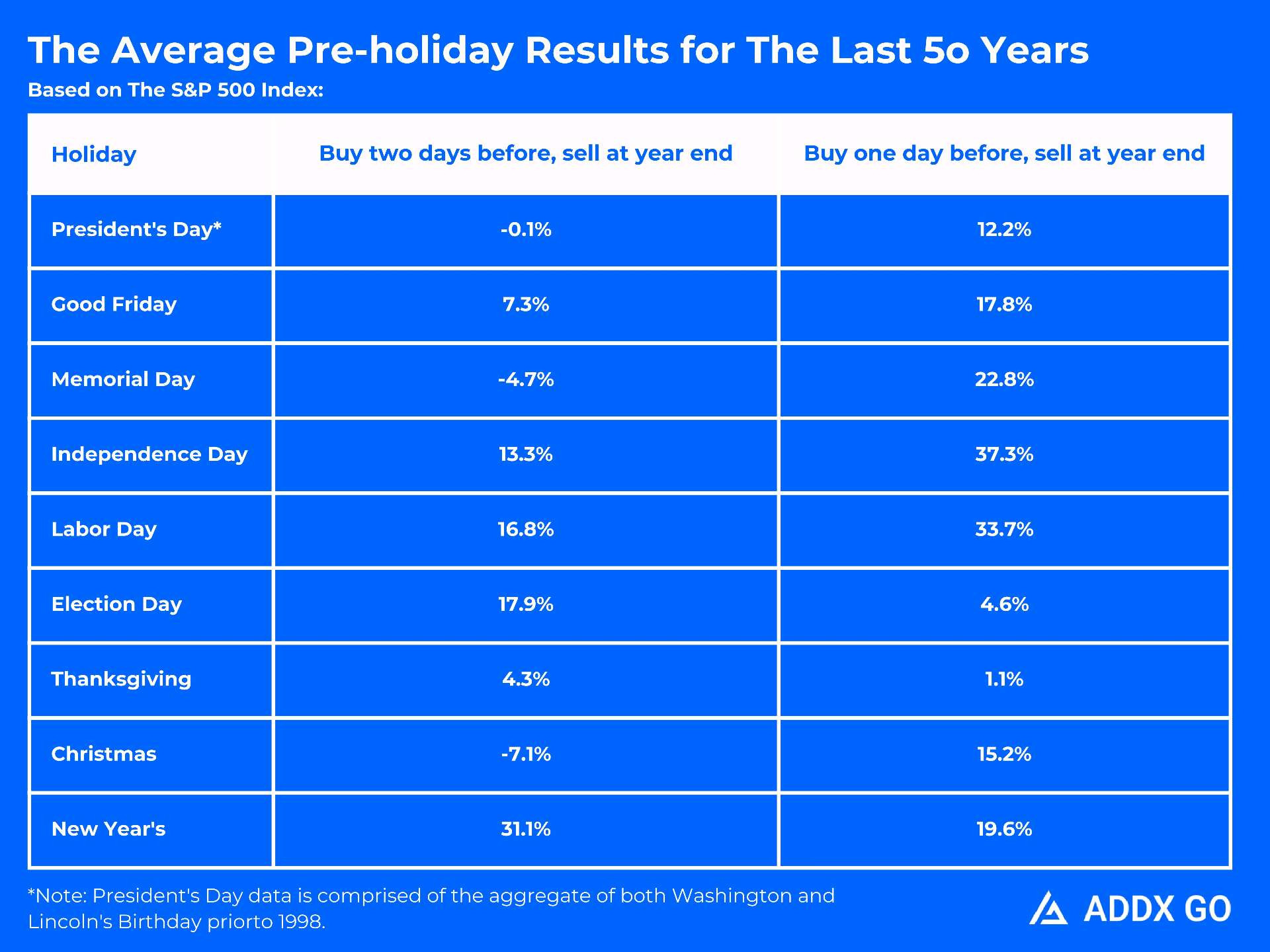
Analyzing historical data from the past 50 years reveals compelling patterns in stock performance around holidays.
Here are some key insights:
- Thanksgiving: Buying stocks just one day before Thanksgiving has historically resulted in an average return of over 15% by year-end, while purchasing two days prior often yields minimal gains.
- Labor Day: For this holiday, buying one day before can lead to an impressive average return of nearly 34%, compared to about 16% for those who buy two days in advance.
- Christmas: The "Santa Rally," which typically occurs between Christmas and New Year's, usually results in positive returns. Buying stocks one day before Christmas often capitalizes on this seasonal uplift.
These insights suggest that the timing of your investments around holidays can significantly enhance your potential returns.
Data-Driven Insights: The Power of Strategic Investing
To illustrate the impact of strategic investing, consider this scenario: If you had invested $10,000 in the S&P 500 in January 1928 and held it until December 1975, your investment would have grown to about $51,000. However, if you had strategically added money before each holiday and sold at year-end, your portfolio could have ballooned to over $1.4 million. This stark contrast highlights the potential benefits of timing and strategic planning in the stock market.
Conclusion: Buy or Sell?
Understanding how holidays impact the stock market can dramatically inform your investment strategy. As you consider your approach for upcoming holidays, keep these key points in mind:
- Buy Just Before Holidays: Historical data shows that buying stocks one day prior often yields better returns than purchasing two days before.
- Watch for the Santa Rally: Leveraging this seasonal effect can result in significant gains during the year-end trading period.
- Stay Informed: Monitor market trends and sentiment leading into holidays to make informed decisions.
Now, we'd love to hear from you! What strategies do you employ during holiday trading seasons? Share your thoughts and experiences in the comments below—let's learn from each other! Happy investing!