
China's Stock Market Rockets 30% in 5 Days:Can Rally Maintain Its Momentum?

The A-shares market witnessed another historic day today, and I believe several key factors contributed to the massive trading volume. First, the A-share indices have risen significantly in recent times, with rapid, short-term gains drawing the attention of many investors. In this context, many funds waiting in the market chose to take profits at these high levels. Simultaneously, funds that had missed previous opportunities and new investors excited by the bullish sentiment saw this as an excellent time to enter the market and buy the dip. This intense battle between exiting and entering capital is the primary reason behind today's astonishing trading volumes in the A-shares market.

In just the first 20 minutes of trading, the A-share market saw its turnover surpass 1 trillion yuan, setting a record for the fastest time to reach this figure. The momentum continued, and within 72 minutes, turnover exceeded 2 trillion yuan, increasing by over 650 billion yuan compared to the same period on the previous trading day. By midday, turnover had reached 2.5 trillion yuan, nearly matching the record-high volume of the prior session. By 1:12 p.m., total turnover broke 2.62 trillion yuan, setting a new all-time high. This level of trading activity not only highlights the market's robust vitality but also reflects investors' heightened focus and expectations for the stock market's future.
In the current market landscape, brokerage stocks have continued their strong rally, while semiconductor and chip stocks in the A-shares market have experienced a collective surge. Additionally, stocks related to the HarmonyOS (Hongmeng) concept have seen significant upward momentum amidst market fluctuations. On the downside, sectors such as coal, hospitality, and catering have witnessed minor adjustments, showing a modest pullback.
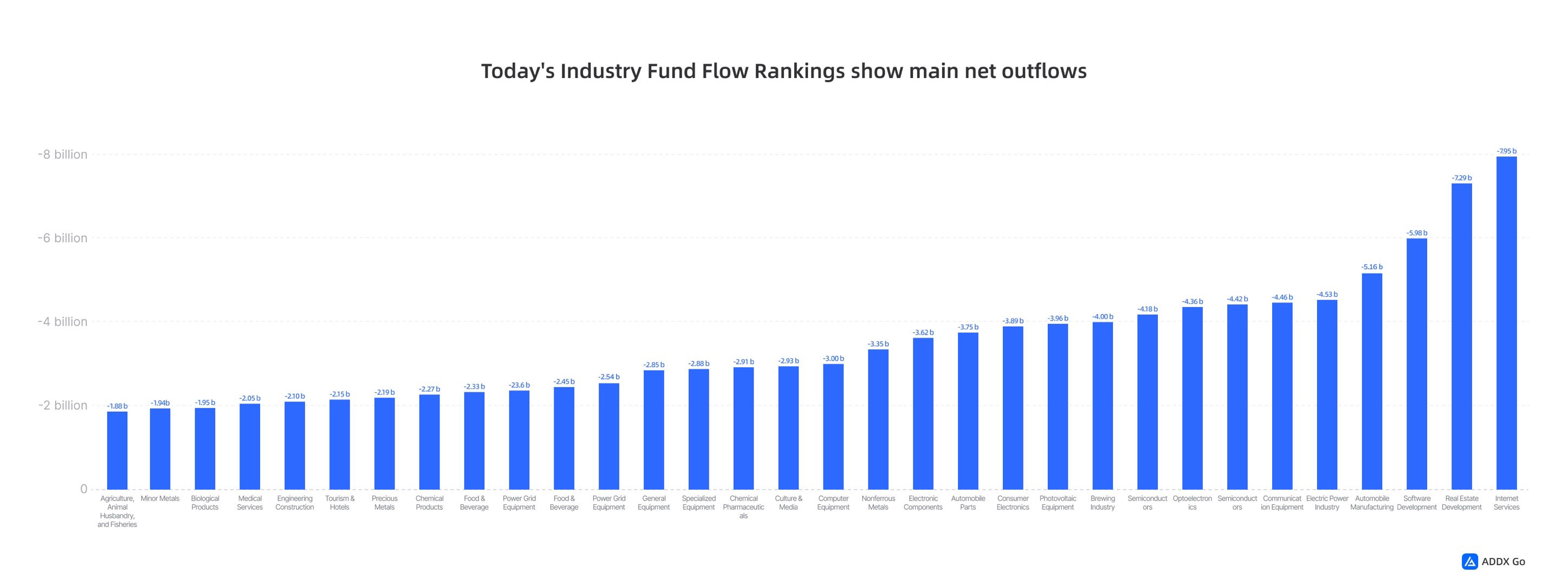
As for broad-based ETFs, market funds have also shown strong interest in index products. For instance, the E Fund ChiNext ETF saw its turnover exceed 31.8 billion yuan, more than doubling its volume from the previous day. The Huatai-Pinebridge CSI 300 ETF turnover reached 27.2 billion yuan, surpassing the last day's total. These massive ETF turnovers illustrate that investors have a positive outlook on the broader market. Active trading in broad-based ETFs indicates a preference for index products, particularly as large-cap stocks continue to rise. Funds are more willing to use ETFs to gain exposure to market opportunities.
Looking at the overall market performance, I believe the massive turnover is closely tied to the recent rapid surge in stock prices. As of this morning's opening, the Shanghai Composite Index has gained over 23% year-to-date, while the Shenzhen Component Index and ChiNext Index have risen by 24% and 36%, respectively. In the past six trading days alone, the Shanghai Composite has surged by over 30%, the Shenzhen Component by more than 40%, and the ChiNext Index by an astonishing 60%. After such rapid gains, it is normal for the market to experience some correction pressure. I believe the A-shares market has seen excessive short-term gains in such a brief period, which may lead to increased volatility going forward.
I believe that the forward price-to-earnings ratio of the A-shares market has significantly increased, indicating that policies are gradually shifting toward asset reflation. Meanwhile, expectations for future fiscal stimulus are also rising. Although the short-term optimism in the market is quite strong, I believe this correction pressure is healthy and will help the market proceed more steadily. As more individual investors flood into A-shares, I think the performance of the A-shares market may outshine that of Hong Kong stocks, especially as the current favourable policies continue to fuel positive sentiment.
From a long-term perspective, I believe the valuation of A-shares remains at historically low levels, presenting significant investment value. In the current policy environment, the market's medium- to long-term opportunities are highly worth paying attention to. Galaxy Securities also pointed out that more economic stimulus policies are expected to be introduced in the fourth quarter, further boosting market sentiment. However, I believe the market's future trajectory will largely depend on whether the underlying economic fundamentals can improve sustainably and whether investors' risk appetite can increase. The market could see an even more excellent rebound if these conditions are met.
It seems that major capital in the U.S. stock market had already anticipated an imminent correction in the Chinese stock market. On October 7th, U.S.-listed Chinese stocks opened higher but quickly reversed, with the Nasdaq Golden Dragon China Index initially rising more than 1.5% to hit a new recent high before plunging dramatically. As of press time, the index had dropped over 2.6%. Most Chinese stocks were down, with KE Holdings falling more than 11%, while Bilibili and iQIYI dropped over 7%. Li Auto saw its gains shrink to just 1%, and XPeng Motors turned downward, dropping more than 2%. Meanwhile, after hitting new recent highs, the FTSE China A50 futures index also experienced a sharp drop, falling over 1% during the session.
Before this rebound, foreign funds' allocation to Chinese assets (including Hong Kong stocks, A-shares, and U.S.-listed Chinese stocks) was at its lowest level in nearly a decade. I believe that global active funds (mainly public mutual funds) allocated only 5% of their portfolios to China, compared to 15% four years ago. According to statistics from Merrill Lynch, foreign public mutual funds have mostly been reducing their positions in Hong Kong stocks since the third quarter of this year, while hedge funds have been consistently shorting Hong Kong equities. In fact, without even referencing the data, a walk around Central and West Kowloon in Hong Kong would reveal the sluggish atmosphere in the Hong Kong stock market. Particularly when U.S., Japanese, and even Indian stocks are performing well, one can easily imagine the lack of enthusiasm foreign institutions with global asset allocation capabilities have for Hong Kong equities.
A spring that is compressed too tightly is bound to rebound. However, this rebound came too quickly to be driven by foreign public mutual funds—they tend to reallocate their portfolios at a slow pace, with low speculative tendencies, making them unlikely to play a role in sharp market swings. Data from the Hong Kong Stock Exchange suggests that short covering led by hedge funds has likely played a critical role. In mid to late September, the short-selling turnover ratio for Hong Kong stocks remained consistently above 18%, even exceeding 20% several times, which is historically high. However, by September 30th, the ratio had abruptly fallen to 13%; for Hang Seng Index component stocks, it dropped to 10%. For individual stocks, such as Tencent, daily short selling volume plummeted from 7.08 million shares on September 27th to 2.86 million shares on September 30th and further to 2.3 million shares on October 4th. Several other popular Hong Kong stocks experienced similarly dramatic changes.
We have reason to believe that speculative foreign funds, led by hedge funds, cover their short positions in Hong Kong stocks and build long ones. During the National Day holiday period, American quantitative trading firms like Jump Street and Jane Street repeatedly appeared among the top brokers by turnover on the Hong Kong Stock Exchange, representing just a tiny glimpse of the overseas quantitative funds pouring into the Hong Kong market. These foreign funds and mainland Chinese speculative funds have orchestrated the dramatic rebound in Hong Kong stocks over the past two weeks. However, suppose the market is to push further beyond current levels. In that case, the participation of foreign public mutual funds will be essential. Without the involvement of these long-term fundamental investors, this rebound is unlikely to transform into a full-fledged market reversal.
Finally, I believe the current A-shares rally has been primarily driven by the favourable external environment, particularly the Federal Reserve's interest rate cuts, which have created space for domestic policy easing. These policies have boosted market confidence and supported the stock market's continued rise. Going forward, the market's performance will largely depend on the strength and speed of fiscal policy implementation. I will closely monitor these policy developments and their impact on the market, especially the potential fiscal and monetary measures that may be introduced in the coming months to further stimulate market growth.