
Warren Buffett’s Strategic Shift: What Does His Bank of America Sell-Off Signal for the Market?

Recently, Warren Buffett’s significant reduction in his stake in Bank of America has drawn widespread attention from the market. Although Buffett has not provided a clear explanation for this move, there has been much speculation. Some believe that Bank of America's valuation has become too high, making it less attractive as a long-term investment.
Others suggest that Buffett and his investment team may be dissatisfied with the bank's management and foresee potential regulatory risks. However, the most common view is that the Federal Reserve’s interest rate cuts could undermine the profitability of the banking sector, especially for institutions like Bank of America, which heavily rely on net interest margin. As loan rates fall, banks’ interest income is bound to decrease, putting pressure on Bank of America’s performance.
Documents submitted by Buffett’s Berkshire Hathaway indicate that within just three trading days up to September 24, the company sold $863 million worth of Bank of America stock. Currently, Berkshire still holds 10.5% of the bank's shares, but many in the market anticipate that it will continue reducing its stake. Since July this year, Buffett has been making large-scale reductions in his position in Bank of America. Analysts speculate that he might gradually reduce his holdings to below 10%, allowing him to avoid the obligation to disclose transactions promptly, and instead opt for a more silent approach to further cutting his position.
Buffett’s investment in Bank of America dates back to 2011, when the bank's stock price was at a low point. At that time, Buffett invested $5 billion to purchase preferred shares and warrants of the bank. Over the following years, as Bank of America increased its dividend payments, Buffett converted the preferred shares into common stock, making Berkshire the bank's largest shareholder, with a stake of over 13%. However, as market conditions and policies evolved, Berkshire began to adjust its holdings, particularly in the face of uncertainty brought by the Federal Reserve’s interest rate cuts. Buffett may now see this as an opportune moment to reevaluate his investment in the banking sector.
Another noteworthy trend is that Buffett has been a net seller of stocks for seven consecutive quarters, while Berkshire’s cash reserves reached a record $276.9 billion by the end of the second quarter this year. While the sale of Bank of America shares might be interpreted as an isolated case, Buffett’s broader strategy of selling stocks and increasing cash holdings clearly reflects a cautious outlook on the U.S. stock market. This conservative stance may be in response to changes in the macroeconomic environment, particularly the challenges posed by inflation, interest rate adjustments, and potential recession risks in the U.S. economy.
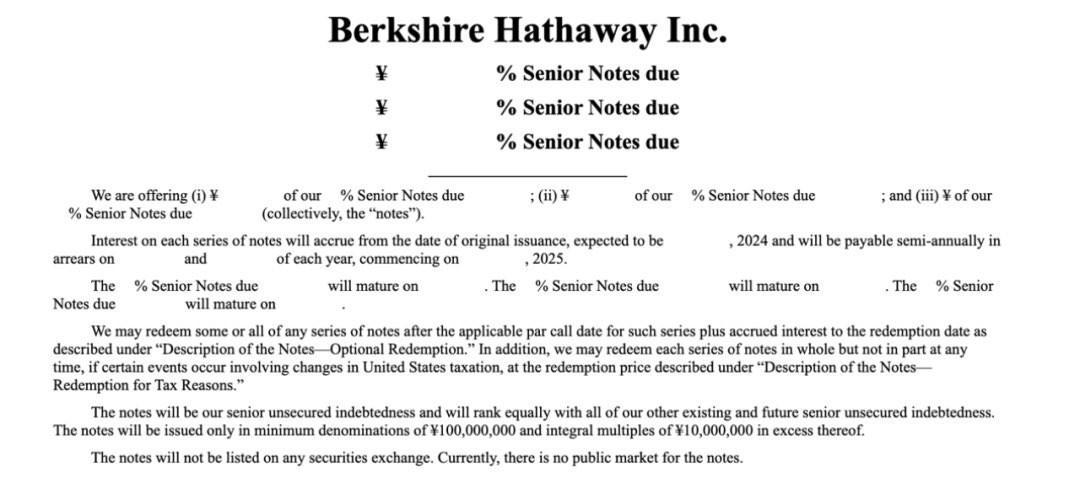
Meanwhile, Buffett's financing moves have also attracted close attention from the market. On October 1, Berkshire filed documents indicating its plan to issue yen-denominated bonds again to expand its investments in Japan. This marks the ninth time since 2019 that Berkshire has issued yen notes, signaling Buffett's continued interest in the Japanese market, particularly in financial companies and shipping firms. Analysts generally believe that Buffett may use this round of financing to further expand his investment portfolio in Japan, targeting undervalued companies with growth potential.
Nevertheless, some market observers suggest that Buffett's focus may still remain on Japan's trading houses, especially in light of his recent sale of Bank of America shares. Some analysts have pointed out that Buffett’s familiarity with the U.S. market far surpasses that of other countries, so even if he reduces his stake in Bank of America, it’s unlikely he would shift toward buying Japanese bank stocks in large quantities. Overall, Buffett's investment strategy remains driven by long-term value, and his recent actions likely reflect a reassessment and realignment of his portfolio across global markets.