U.S. Bank Stocks Hit Two-and-a-Half-Year High! Market Divides: Where Will the Rate Cut Cycle Lead?

On Friday, October 11, U.S. bank stocks surged to their highest close in two and a half years, driven by better-than-expected earnings from JPMorgan Chase and Wells Fargo. The positive results boosted hopes of a “soft landing” for the U.S. economy.
JPMorgan Chase and Wells Fargo, the largest and fourth-largest U.S. banks, respectively, reported declines in quarterly profits compared to the same period last year: JPMorgan's Q3 net income fell 2% to $12.9 billion, and Wells Fargo's dropped 11% to $5.1 billion. However, both results exceeded analysts’ expectations, who had forecast net profits of $12.1 billion for JPMorgan and $4.5 billion for Wells Fargo.
By Friday’s close, JPMorgan shares rose 4.4%, while Wells Fargo climbed 5.6%.
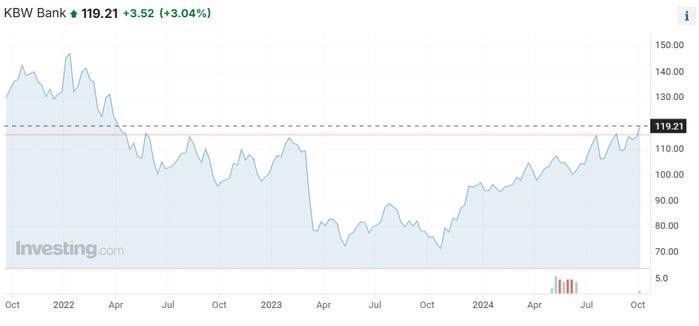
The KBW Bank Index, which tracks the 24 largest U.S. banks, jumped over 3%, pushing bank stocks above their February 2023 highs—set before the collapse of Silicon Valley Bank ignited a crisis among U.S. regional banks—and marking their highest closing level since April 2022.
In my view, the outlook for a soft landing has strengthened, with the resilience of the U.S. economy making this scenario even more likely.
Economic Resilience Supports Soft Landing Prospects
The U.S. labor market continues to surprise. The Department of Labor reported a gain of 250,000 jobs in September, far surpassing expectations, with upward revisions to job growth in July and August. The unemployment rate fell from 4.2% to 4.1%, easing concerns about labor market weakness.
The earnings from JPMorgan Chase and Wells Fargo offer further evidence that the Federal Reserve may be able to fight inflation without tipping the economy into recession, achieving the much-anticipated soft landing.
Consumer Resilience Remains Strong
Since 2022, the Fed has aggressively raised interest rates to curb inflation, raising concerns about the health of the U.S. economy. However, the Fed initiated its first rate cut last month, signaling a potential shift.
JPMorgan CFO Jeremy Barnum commented: “These earnings align with the narrative of a soft landing—or perhaps even the prospect of no landing at all.”
Barnum added that while consumers are reducing discretionary spending on travel and entertainment, these changes remain within normal bounds and do not indicate any significant financial stress.
Similarly, Wells Fargo CEO Charlie Scharf stated: “We continue to monitor consumer behavior for signs of strain, but we haven’t observed significant changes. Credit and debit card spending remains healthy, although it is slowing.” Wells Fargo CFO Michael Santomassimo noted that while rising prices are squeezing lower-income consumers, these pressures haven’t spread to the broader economy. However, he warned that the bank has yet to see any benefits from rate cuts, with corporate borrowers remaining cautious. After two years of tightening, declining interest rates are expected to compress net interest income (NII), which forms a significant portion of banks' profits.
The latest JOLTS report showed job openings rising to 8.04 million in August, a three-month high. The hiring rate fell to 3.3%, matching its lowest level since 2013 (excluding pandemic distortions). Meanwhile, the service sector grew at its fastest pace in 18 months, with the ISM Services PMI climbing to 54.9 in September, its highest since February 2023.
Looking ahead, earnings reports from Bank of America, Citigroup, and Goldman Sachs are scheduled for release on October 15, with Morgan Stanley following on October 16.
A Market Divided on Bank Stocks’ Future
Following the solid earnings from JPMorgan and Wells Fargo, bullish sentiment toward bank stocks has gained traction.
Michael Landsberg, Chief Investment Officer at Landsberg Bennett Private Wealth Management, said: “We expect this earnings season to remain robust, especially for the major banks. Their low credit card delinquency rates and rising economic activity should drive earnings growth.”
David Lefkowitz from UBS Global Wealth Management added: “Now that the Fed has started the rate cut cycle, the economy should receive further support from lower interest rates on credit card debt and business loans. As a result, we expect Q3 earnings to reflect these improving trends.”
Based on my analysis of two historical rate cut cycles—July 1995 to January 1996 and September 1998 to November 1998, both of which avoided recessions—financial stocks tend to perform exceptionally well in soft landing scenarios.
However, there are concerns about declining net interest income as rates continue to fall. Last month, JPMorgan President Daniel Pinto warned that analysts might be too optimistic about next year’s spending and NII forecasts, calling current estimates “unrealistic” given expectations for lower interest rates.
While Wells Fargo’s latest earnings report hinted that Q4 NII could fall short of previous projections, the bank raised its 2025 outlook. In contrast, JPMorgan slightly raised its 2024 NII forecast from $91 billion to $92.5 billion but offered no guidance for 2025.
Buffett’s Bank Stock Sell-Off Draws Attention
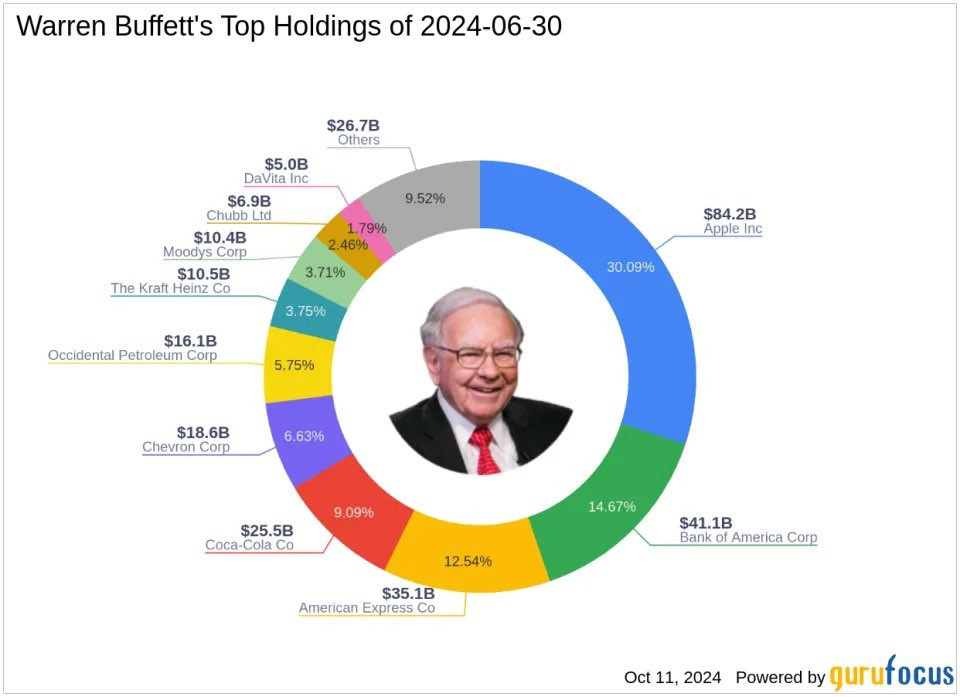
Investors remain focused on Warren Buffett’s Berkshire Hathaway, which has been steadily reducing its holdings in U.S. bank stocks. As of Thursday, October 10, Berkshire’s stake in Bank of America fell below 10%.
Over the past few years, Buffett has sold off long-held positions in several major banks, including JPMorgan Chase, Goldman Sachs, Wells Fargo, and U.S. Bancorp. During the U.S. regional banking crisis last year, Buffett expressed his concerns: “You simply don’t know what’s changed in deposit behavior. It changed after 2008, and it’s changed again now. In this environment, we remain cautious about bank ownership.”
In summary, while bank stocks have rebounded strongly, challenges remain. Lower rates could compress NII, and cautious corporate borrowing may weigh on future earnings. However, with economic indicators pointing toward resilience, optimism around a soft landing persists. The upcoming earnings reports will be critical in deter