
Boeing Considered Selling Space Business and Initiating a Financing Plan

Go Wire
October 28, 2024
GoGPT Summarizes Articles
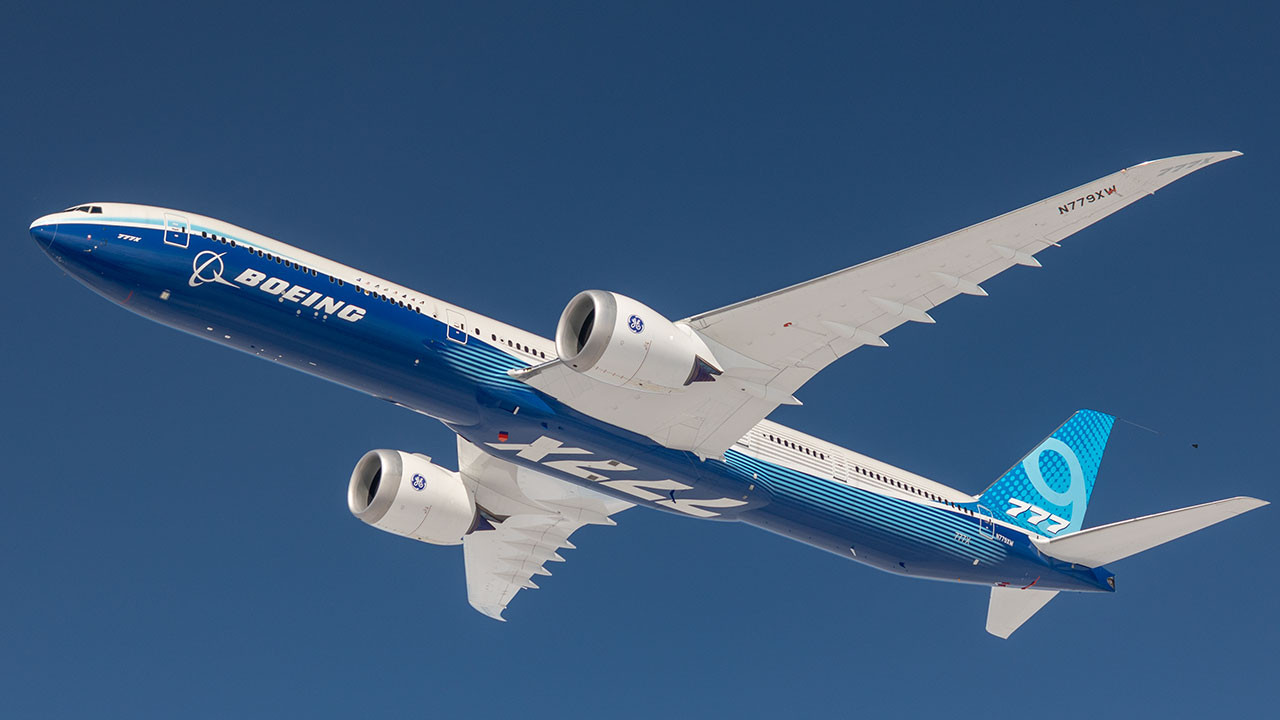
After a string of crises, Boeing is considering selling part of its space business to improve the company's strained situation. Boeing is currently facing a serious financial crisis. Last week, Boeing workers voted to reject the company's latest contract offer, extending another strike that has continued to halt most airplane production. Meanwhile, the company also reported its worst quarterly results in history, racking up a $6 billion loss for the three quarters.
According to the Wall Street Journal reported on October 25, Boeing was considering selling part of its space business to improve the company's tight financial situation. Sources familiar with the matter told the Wall Street Journal that Boeing's possible sale of the business includes operations related to interplanetary passenger spaceships and supportive work for the International Space Station but does not involve the department responsible for building space launch systems. Regarding these related inquiries, Boeing responded that it did not comment on market rumors or speculation.
Boeing has worked closely with NASA on large-scale programs for decades, including the Apollo astronaut missions and the creation of the space station. But in recent years, Musk's SpaceX has replaced Boeing as NASA's most important partner. The International Space Station is expected to be retired by 2030. NASA is considering replacing it with a station built by another company.
In June, US astronauts Wilmore and Williams traveled to the ISS by taking the first manned test flight of the Boeing Starliner spacecraft. But, due to problems such as propeller failure and helium leaks, their return flight was repeatedly delayed. They had to remain in space. This incident had a serious hit to Boeing's reputation.
Meanwhile, Boeing's Starliner spacecraft program has been severely hampered by development delays and technical problems, causing the company to incur more than $1.8 billion in additional costs. In addition, since the beginning of the year, constant accidents of Bouoeing airplanes have exposed serious issues of quality and safety, leading to a significant drop in Boeing's airplane sales and putting the company under fire from regulators, lawmakers, and airlines.
What is worse, a communications satellite designed and built by Boeing has recently shown an anomaly in space and eventually disintegrated, creating a large amount of fragments. Multiple accidents have raised concerns about Boeing's ability to produce, research, and develop for its space business.
Boeing's third-quarter loss doubled year-on-year as a result of multiple challenges including ongoing strikes, a troubled supply chain, and a downgraded rating. On October 23, Boeing announced its third quarter results. Revenue of $17.84 billion in the third quarter fell 1% compared to the previous one. US GAAP net loss of $6.174 billion was 2.77 times the previous one, becoming the largest loss since 2020. GAAP loss per share was $9.97, being 2.7 times the previous loss. Its achieved revenue in the first three quarters was $51.275 billion, falling 8% year-on-year. GAAP net loss of $7.968 billion was 2.6 times the previous one. GAAP loss per share was $12.91 was 2.55 times the previous one.
The earnings report noted that, during the quarter, the commercial aircraft business had 49 net orders and 116 aircraft deliveries, with more than 5,400 aircraft orders valued at $428 billion. The company's total orders were valued at $511 billion. It produced four 787 airplanes per month and planned to produce five airplanes per month by the end of the year.
The earnings results were impacted by the currently growing wave of Boeing strikes. The ongoing strikes initiated by 33,000 U.S. West Coast workers led to the suspension of production of the 737 MAX, 767, and 777 airplanes. The report noted that third-quarter results were primarily impacted by the downtime of the International Association of Machinists and Aerospace Workers (IAM) in the US and benefits in the commercial aircraft and defense sectors. Additionally, the decline in third-quarter revenue was primarily due to lower wide-body aircraft deliveries, including the impact of the IAM downtime.

Boeing President and CEO Kelly Ortberg noted “The number one issue on everyone's mind right now is to end the IAM strike.” on the call conference where he met with union leaders in his first week on the job. She also let them know that Boeing was committed to rebuilding the mutual relationship by stating “We hope the series of plans Boeing has put together to get employees back to work. And, when employees come back, it will be our job to restart the plant and the supply chain.”
It was also Ortberg's first quarterly earnings report after she took the job. Since August 8, Ortberg has become Boeing's new president and chief executive officer. Ortberg is a 64-year-old Senior aviation insider with more than 35 years of aerospace leadership experience. Previously, the market and the aviation industry also wondered whether Otterberg's arrival could solve the many challenges faced by Boeing so that Boeing resumed its stability after many safety and quality crises.
Notably, on October 23, Boeing workers voted on a wage agreement for a 35% raise over four years. The agreement was rejected by 64% of the workers, making a strike that lasted six weeks continue. S&P Global Ratings said that the strike cost the company about $1 billion a month.
“Boeing is at a crossroads in its evolution and it will take time as well as changes to restore its leadership position,” Ortberg said bluntly on the call. She continued to point out that decreased trust, increased debt, and serious mistakes in the company's overall performance disappointed many customers. But, Boeing also faces great opportunities such as the company's orders of about 500 billion dollars.
In detail, Ortberg pointed out that the need for fundamental changes to the company's culture is the first thing to be done. The operational stability through the implementation of safety and quality programs and management of the balance sheet came second. The third task is to strengthen the implementation of discipline. The last thing is the need to build a new future for Boeing.
Ortberg previously announced the plan of laying off about 10 percent of its workforce in the next few months which was around 17,000 people. The layoffs would include executives, managers, and employees. Boeing's business was also facing adjustments, in which the delivery of the first of Boeing's new wide-body 777 X airplanes would be delayed until 2026 and production of the 767 freighter would be halted in 2027 after the remaining orders were completed.
Regarding layoffs and business adjustments, Ortberg said on the call that the focus was on the consolidation of inefficient areas and the need to continue to reduce non-essential activities. These changes were already happening. Responding to investors, Ortberg said that the focus of the layoffs was on simplifying overhead activities. She would not move employees out of production or engineering labs. The plan was to increase production over the next year. In the meantime, teams may be supplemented as needed, not ruling out some additional outside resources.
The earnings report also noted that Boeing's operating cash flow was -$1.345 billion in the third quarter, compared to $22 million in the same period last year, reflecting lower wide-body aircraft deliveries and the impact of the IAM shutdown. Free cash flow was -$1.956 billion, compared to -$310 million in the same period last year. In October, Boeing signed a new $10 billion short-term credit agreement with a total of $20 billion in credit currently available. But, it has not been utilized.
According to foreign media reports, both Moody's Ratings and S&P Global Ratings said in recent weeks that they were considering downgrading Boeing's credit rating to junk status. Boeing was currently trying to avoid a downgraded rating.
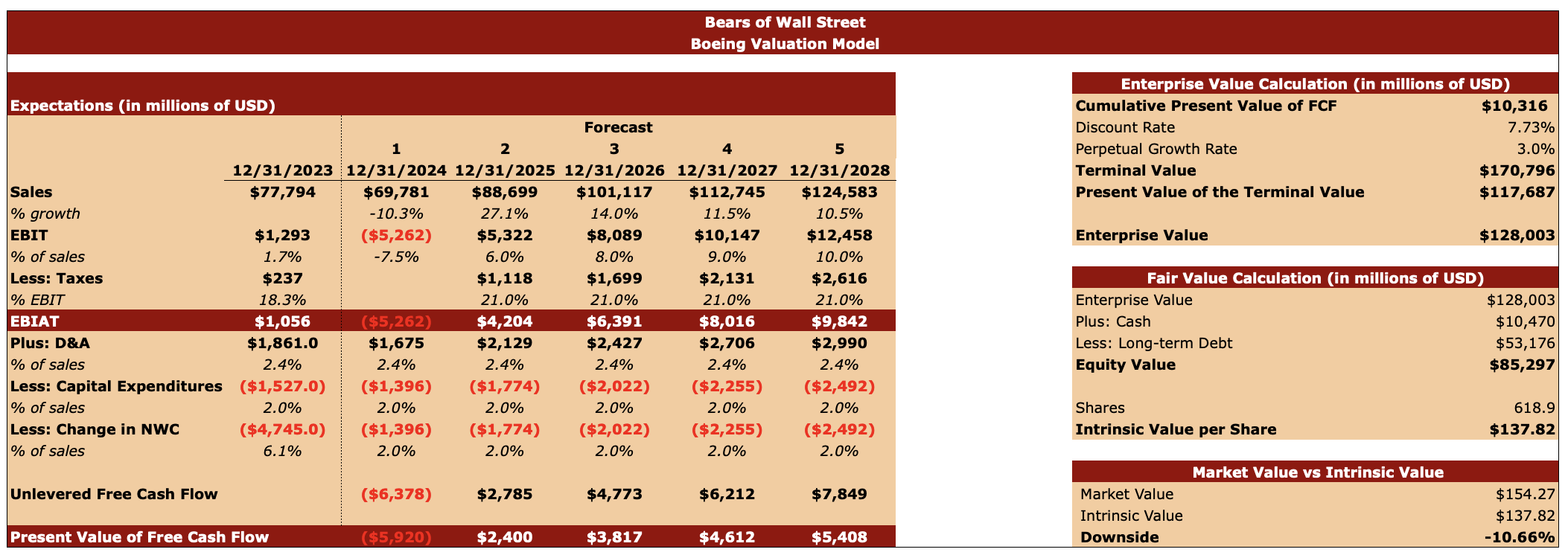
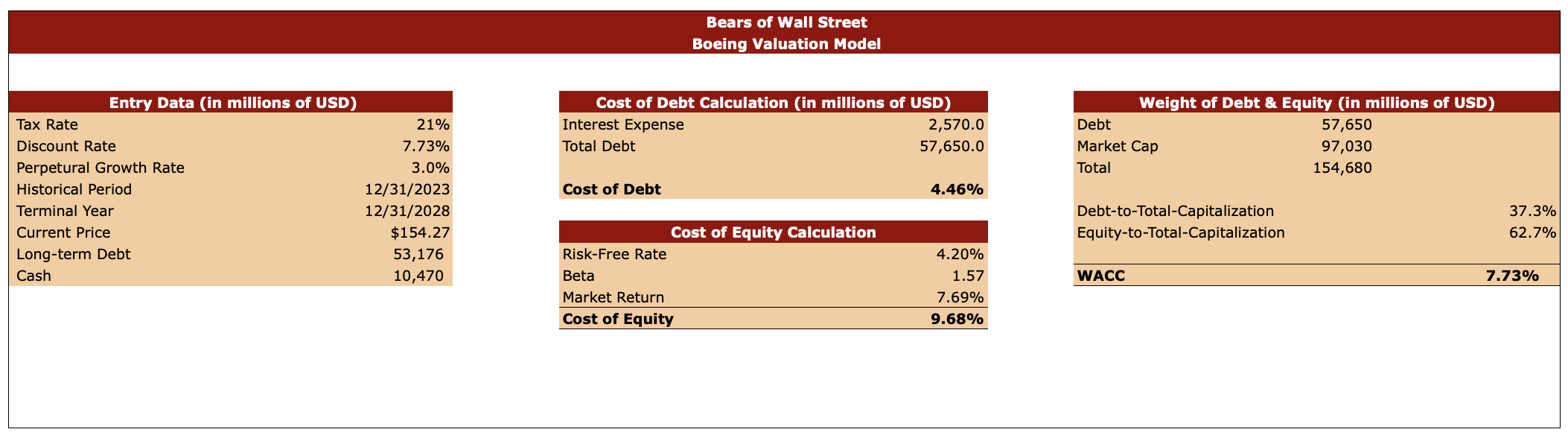
On the call, Boeing Executive Vice President and Chief Financial Officer Brian West said that retaining its investment grade rating is a top priority for the company. The company was actively engaging with the rating agencies for a constructive dialog. The company planned to fully address issues in its balance sheet in the near term, which may include the issuance of equity and equity-linked securities. It is believed that over time, business performance and capital structure will return to levels that are fully consistent with investment grade.
West said Boeing would likely continue to spend money in 2024 and 2025. The free cash flow in 2025 would be significantly better than in 2024 but still expected to be negative for the full year of 2025.
On October 27, the person in the know revealed that Boeing planned to launch a financing round as early as October 28 and was expected to raise more than $15 billion. Depending on its demands, this amount may increase.
The US Securities and Exchange Commission's filings on October 23 showed that Boeing had been authorized to sell up to $25 billion worth of equity and bonds. This permit could help the company defend against strikes and avoid falling into junk stock.
By the close of the US market on last Friday, Boeing slipped 0.12%.