
How to Read an Earnings Report: The Essentials (Part 1)


Ever wondered why a company's stock price can soar one day and plummet the next, all based on a quarterly report? Understanding earnings reports is crucial for any investor navigating the often turbulent waters of the stock market. These reports can seem complex and filled with daunting numbers at first glance, but breaking down the essentials can empower you to make informed investment decisions. In this first part of our series, we'll explore what earnings reports are, why they matter, and the key components to focus on.
What is an Earnings Report?
At its core, an earnings report provides insight into a company's profitability over a specific period, usually a quarter. But don't be fooled by the simplicity of the term “earnings.” The real magic happens when you dive deeper into the numbers. A positive earnings report can send a stock price soaring, while a negative one might trigger panic selling—or even be interpreted as a buying opportunity. Understanding this paradox is key.
Typically released quarterly, an earnings report offers a financial overview of a company's performance. This document is vital not just for investors but for analysts and market strategists as well.
Key elements usually include:

Why Are Earnings Reports Important?
Earnings reports can significantly impact stock prices. For example, when Apple reported better-than-expected earnings in Q2 2021, its stock price jumped by 5%. Conversely, Netflix saw a 25% drop after missing subscriber growth targets in Q1 2022. Understanding these reports helps you identify potential investment opportunities and assess risks effectively.
Key Components to Analyze
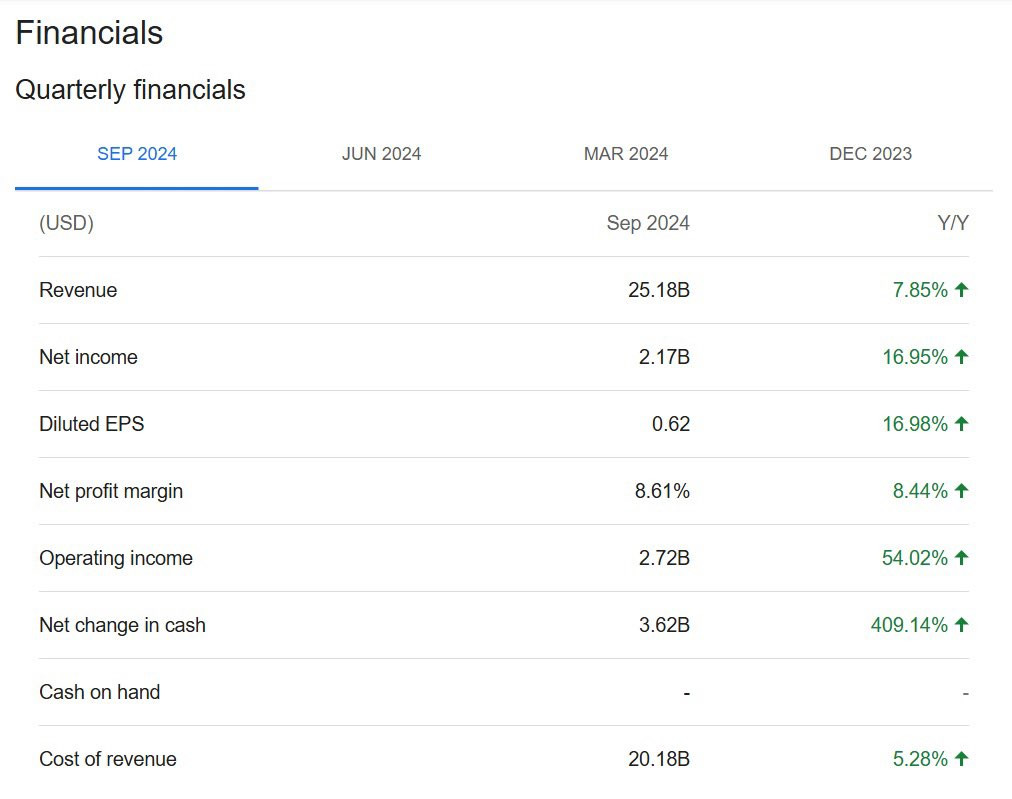
Let's take a closer look at Tesla's financial situation for the third quarter of 2024 to illustrate how to analyze key components of an earnings report.
1. Revenue Growth: One of the first metrics to consider is revenue growth. For Tesla, the year-over-year (Y/Y) revenue growth stands at an impressive 7.85%. This trend indicates that the company is successfully increasing its sales compared to the same period last year, which is a positive sign of demand for its electric vehicles and energy products.
2. Net Income: A rising net income is a strong indicator of a healthy business. In Tesla's case, net income grew by 16.96%. This growth suggests that not only is the company generating more revenue, but it is also effectively managing its costs, leading to higher profitability.
3. Earnings Per Share (EPS): The diluted EPS is another crucial metric, and for Tesla, it increased by 16.98%. A higher-than-expected EPS typically leads to a positive reaction in the stock market.
4. Net Profit Margin: The net profit margin is essential for assessing profitability relative to total revenue. Tesla's net profit margin increased by 8.44%, indicating that the company is not only growing its revenues but is also retaining a greater portion of that revenue as profit. This is a positive indicator of financial health and operational effectiveness.
5. Operating Income: Tesla's operating income showed remarkable growth of 54.02%. This metric reflects the company's core business performance, excluding the effects of financing and taxes. A substantial increase in operating income suggests that Tesla is efficiently managing its core operations and benefiting from economies of scale, which can lead to sustained long-term growth.
6. Cash Flow: Positive cash flow is critical for a company's ability to sustain operations and invest in future growth. Tesla reported a significant increase in net change in cash of 409.14%. This substantial growth in cash flow indicates strong liquidity, allowing Tesla to invest in research, development, and production capacity, further fueling its expansion.
It’s no surprise that following the release of this stellar earnings report, Tesla's stock price surged significantly, reflecting investors' confidence in the company’s future prospects.
In Summary
By familiarizing yourself with these key components—revenue growth, net income, EPS, net profit margin, operating income, and cash flow—you'll be better equipped to interpret a company's earnings report effectively.
Stay tuned for Part 2, where we'll dive deeper into analyzing specific sections of Apple's earnings reports and understand the implications for your investment strategy. We'll explore how to dissect these reports to extract actionable insights that can shape your investment approach. Don't miss it!