
AMD Q3 Outlook: AI Chips and Data Centers in Focus

As Advanced Micro Devices (AMD) prepares to release its Q3 earnings on Tuesday, investors are keenly eyeing the company’s data center revenue and outlook for AI chips.
According to InvestingPro estimates, AMD’s Q3 EPS is expected to rise 31% year-over-year to $0.92, while revenue is anticipated to grow 15.7% year-over-year to $6.715 billion. Over the past four quarters, AMD has slightly surpassed expectations, and investors are optimistic for a similar outcome this time.
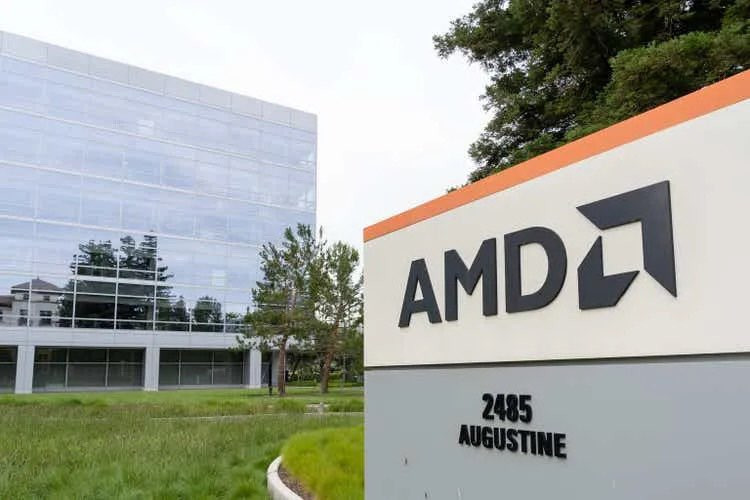
Supported by major cloud computing clients like Microsoft and Meta, AMD reported in Q2 that its AI chip revenue exceeded $1 billion for the first time, fueled by strong demand.
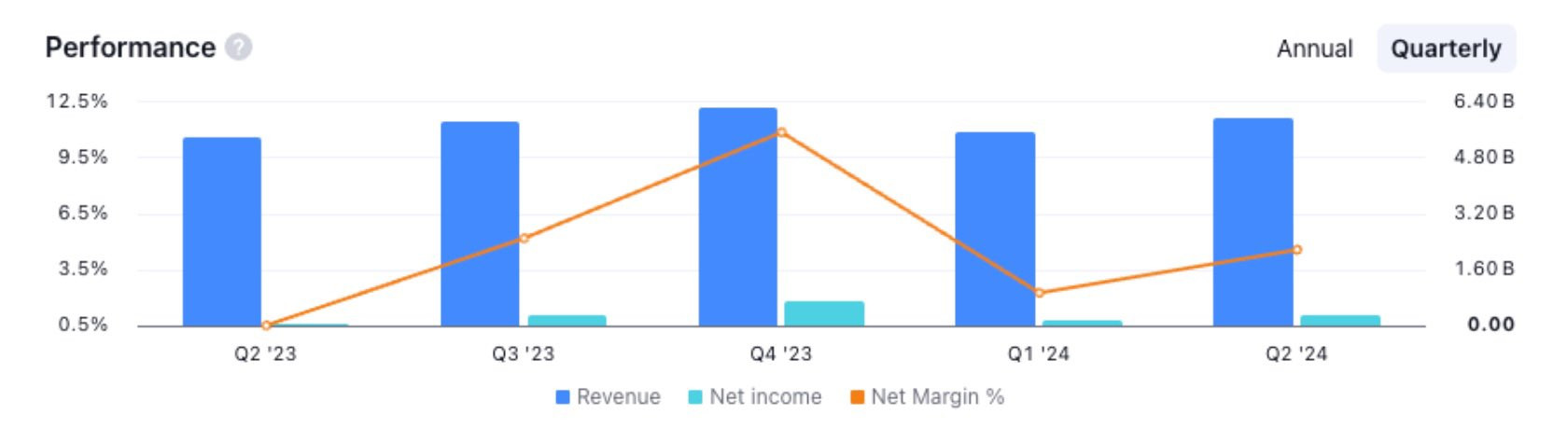
Reviewing Q2 results, AMD’s revenue and adjusted EPS surpassed Wall Street expectations, with Q2 revenue reaching $5.835 billion, up 9% year-over-year and 7% quarter-over-quarter. Net income stood at $265 million, up 881% year-over-year and 115% quarter-over-quarter, while EPS was $0.16, reflecting a 700% increase year-over-year and 129% growth quarter-over-quarter.
Looking ahead to Q3 results, Northland analyst Gus Richard expects AMD’s revenue to meet or exceed the higher end of its guidance, driven by market share gains in server CPUs, client PCs, and ongoing AI growth. He also believes that strong enterprise demand and continued momentum in AI could prompt AMD to raise its Q4 revenue guidance.
According to Oppenheimer’s model, AMD's Q3 data center revenue is projected to rise by 21% quarter-over-quarter and 114% year-over-year.
Bank of America Securities maintains a "Buy" rating and a $180 target price on AMD, emphasizing the company's upgraded end-to-end AI infrastructure platform.
Despite increased demand for AI chips, AMD faced supply constraints in the first half of 2024. However, the launch of the MI325 GPU accelerator and an optimized supply chain have helped the company regain growth momentum.
Wedbush analyst Matt Bryson stated, "We view AMD as the most competitive third-party alternative to Nvidia’s GPUs. We expect AMD’s accelerator revenue to surpass $10 billion, representing closer to a 5% market share rather than Nvidia’s 10%, making AMD's data center GPU targets realistic, if not beatable."
In early October, Intel and AMD formed an x86 ecosystem advisory group to help developers explore new ways to expand the x86 ecosystem and streamline software development.
Over the past two years, AMD has beaten EPS estimates 75% of the time and revenue estimates 88% of the time. In the last three months, there have been seven upward EPS revisions and 26 downward revisions, along with 27 upward revenue revisions and seven downward revisions.
Can Data Center Growth Set New Records?
Investors continue to focus on the performance of AMD’s data center and client business segments. In Q2, AMD's data center segment revenue surged 115% year-over-year to a record $2.8 billion, fueled by the rapid shipment of the Instinct MI300 GPUs and strong double-digit growth in EPYC CPU sales.
Some market analysts suggest that if AMD’s AI chip sales, particularly the MI300 series, exceed expectations in Q3 and make further progress against Nvidia, investor confidence in AMD's AI potential could rise, pushing the stock price higher. Conversely, if AI chip sales fall short, doubts about AMD's competitiveness and growth potential may lead to a decline in its share price.
Wedbush maintains an "Outperform" rating and a $200 price target on AMD, even without new AI sales guidance or major client announcements. Bank of America analysts also maintain a "Buy" rating with a $180 target price. Meanwhile, Piper Sandler has raised its target price from $175 to $200, reiterating an "Overweight" rating.
Year-to-date, AMD shares have gained about 6%, compared to a 22% rise in the S&P 500. Currently, AMD’s stock is priced at $159.92, facing resistance around $161. If it breaks above this level, further resistance is expected at $173 and $188, with support levels at $140, $131, and $121.
Meanwhile, Taiwan Semiconductor Manufacturing Company (TSMC) shares fell more than 4% yesterday. However, Citi analysts believe TSMC’s strong fundamentals can withstand political uncertainties. TSMC’s robust technological leadership and resilient business fundamentals should help it counter potential tariffs proposed by Trump. Analysts point out that over 60% of TSMC’s revenue comes from U.S. clients, but most products are assembled outside the U.S. "If tariffs are imposed based on semiconductor content in imported products, the cost of the entire tech supply chain would rise," they noted. Additionally, TSMC's U.S. wafer fab expansion is progressing well, with the first fab achieving yield rates comparable to those in Taiwan. Citi expects TSMC’s earnings growth to exceed 30% next year, driven by strong AI chip demand.
TSMC’s stock price currently stands at $194.68, a significant resistance level, with the potential for a rebound once negative factors subside.