
ADDX Go Market Morning Wrap - 4th Nov

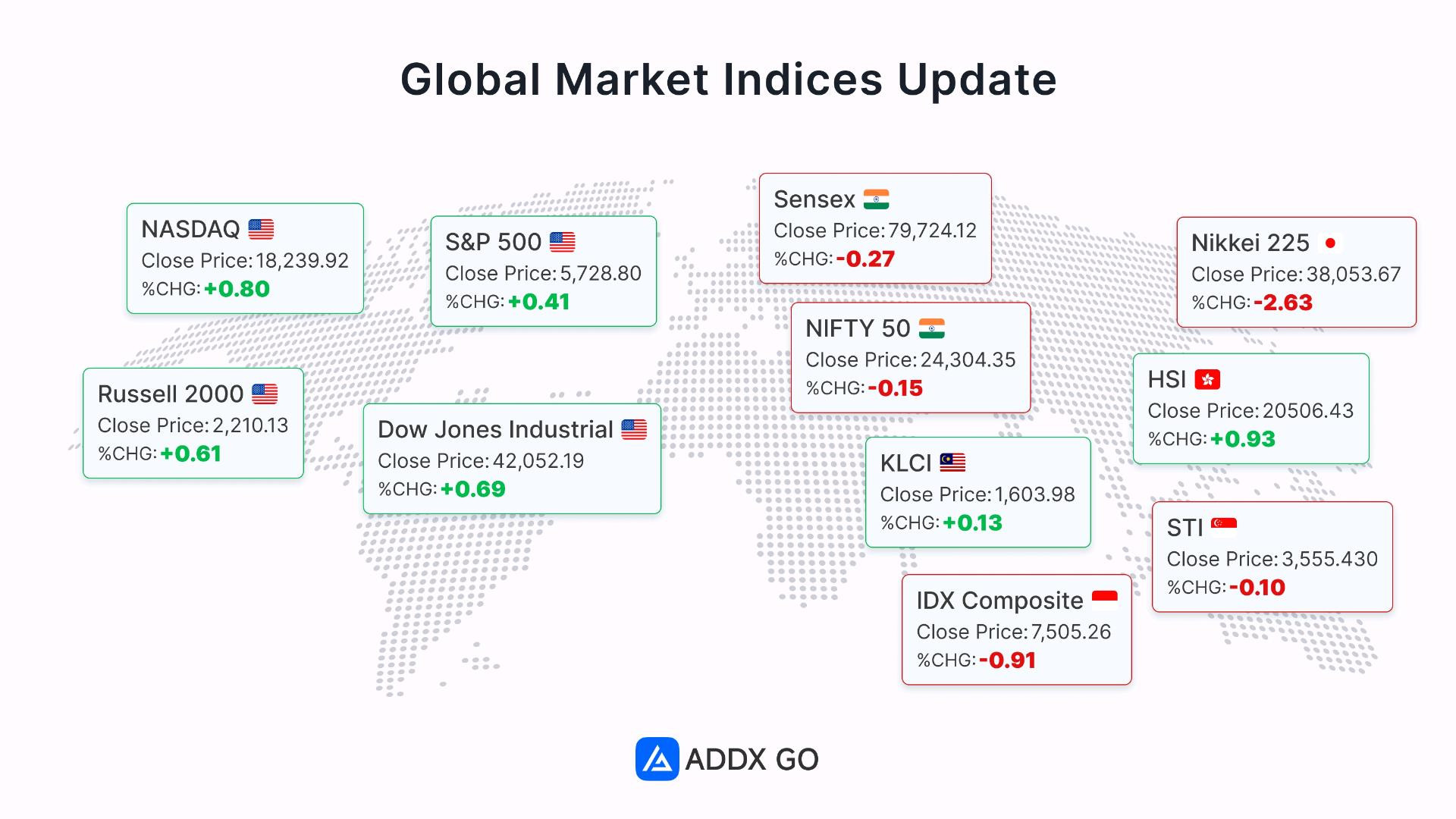
Market Key Focus
US Market
- Markets
Although Apple's financial report was disappointing, the weak U.S. non-farm data in October boosted expectations of interest rate cuts. In addition, the favorable financial reports of Amazon and Intel boosted optimism in technology stocks. The Nasdaq, which rose as much as 1.5%, and the chip stock index, which rose as much as 2.2%, both bid farewell to two consecutive days of decline. However, on a weekly basis, the Nasdaq and Nasdaq 100 bid farewell to the previous seven-week winning streak.
- Stocks
Apple closed down 1.33%, and fell 3.67% this week. The tens of billions of back taxes dragged down its profits, and its revenue may slow down this quarter.
Lululemon closed up 7.8%, and Amazon rose 6.2%, driving the optional consumption sector to close up 2.4% and lead the gains.
Nvidia will be included in the Dow Jones to replace Intel. After the US stock market closed, Nvidia's gains expanded to more than 2%, while Intel once fell more than 1.7%:
- Treasury
U.S. Treasury yields rebounded after hitting a daily low. The two-year Treasury yield plummeted 15 basis points due to the release of non-farm payrolls data, but rose nearly 4 basis points in late trading. The 10-year Treasury yield eventually rose by more than 9 basis points.
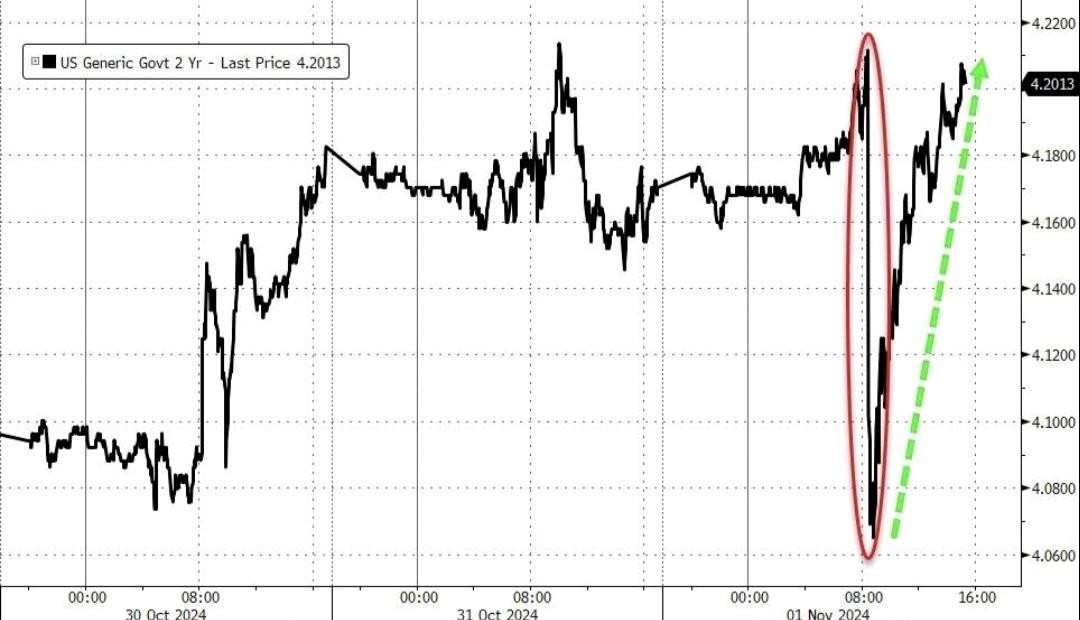
Poor non-farm payrolls data caused a sharp drop in short-term U.S. Treasury yields and subsequently, U.S. Treasury yields rebounded across the board
- FX
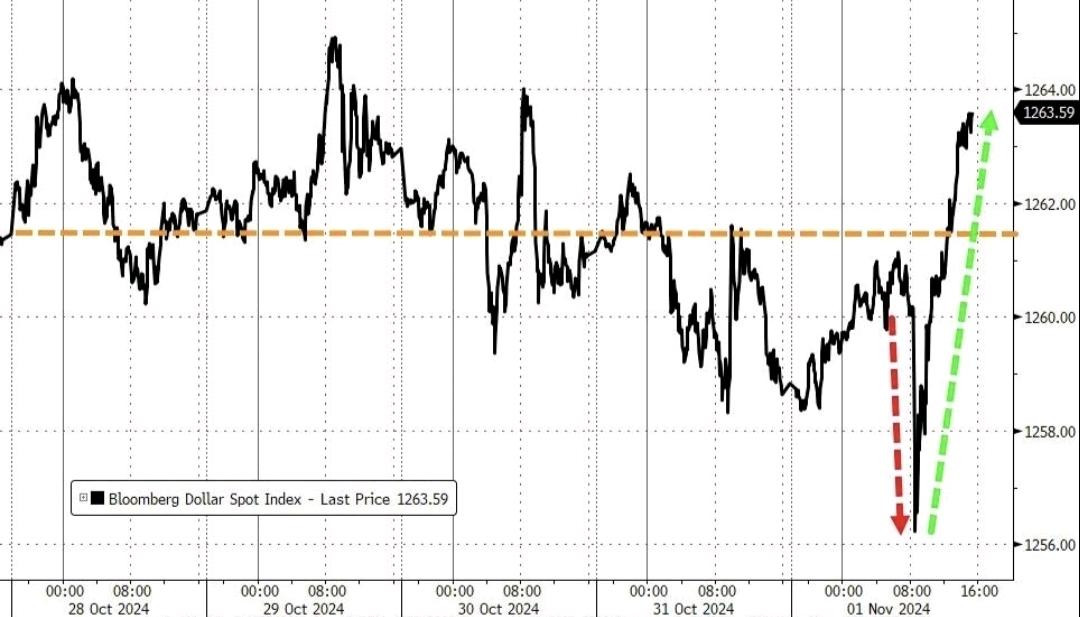
The U.S. dollar index reversed in a V-shape on the "non-farm day", rising above 104 again and erasing the weekly decline. The U.S. dollar index DXY rose 0.33% in late trading to 104.317 points
Asian Market
- Markets
Asian stock markets generally fell, with Japanese stocks leading the decline. The Nikkei 225 index closed down 2.63%, breaking below 38,000 points during the day.
The Nasdaq Golden Dragon China Index closed up about 0.1%, and rose 0.35% this week.
- Stocks
The decline in technology stocks dragged down the overall stock market performance, especially in the semiconductor industry. Tokyo Electron fell nearly 4%, SK Hynix fell more than 3%, and TSMC fell after the Taiwan stock market reopened.
- FX
After rising above 152, the Japanese yen turned down in the US stock market and barely held 153, falling more than 0.4% this week.
The offshore RMB fell 138 points in the last trading session and barely held 7.14, falling slightly for the whole week.
European Market
- Markets
European stocks closed higher on Friday, bidding farewell to three consecutive days of decline, generally rising by about 1%, but still fell for the second consecutive week and most of the weeks fell by more than 1%:
- Stocks
Danish shipping giant Maersk rose more than 5%, and Barclays and JPMorgan both raised their target prices for the stock.
- Treasury
The yield of two-year British bonds rose by more than 26 basis points due to the inflation risk brought by the UK's "Autumn Budget Report".
- FX
The Swiss National Bank's interest rate cuts have caused the Swiss franc to fall to an 11-week low. The pound was the only non-US currency to close higher, ending the decline after the budget sell-off in the previous two days, but its five-week losing streak was the longest in six years.
Cryptocurrency Market
- The leading Bitcoin futures with the largest market value fell 1.20% to $69,620.00 in late trading. It hit a new intraday high after the release of the U.S. non-farm payrolls report. It rose 1.36% this week and hit a new intraday high of $74,485.00 on October 29.
- The second largest Ethereum futures rose 0.46% to $2,538.00. It also hit a new intraday high after the release of the non-farm payrolls report. It rose 1.64% this week and hit a new intraday high of $2,752.00 on October 30.
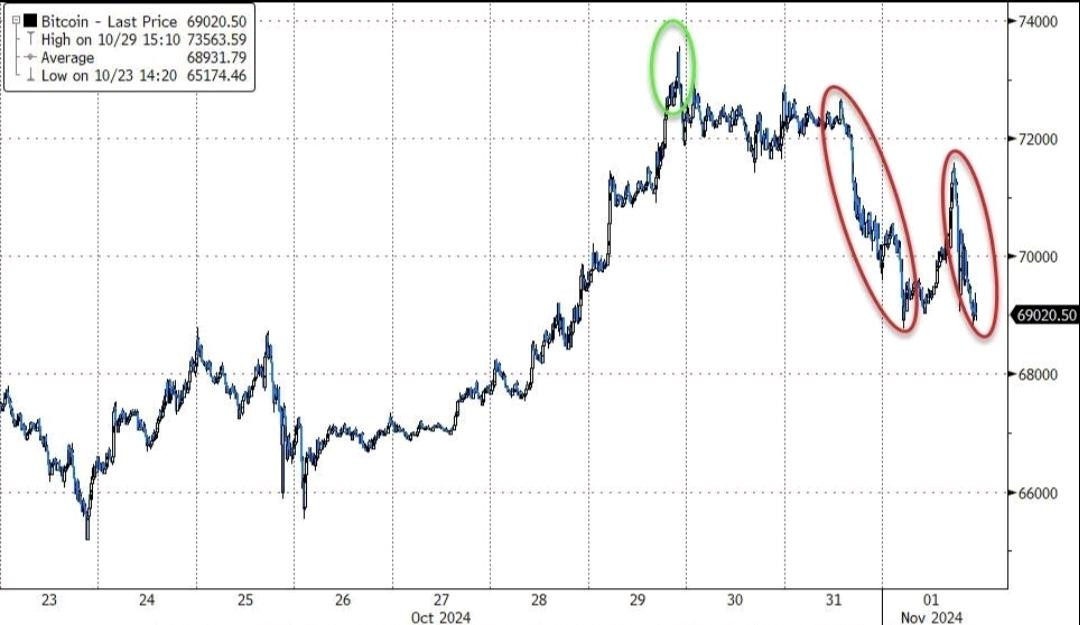
Bitcoin has followed a similar path to gold this week, rising to near new highs before profit-taking over the past two days.
Macro
- Due to two hurricanes and the Boeing strike, the number of new non-farm payrolls in the United States in October fell sharply to 12,000, far below expectations, and the unemployment rate was 4.1%, in line with expectations. At the same time, the U.S. ISM manufacturing contraction in October hit a 15-month high, but it is worth noting that the price paid unexpectedly soared back to the expansion zone. The "New Fed News Agency" said that the U.S. unemployment rate in October announced today rose from 4.05% to 4.14% on an unrounded basis, and traders increased their bets on a 25 basis point rate cut by the Federal Reserve in November.
- This week's focus includes the US election, the interest rate decisions of the Federal Reserve and the Bank of England, and the US ISM services PMI. The market expects that both the Federal Reserve and the Bank of England will cut interest rates by 25 basis points next week.
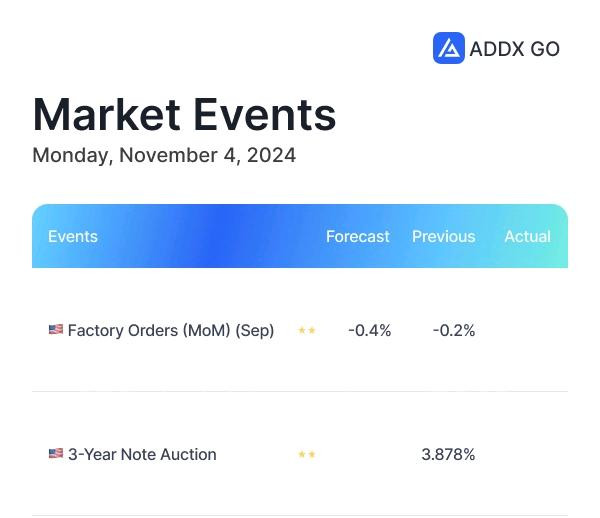
Market Events
Stocks to Focus
- Boeing once rose more than 3.4%. The company and the machinists union reached a consensus on the salary increase offer. The union plans to vote on the new offer next Monday. If passed, it is expected to end the seven-week strike.
- Energy company Dominion discussed the SMRs agreement in an analyst conference call. Nuclear power concept stocks rose and then fell. Nuclear power concept stock LEU rose more than 14% and closed up 5.51%. OKLO invested by Altman rose more than 10.1% and closed down 3.52%.
Tracking Gold
Spot gold fell for the second consecutive day and hit its biggest weekly drop since August. Reports of Iran's retaliation against Israel and weak non-farm payrolls added to expectations of rate cuts, causing spot gold to rise by nearly 0.7% at one point. Investors then took profits, and the dollar and U.S. bond yields both rebounded after hitting daily lows, putting pressure on precious metals. Gold prices rose sharply and then fell as low as 0.4%.