
Indian Stocks Continued to Slide on Foreign Disinvestment

Go Wire
November 5, 2024
GoGPT Summarizes Articles

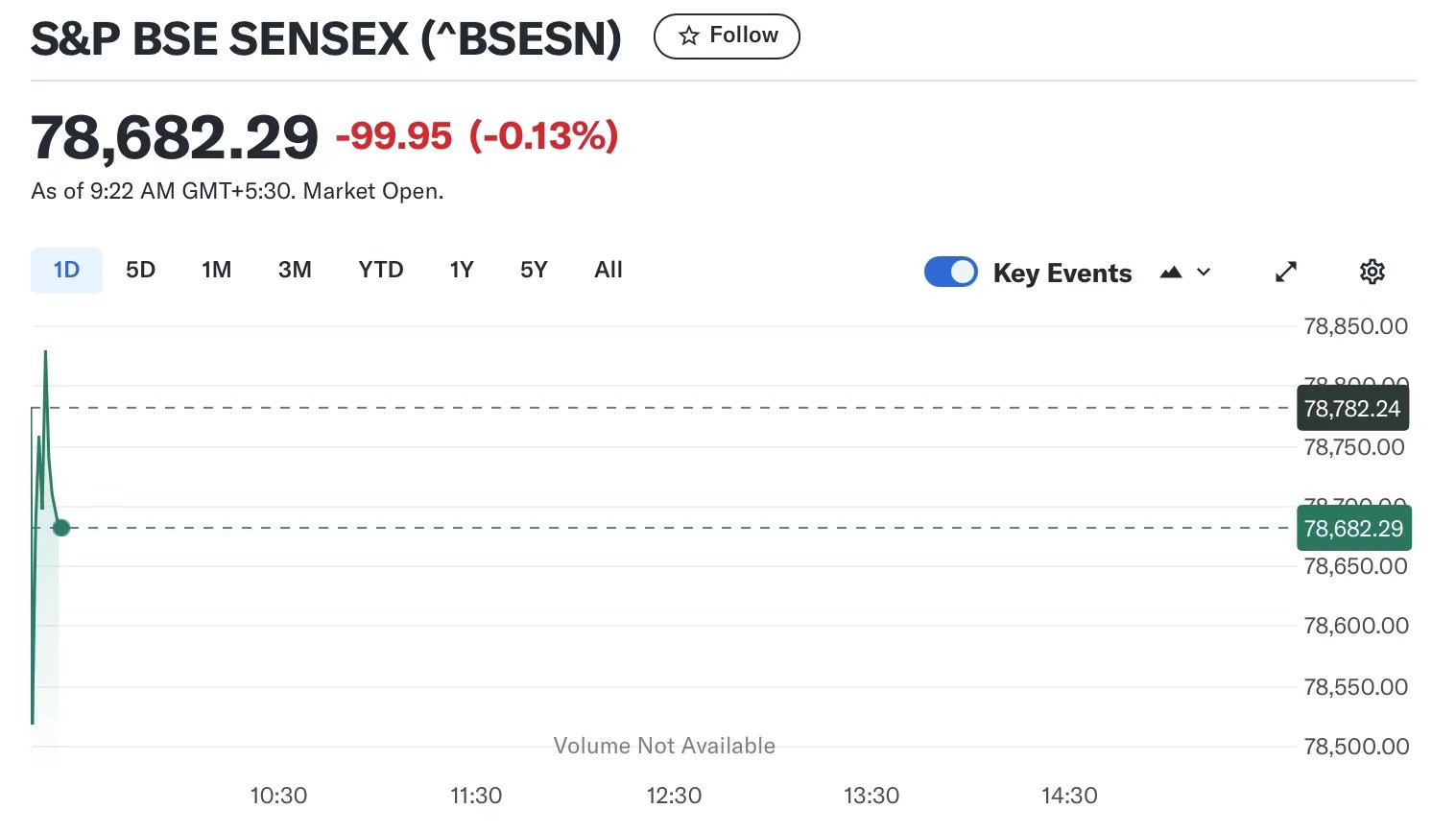
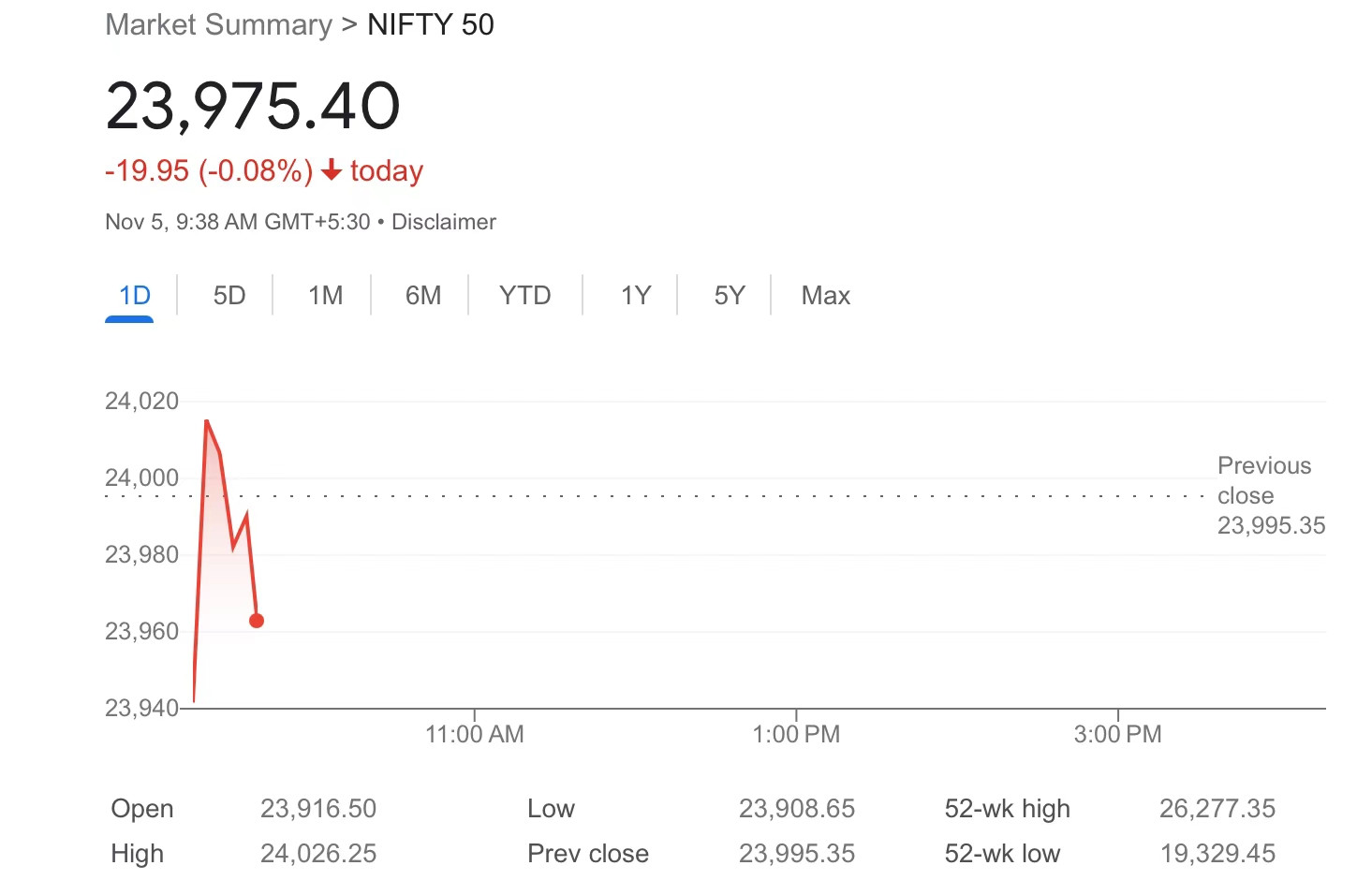
On November 4, India's market continued the slump. The S&P Bombay Stock Exchange Sensitive Index dipped 1.62%. The Nifty 50 index plunged 2% intraday, showing its biggest fall since October 3.
Since October, market enthusiasm for investing in India has dropped to a freezing point. The Nifty 50 once fell 6.2%, its biggest decline since March 2020. The MSCI India once slumped by 7.7%, lagging the MSCI AC Asia Pacific ex Japan Index and MSCI Emerging Markets Index by 2.8% and 3.3%.
This Indian market volatility stems from the "opposite direction” of domestic and foreign capital. JP Morgan pointed out in a research report on October 3rd, that foreign institutional investors (FIIs) hit an all-time high net outflow of $ 10.4 billion in a month, compared with $ 5.9 billion in net inflow in September. Meanwhile, India's domestic institutional investors (DII) increased positions against the trend, maintaining net buying for 14 consecutive months. So, October inflows hit a record of $ 12.8 billion. This contrast reflects that the domestic capital takes over but foreign capital flees.
This wave of disinvestment put pressure on the Indian stock market. Large-cap stocks and small and mid-cap stocks declined unevenly.
Analysis pointed out that the main reasons for FII disinvestment are India's weak corporate earnings and concerns about over-valuing India's stock market. Moreover, some international funds gradually shifted to other emerging market countries such as China, resulting in a significant outflow of funds from the Indian market.
Meanwhile, the Indian market has faced multiple internal and external economic challenges, including inflationary pressures, growth slowdown, etc., further weakening investor confidence and intensifying disinvestment.
Citi's report showed that the continued outflow of foreign capital might drag down the performance of the Indian stock market shortly. After the October correction, Indian stock market valuations have fallen from their peaks but the valuations are still nearly one standard deviation above the long-term average on most metrics.
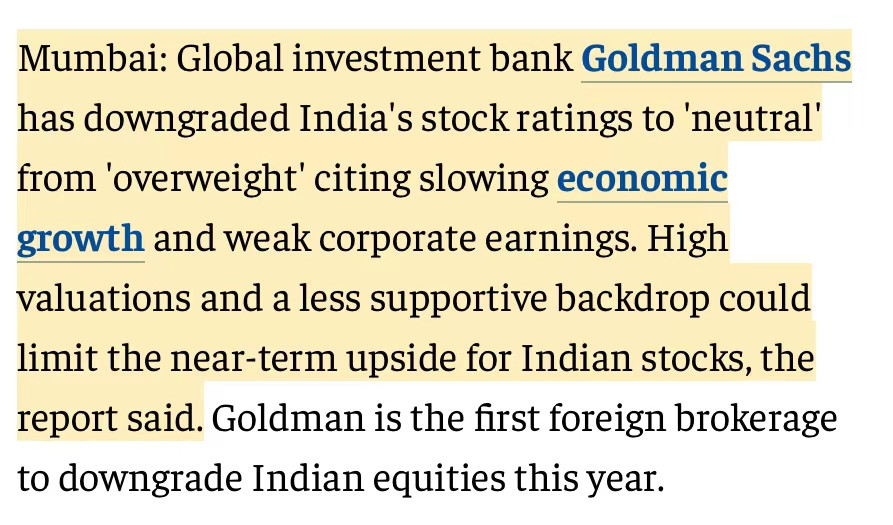
Goldman Sachs also recently downgraded its rating on the Indian stock market from Overweight to Neutral. And, it warned that overall valuations were already 24 times expected profits, reaching the highest point, which was the most common concern among investors. Goldman Sachs predicted that the Indian stock market was likely to experience volatility in the next three to six months as the cyclical slowdown in the economy weighed on corporate profitability.
#india