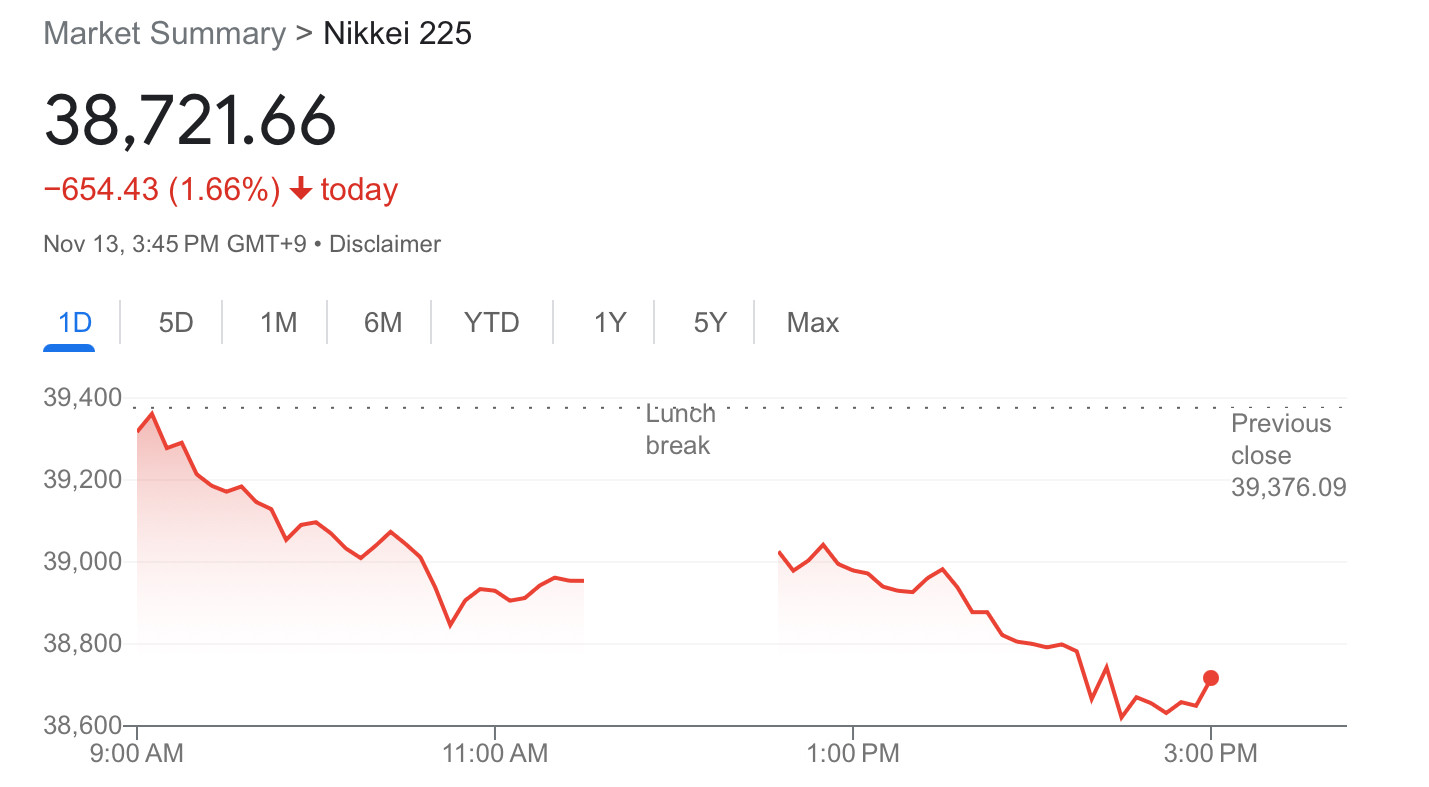
Asian Stock Markets Mostly Lowered on Investor Concerns

Most Asian markets slumped on Wednesday, Nov. 13, as a sharp rise in US bond yields made investors nervous about the possibility of losing another Fed rate cut and China’s growth in consumption.
Short-term Treasury yields jumped up from their highest point since late July on Tuesday, spurring the dollar to a more than three-month peak versus the yen. Soaring bond yields were attributed to the expectation that Donald Trump’s policies of lower taxes and higher tariffs would increase government debts, thus expanding the fiscal deficit. Analysts regarded Trump's proposed policies as a booster of inflation, potentially curbing the Fed’s desire to cut rates again. The potential loss of the easing Fed rate policy forced investors to trade investments in Asia cautiously.
The investment caution also arose from that China’s consuming market may be weakened by Trump's strict trade tariffs. Stimulus announcements from Beijing that failed to fit investors’ expectations reduced investors’ optimism over China’s economic rejuvenation and expanded their worrisome.
Asian traders assessed corporate goods data out of Japan, which showed year-on-year producer price growth, or wholesale inflation, in October reached its highest since July last year at 3.4%. That was higher than the 3% growth expected by economists polled by Reuters, and the 2.8% rise in September.
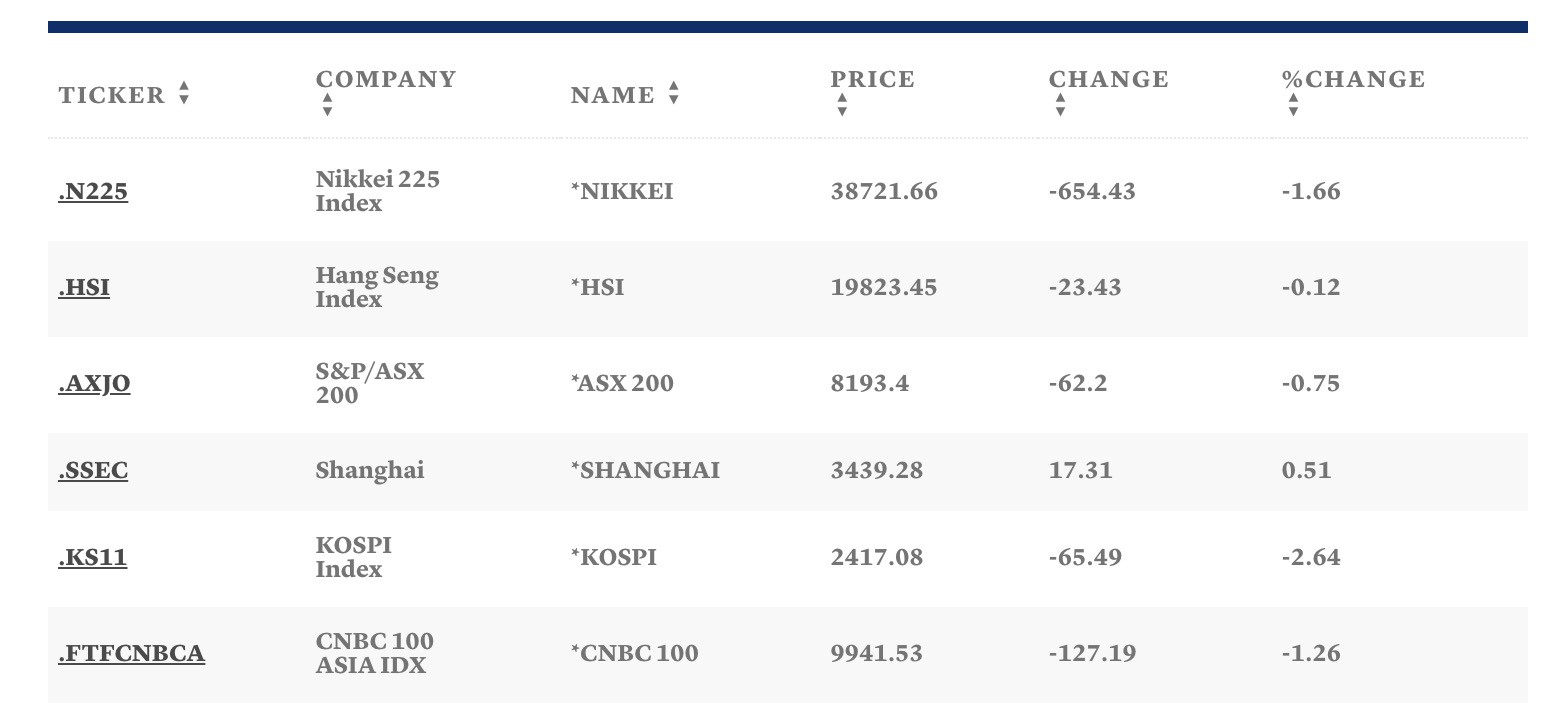
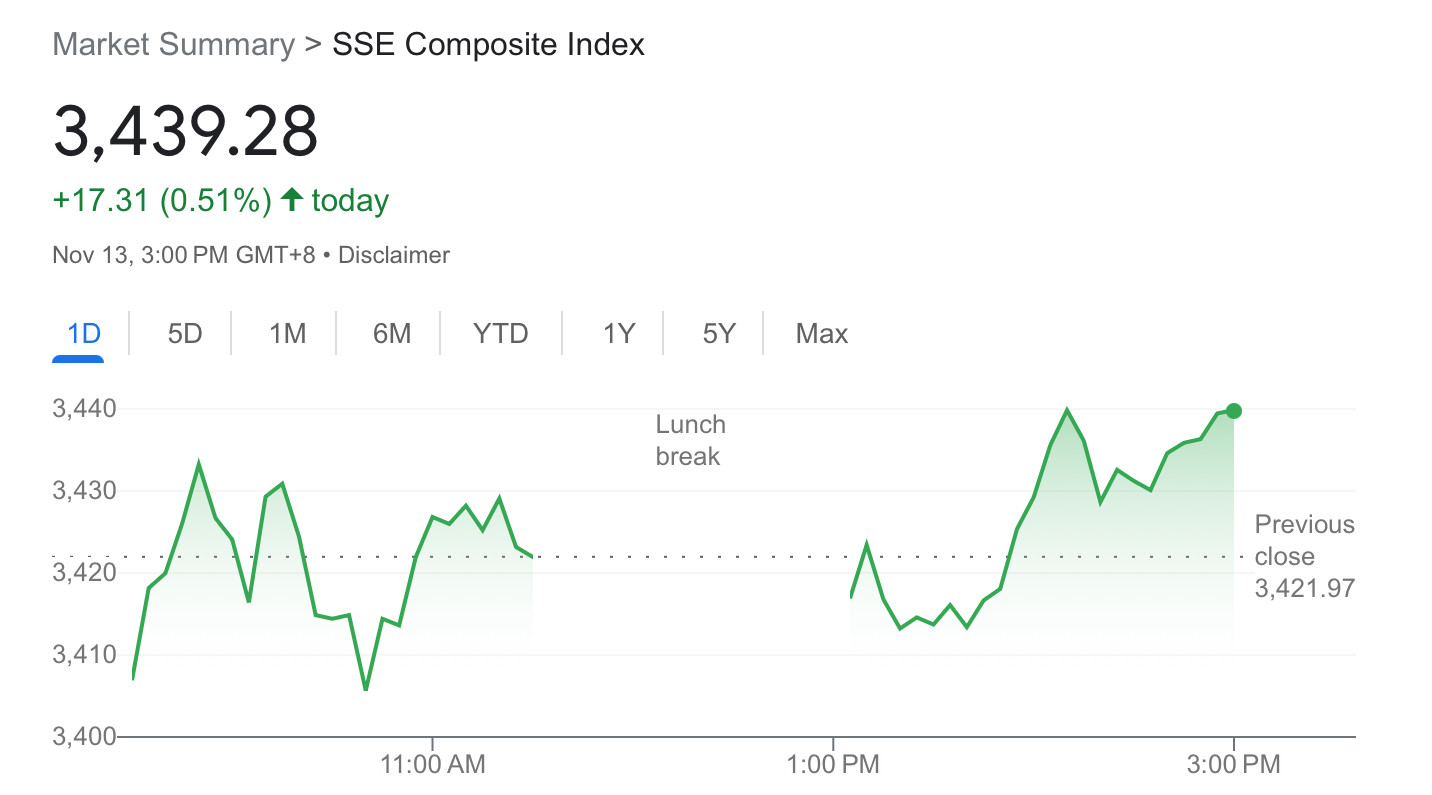
As the markets closed today, in China, Hong Kong’s Hang Seng Index slid 0.12%, while the mainland’s Shanghai Composite Index rose 0.51%.
Japan's Nikkei and South Korea's Kospi sagged 1.66% and 2.64%, respectively. Nifty 50 in India fell 1.43%.