
US CPI Data: Will Inflation's Stubbornness Derail December Rate Cuts?

The upcoming release of the US CPI data tonight may once again highlight persistent inflation, casting a shadow over the prospects of a rate cut in December. Wall Street is widely expecting a 2.6% year-on-year increase in October's CPI, up from 2.4% the previous month, and a core CPI increase of 3.3%, with the monthly change holding steady at 0.3% for the third consecutive month. While inflation has eased to some extent, its stubbornness could undermine market confidence in the possibility of further rate cuts from the Federal Reserve in December.
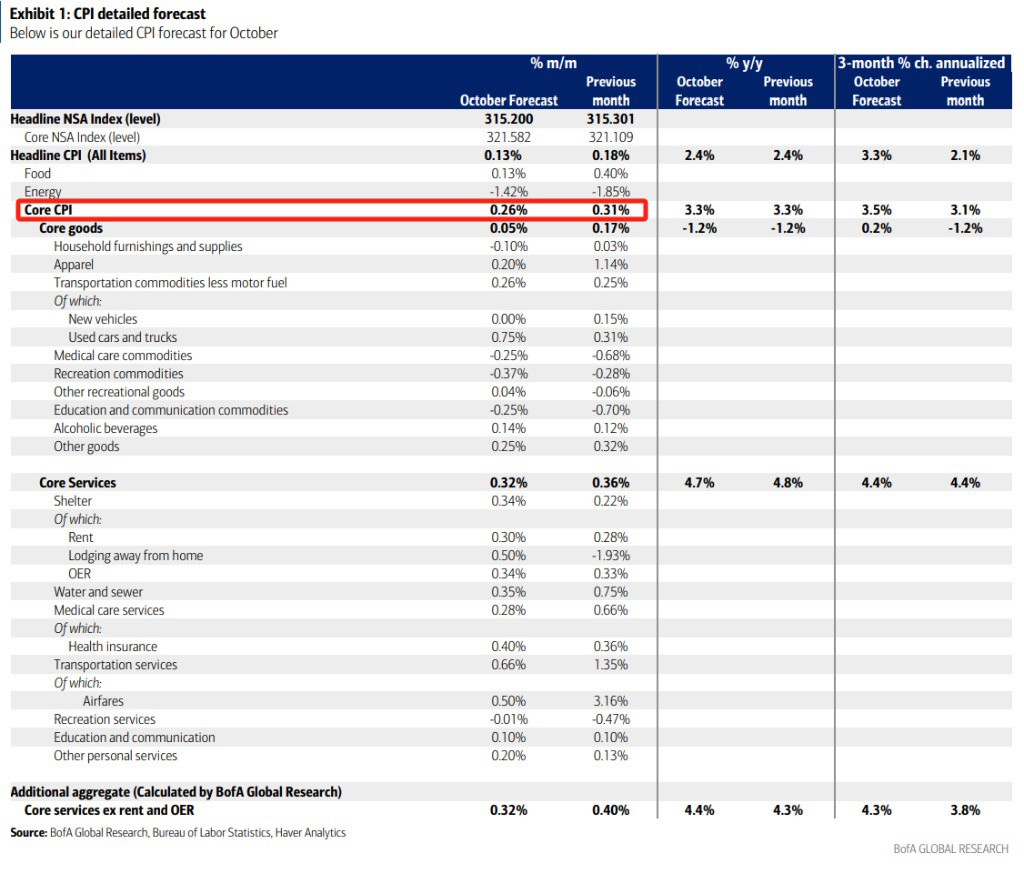
The stickiness of inflation, particularly in housing and used car prices, may influence the Fed's decisions on rate cuts in the coming months. The Fed has already cut rates by 75 basis points, with a 45 basis point cut in September and a 25 basis point cut in November. However, the probability of a 25 basis point rate cut in December has dropped from 80% before the election to around 60%. Investors are concerned that Trump’s policies could drive inflation higher, potentially slowing the Fed's efforts to reduce rates.
Housing inflation, particularly in Owners' Equivalent Rent (OER), is critical for determining the CPI's broader trend. Morgan Stanley expects OER to rise slightly in October but believes that the overall trend will still be downward. Other factors, such as supply chain disruptions caused by hurricanes, could push housing and used car prices higher, further influencing CPI and potentially exacerbating inflationary pressures.
Despite the CPI data indicating persistent inflation, the Fed may still opt for further rate cuts in the coming months. Bank of America believes this data won't change the Fed's expectation of a 25 basis point rate cut in December. While expectations for rate cuts have slowed, the Fed is still likely to cut rates in December and early next year. Goldman Sachs and JPMorgan have also adjusted their rate cut forecasts, anticipating a slower pace of cuts, particularly given concerns that Trump’s policies could hinder inflation from returning to the Fed's target.
I believe that despite the continued stickiness of inflation, particularly in housing and used car prices, inflation will gradually ease to more manageable levels as supply chains recover and energy prices continue to drop. While the likelihood of a rate cut in December isn't as high as it once was, if the CPI data consistently shows inflation cooling, I expect the Fed will still proceed with rate cuts, particularly as global economic growth slows.
From my perspective, CPI data in the coming months may still be impacted by external factors like weather and geopolitical tensions. However, I believe the Fed will adjust its policy based on core CPI trends, and if inflation continues to show signs of easing, a December rate cut remains possible and could even accelerate if conditions improve further.