
Mixed Feedback on ESMA's Proposal to Shorten the Settlement Cycle from Two to One Day

Go Wire
November 19, 2024
GoGPT Summarizes Articles
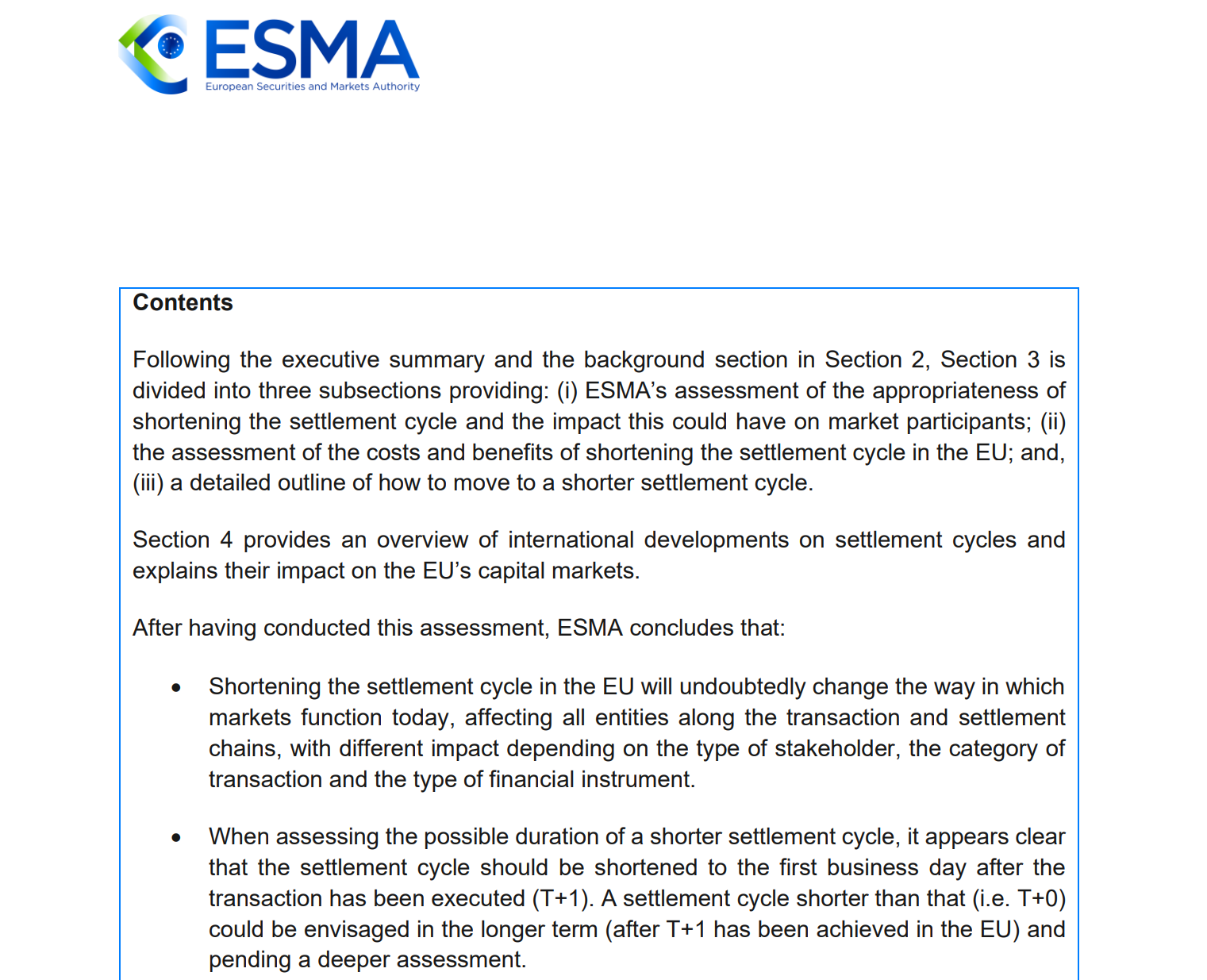
The European Securities and Markets Authority (ESMA), the EU’s financial markets regulator, has published its assessment on transitioning the settlement cycle for securities transactions to T+1 (one business day after the trade date). ESMA intended to use this shift to enhance settlement efficiency, foster market integration, and advance the EU’s Savings and Investment Union objectives.
In detail, ESMA proposed a unified transition to T+1 across all relevant instruments, with October 11, 2027, as the recommended go-live date. This timeline avoids the challenges of implementing such a significant change at the end of the last quarter or during the busy November-December period. Additionally, ESMA emphasized the importance of aligning this move with other European jurisdictions to ensure cohesion.
To make it more convincing, ESMA outlined the strengths of the T+1 cycle, including risk reduction, savings on margin costs, and mitigating inefficiencies caused by misalignment with major global markets. These changes are expected to boost the benefits of EU capital markets.
However, ESMA specified its challenges. Primarily, it needs to amend the Central Securities Depositories Regulation (CSDR) and adjust the settlement discipline framework to ensure legal clarity and support post-T+1 process improvements. Plus, the efficiency of T+1 demands more capital investments given the diversity of EU capital markets. Lastly, the diverse EU capital markets mean the need for more concrete governance to oversee this project.
To overcome those challenges, ESMA expected to collaborate with the European Commission and the European Central Bank to refine settlement efficiency rules and co-solve governance issues for the T+1 transition.
In response to this proposal, investors show signs of increasingly recognizing the need to shorten the settlement cycle, because the settlement of stocks and bonds in Europe lags behind ones in the US which has implemented T+1. However, some market participants are concerned that completing the transition in 2027 is “too ambitious”.
#EuropeanMarket