
Nvidia's Continued AI Chip Demand Boom Raises Concerns Amid Slowing Sales Growth for Investors

Go Wire
November 21, 2024
GoGPT Summarizes Articles

After the US market closed on November 20, Nvidia (NASDAQ: NVDA) released an earnings report that might affect the trend of US stocks.
In the third quarter of fiscal year 2025, Nvidia's revenue reached $35.1 billion, up 94% year-on-year (YoY) and 17% sequentially, far exceeding market expectations of $32.5 billion. Revenue from the data center business which is directly related to AI chips reached $30.8 billion, up 112% year-over-year and 17% sequentially.
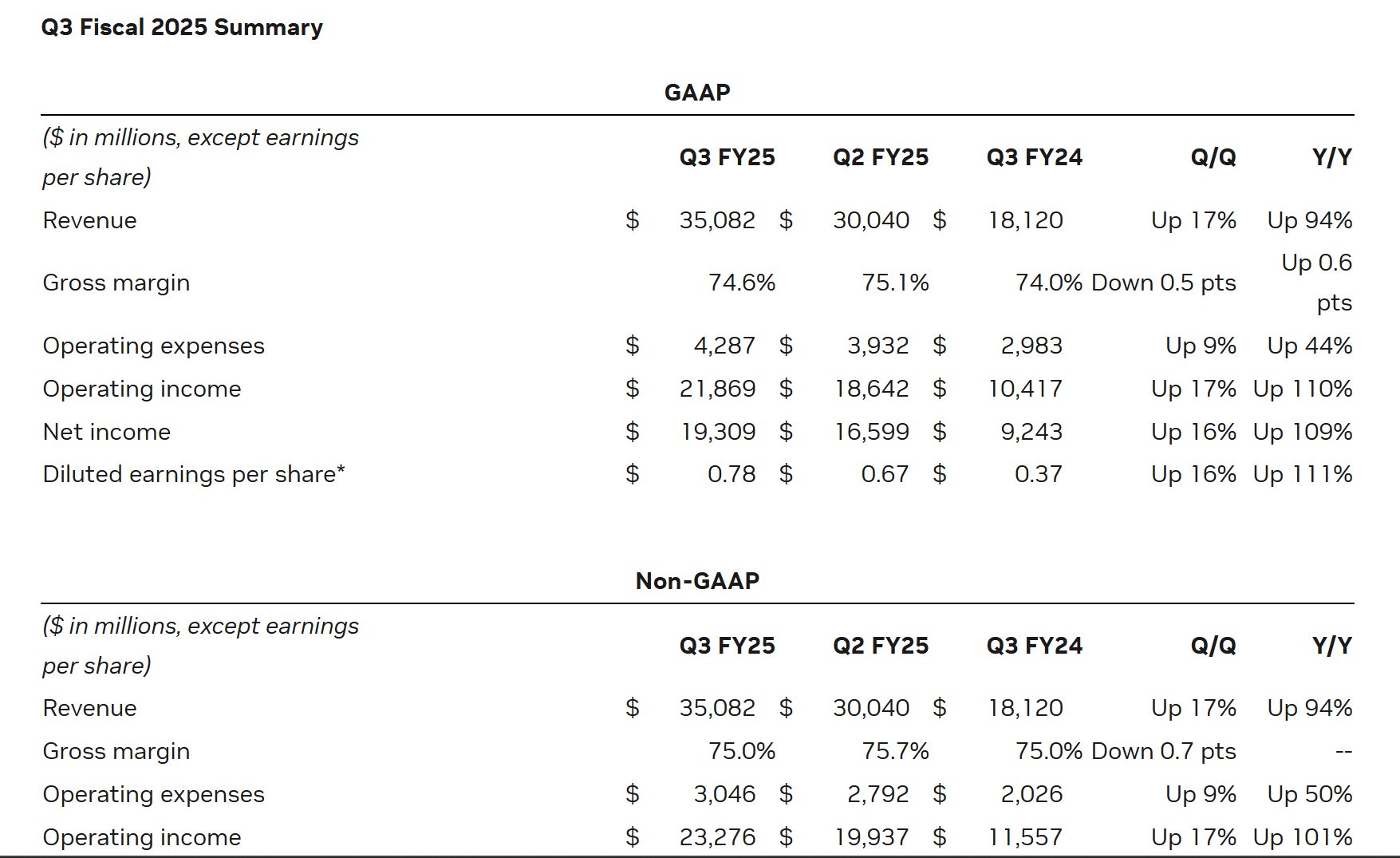
In terms of profitability, its net income reached $19.3 billion, up 108% year-over-year. Gross margin was 74.6%, up 0.6% from last year's same quarter. Nvidia CFO Colette Kress said the rise in gross margin was mainly due to an increase in chip sales of the data center.
Specifically, its gaming and AI PC area had revenue of $3.3 billion for the quarter, up 15% YoY. The Professional Visualization area had revenue of $486 million, up 17% YoY. The automotive and robotics products business accounted for a modest $448 million in revenue, with a 72% growth quarter-over-quarter. Nvidia said its tremendous growth was mainly due to increased sales of chips and ancillary products for its automobiles and robots.
Despite its sectoral tremendous growth, Nvidia's 90% revenue growth rate in the third quarter decreased compared with the first two-quarters growth rate of over 200% and 100%. Additionally, it forecast its fourth-quarter revenue of $37.5 billion (up or down 2%). Based on this data, its fourth-quarter growth rate is expected to further go down to 69.7%.
Before the earnings report, Nvidia's stock surged to a record high on Nov. 20, surpassing its previous market capitalization peak. However, its growth slowdown disappointed high market hopes, leading to a post-market drop of over 5% on Nov. 20. As of Nov. 21, after hours, the stock had slipped by 2.53%, with Nvidia maintaining its top position with a market capitalization of $3.58 trillion.
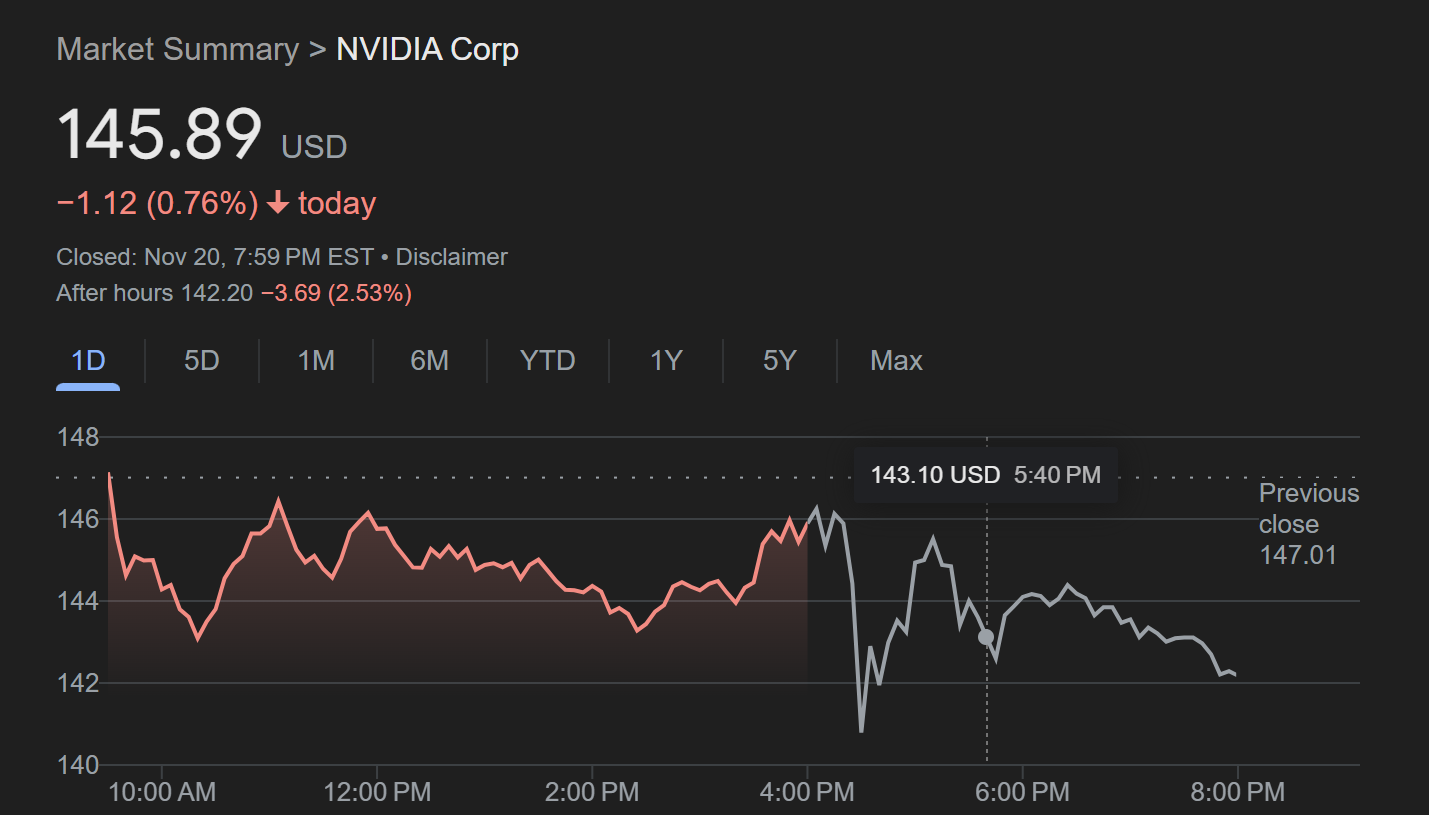
The market has seemingly linked the growth of Nvidia to the boom in the global AI industry. Nvidia's influence on the overall U.S. market has expanded. On Nov. 8th, it officially replaced Intel as a constituent of the Dow Jones Industrial Average. It is also the highest-weighted component of the S&P 500. Its falling stock prices driven by the earnings results led to a collective decline in technology stocks in the US market on Nov. 20.
The market is also keeping a close eye on Nvidia's shipments of Blackwell chips. Because of reports of its Blackwell chips having an overheating problem and design flaws, the market has worried about whether Blackwell chips would be shipped normally. Regarding this concern, Nvidia's CEO Jensen Huang in the earnings call responded that the Blackwell chips have been in full production. Microsoft, Oracle, OpenAI, and other NVIDIA customers have begun to receive goods. Nvidia has had many chip orders. Colette Kress also added that shipments of Blackwell chips would begin this quarter and accelerate its shipping speed in 2025.
The company's previous-generation Hopper AI chip, the H200, also saw “significant growth” in the third quarter. Colette Kress noted that the company would continue to sell both Hopper and Blackwell chips and expected demand for Blackwell to exceed supply in fiscal year 2026 due to certain supply constraints on its products.
In the end, Jensen Huang reassured that Nvidia is on the right track at the moment, meaning the company would continue lowering the cost of AI while helping maximize value for its customers.
#nvidia hitting 4 trillion