
What History Tells Us About Trump's Rising Tariffs and Market Impact

Shearing sheep
November 29, 2024
GoGPT Summarizes Articles
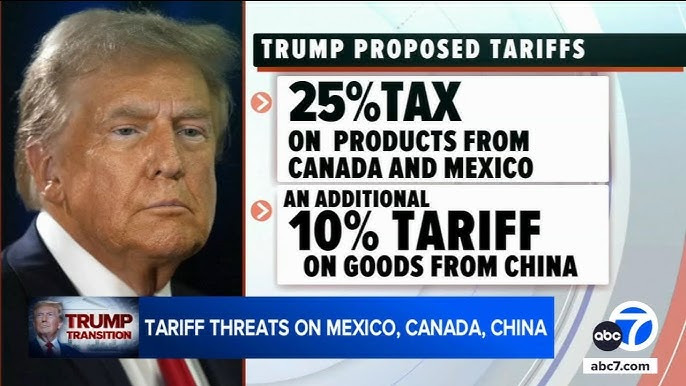
Here we go again—Trump considering higher tariffs on imports from China, Mexico, Canada, and beyond. And while this might sound like the same old tune, it's worth taking a step back and asking: what does this really mean for the economy? Let’s take a look at what history has to say.
Let’s start with the Fordney-McCumber Act of 1922. This was one of the major protectionist moves in U.S. history. The law raised tariffs on foreign imports to protect American agriculture and manufacturing. But the outcome wasn’t exactly what lawmakers hoped for. The following year, the Dow dropped 10%.
Then, in the 1930s, came the Smoot-Hawley Tariff Act—one of the most aggressive protectionist measures in U.S. history. The government imposed tariffs on thousands of goods, some as high as 60%, with the goal of protecting American jobs and industries. But what happened instead? Other countries retaliated with their own tariffs, global trade collapsed, and the Great Depression worsened. The Dow Jones plummeted by 40% in the year following Smoot-Hawley’s enactment. Not exactly a success story.
Fast forward to Trump’s first term. We saw him impose tariffs on specific goods like solar panels and steel, primarily targeting China. While it didn’t tank the economy, those tariffs were more limited in scope. In 2018, despite trade tensions, the S&P 500 finished up nearly 5%, and the Dow remained relatively flat. But Trump’s latest tariff talk is much broader, targeting key industries and a wider range of countries, which has some investors concerned about the long-term impact.
Of course, free trade has its drawbacks too. While it’s fueled massive economic growth, it has also led to job outsourcing, particularly in industries like textiles, steel, and electronics. According to the Bureau of Labor Statistics, the U.S. lost nearly 5 million manufacturing jobs between 2000 and 2019, much of it due to overseas competition. But here's the flip side: free trade also drives efficiency, lowers prices, and fosters innovation. It forces companies to focus on what they do best, and consumers benefit from cheaper goods. That’s been the trend for decades.
Where protectionism gets tricky is with industries vital to national security or long-term economic stability, like semiconductors, pharmaceuticals, and cars. Over-relying on foreign suppliers for critical goods can leave a country vulnerable in times of global unrest. The semiconductor shortage of 2020 exposed just how fragile global supply chains can be. In response, the U.S. government has pushed to incentivize domestic chip production—a trend we might see intensify if tariffs on tech-related goods rise.
So, what’s the takeaway? History suggests that while tariffs may seem like a quick fix to protect certain industries, they often backfire. After Smoot-Hawley, it took years for global trade to recover, and many economists argue that protectionism worsened the Great Depression. As for Trump’s tariffs in his first term, while they didn’t crash the economy, their long-term impact on growth is still uncertain.
Right now, the market doesn’t seem too concerned. The S&P 500 is up about 6% over the past month, and investors are focusing on potential tax cuts and deregulation. But as we know, markets don’t always reflect long-term realities. Could Trump’s tariffs end up being a short-term boost but a long-term drag on economic growth? Or will history repeat itself, and protectionism fail to deliver on its promises?
What do you think? Will Trump’s new tariffs hurt or help markets in the long run? #trump
#trump