
Non-Farm Payrolls Are Coming! Interest Rate Decision? The Christmas Rally! What Are the Investment Opportunities in December?

Magical Investor
December 3, 2024
GoGPT Summarizes Articles
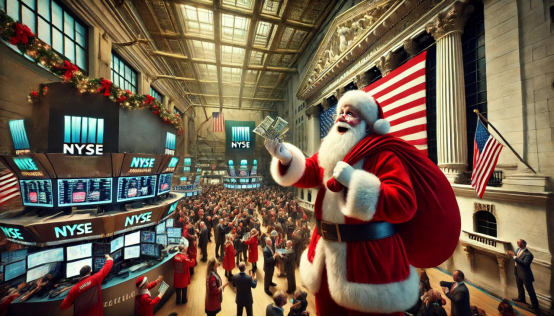
As December arrives, the U.S. stock market stands on the cusp of the year-end, with bullish sentiment surging. The much-anticipated "Christmas rally" is poised to propel U.S. stocks to new heights potentially.
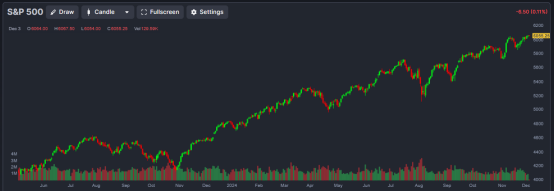
As of December 2nd, the S&P 500 Index has already registered an impressive gain of over 26.78% this year, reaching 6,047 points.
As of December 2nd, the S&P 500 Index has risen by more than 26.78% this year to 6,047 points. There is a possibility that the S&P 500 Index will hit the biggest annual gain of about 29.60% (in 2013) in the final month of this year, it only needs to rise above 6,182 points by the end of the year.
This target is already quite close. This month, the S&P 500 Index only needs to rise by more than 3%.
This month, the Federal Reserve is set to disclose its interest rate decision, the Christmas rally is imminent, and the crucial non-farm payrolls data will be unveiled this week.
What many events! What changes will our precipitate, and what investment opportunities might we have?
Will the Fed opt to cut rates in December?
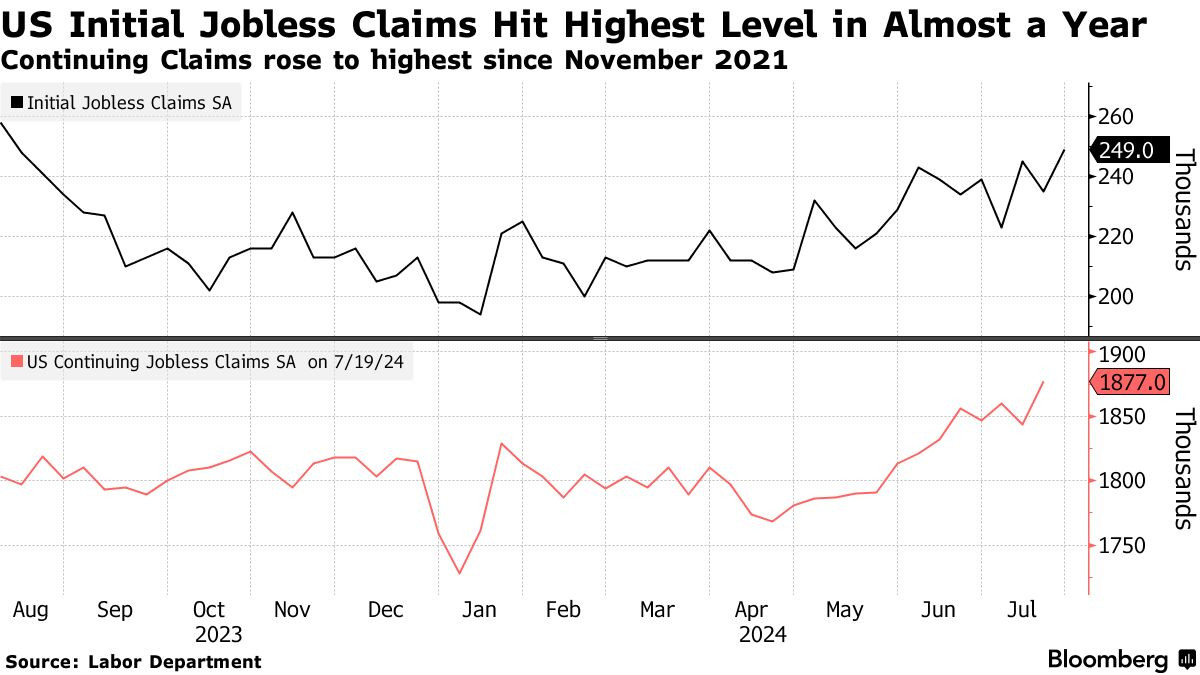
The answer may well hinge on this week's non-farm payrolls data. This Friday's non-farm payrolls report holds the key to the Federal Reserve's immediate policy stance and its future trajectory.
If the employment figures prove robust and inflation gains momentum in November, the Federal Reserve might consider pausing its rate hikes at the December FOMC meeting. Conversely, a scenario of weaker data could potentially trigger a 50-basis-point rate cut.
Citigroup presently anticipates a relatively lackluster November non-farm payrolls report, forecasting a meager addition of only 155,000 new jobs, notwithstanding a post-hurricane and strike rebound.
This translates to a potential underlying job growth of a mere 84,000, falling short of any estimated growth rate necessary to stave off an increase in the unemployment rate. The unemployment rate is projected to climb to 4.3%, underscoring a trend of a loosening labor market.
Currently, the market's mainstream perspectives regarding the December FOMC meeting are bifurcated into two camps: a 25-basis-point rate cut and a "pause" in rate adjustments. However, the bar for a rate cut pause is set rather high, mandating over 300,000 new jobs added in November and a significant overshoot in the core inflation expectation for the same month.
And if the non-farm payrolls data can stabilize or even exceed expectations, then the Federal Reserve will most likely choose to continue with a 25-basis-point rate cut or a 50-basis-point rate cut, which will have a favorable policy impact on the U.S. stock market.
The Santa Claus Rally Coinciding with the Presidential Election Year
The "Santa Claus rally" refers to the last five trading days of each year (usually starting after Christmas) and the first two trading days of the next year.
And U.S. stocks usually perform strongly during this period. Over the past 70 years, the S&P 500 Index has averaged a gain of more than 1.3% during these seven trading days.
It's easy to imagine that in the coming weeks, the approaching "Santa Claus rally" may boost market optimism.
However, the scope of the "Santa Claus rally" mainly refers to the year-end and early-year rebound seen in most years and does not cover the entire month of December, and this distinction should be noted.
So, if we turn our attention to a single month, how has the U.S. stock market performed historically in December? Coupled with the fact that this year is a U.S. presidential election year.
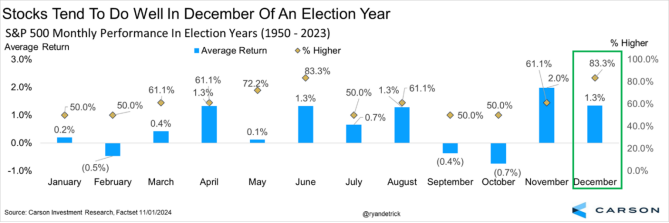
According to statistics, December is the second-best-performing month for the S&P 500 Index in a presidential election year - only November (the month of the election itself) is better. And considering that U.S. stocks soared further in the election month this year, so far, this situation seems to be repeating itself.
It's also worth noting that in December of a presidential election year, the S&P 500 Index has an 83.3% probability of rising, making it the month when the market is most likely to move higher during an election year.
What Are the Investment Opportunities? Or What Should We Buy?
In this complex and dynamic backdrop, what might be the prudent investment choices for December?
The "Magnificent Seven" of U.S. Tech Stocks
The upward momentum of the U.S. stock indices often heralds a concurrent rise in the technology stocks spearheaded by the "Tech Magnificent Seven." The rationale is straightforward: a significant portion of ETFs, funds, and even pension funds in the U.S. stock market have these large-cap tech stocks as their core investment targets.
Consequently, with the release of the non-farm payrolls report and the anticipated influx of U.S. dollar repatriation, these behemoth tech stocks could potentially become the cynosure of market speculation. Notable examples include industry giants such as Nvidia, Apple, and Microsoft.
The Consumer Sector
In the wake of last week's Black Friday, the year-end consumption spree in the United States has been set in motion. The consumer sector stands to benefit substantially during this period, and these positive effects are likely to be mirrored in the upcoming quarterly financial reports.
Recommended picks within this sector include stalwarts like Coca-Cola, McDonald's, and Macy's.
Analysts' Optimism Towards Small-Cap Stocks
Since November, the Russell 2000 Index, a barometer of small-cap stocks, has registered a nearly 11% gain.
Analysts posit that small-cap stocks are edging closer to their historical peaks once again, buoyed by investors' sanguine expectations regarding Trump's policies, particularly the tax cut measures, which are anticipated to invigorate the U.S. economic growth.
Morningstar's index strategist had earlier opined that small-cap stocks are predominantly clustered in "U.S.-centric and economically sensitive" market segments, such as financial services, basic materials, consumer discretionary, real estate, and other sectors, all of which are poised to perform favorably under Trump's policy regime.
Jefferies analysts, in a recent report, have also pointed out that the trajectory of interest rates will play a decisive role in determining the sustainability of the small-cap stock rebound.
Investors, what are your plans and strategies for December? Feel free to share your insights and perspectives in the comments section below. Your input is valuable!
#Fed Rate Outlook