
Nvidia's Expansion in Southeast Asia: Why Southeast Asia Again?

Magical Investor
December 6, 2024
GoGPT Summarizes Articles
On the eventful evening of December 5th, the Vietnamese government and Nvidia formalized an agreement to establish a research and development center and an artificial intelligence data center.

This significant move aims to enhance the application of artificial intelligence and create a plethora of job opportunities within Vietnam's workforce.
According to the meticulous plan, Nvidia will build an artificial intelligence research and development center, named the Vietnam Research and Development Center (VRDC), along with an artificial intelligence data center in Vietnam. These technological hubs are expected to support Nvidia and its Vietnamese partners in implementing cutting-edge artificial intelligence seamlessly.
The Vietnamese Prime Minister expressed that this renewed collaboration, after a year-long hiatus, marks a significant milestone. It highlights Mr. Huang's commitment to transforming Vietnam into a key hub for Nvidia.
Jensen Huang, Nvidia's visionary CEO, believes this moment is ideal for Vietnam to shape its AI-driven future. He emphasized that the heart of artificial intelligence lies in data-driven training, and Vietnam's data resources are a national asset.
Nvidia has pledged to support AI advancement, nurture talent, and boost local startup initiatives.
This development has sparked lively discussions in the investment community. Observers recognize Nvidia's persistent focus on expanding in Southeast Asia.
Rumors had circulated in corporate circles two months prior, hinting at Jensen Huang's visit to Bangkok in December to unveil Nvidia's investment plans for Thailand. This revelation had stirred global interest in the growing AI prospects in Southeast Asia.
The question remains: Why Southeast Asia? What unique opportunities does this region offer?
The Potent Potential of the Southeast Asia AI Market
Southeast Asia is now rapidly becoming a hot spot for global AI and data center investments.
Besides Nvidia, tech giants such as Google (Alphabet) and Microsoft are also increasing their investment efforts in this region. Ultimately, the reason lies in the demographic advantage of Southeast Asia.
Southeast Asia has a population of over 680 million, with a young and growing population structure, and the demand for advanced technologies such as artificial intelligence, cloud computing, and gaming is continuously increasing.
Thanks to artificial intelligence, the digital economy in Southeast Asia has developed rapidly, reaching a value of $100 billion and is expected to increase to $835 billion by 2030. According to forecasts, the artificial intelligence expenditure in Southeast Asia will increase significantly from $174 million in 2022 to $646 million in 2026, with a compound annual growth rate of 40.8%.
Through the development of digital infrastructure and support for advanced technology investments, countries such as Singapore, Malaysia, and Vietnam are emerging as global technology hubs, which also provides opportunities for Nvidia to expand its manufacturing and innovation base.
Southeast Asia Actively Embraces AI
In fact, AI is not really an emerging industry in Southeast Asia. Before the wave of large models, due to its abundant and low-cost labor force, Southeast Asia was engaged in the simplest artificial intelligence work - data annotation.
Data show that data annotation belongs to the upstream data production link and provides "raw materials" for downstream AI algorithm enterprises.
Supervised learning and semi-supervised learning in machine learning all require manually annotated data for learning, and their training sets, validation sets, and test sets are all annotated data.
It has been reported by the media that data annotation is regarded as an assembly line factory in the AI field and is usually concentrated in Southeast Asia, Africa, or regions with abundant human resources.
In recent years, with the continuous improvement of network infrastructure in Southeast Asian countries and the continuous development of technology enterprises, countries have also been vigorously developing the field of artificial intelligence.
Various countries have issued a series of favorable policies. I won't list them one by one here. Interested friends can search for them by themselves.
Nvidia's Southeast Asia Blueprint: Mapping the Technological Terrain
Finally, let us cast a cursory glance at the Southeast Asia AI blueprint that Nvidia has been painstakingly etching. Here, we spotlight a select few of its initiatives.
Singapore:
In the balmy month of February this year, Singtel, Singapore's telecommunications titan, announced a strategic alliance with Nvidia.
The objective? To methodically deploy artificial intelligence in phases across its data centers strewn across Southeast Asia, thereby enabling customers to harness the power of Nvidia AI GPU - enabled online servers.
Singapore has, in the process, ascended to become Nvidia's third - largest market. As of July 2024, Nvidia's quarterly revenue soared to a staggering $300.4 billion, with Singapore contributing a hefty $56.2 billion, accounting for a significant 18.7%.
This places it in the august company of the United States ($130.2 billion, a commanding 43.3%) and Taiwan, China ($57.4 billion, a notable 19.1%).
Indonesia:
In April this year, Nvidia cooperated with Indosat Ooredoo Hutchison, Indonesia's telecommunications giant, to establish an artificial intelligence center.
This plan will help strengthen the local telecommunications infrastructure, human resources, and digital talents. Indosat Ooredoo Hutchison is Indonesia's second-largest mobile telecommunications company.
The company has stated that it is ready to integrate Nvidia's next-generation chip architecture, Blackwell, into its infrastructure, aiming to drive Indonesia into a new era of artificial intelligence and technological progress.
Malaysia:
In a similar vein, Nvidia has set its sights on Malaysia's electronic components and semiconductor sectors. Blessed with relatively low production costs and a reservoir of qualified, skilled labor, Malaysia harbors the latent potential to metamorphose into a regional manufacturing juggernaut.
Seizing this opportune moment, Nvidia is also poised to amplify the scale of its research and development initiatives in artificial intelligence and data processing.
In December 2023, YTL Power, Malaysia's energy utility stalwart, made waves by announcing a collaboration with Nvidia to erect an artificial intelligence data center with a staggering price tag of $43 billion.
Vietnam:
The situation in Vietnam has taken an interesting turn. Following yesterday's signing ceremony, Jensen Huang announced that Nvidia has acquired VinBrain, an AI startup under Vingroup, with plans to establish a significant design center in Vietnam's future.
VinBrain is recognized for its pioneering work in developing AI applications for the medical field. Their solutions have been deployed in over 182 hospitals across Vietnam, the United States, India, and Australia, enhancing the efficiency of medical professionals.
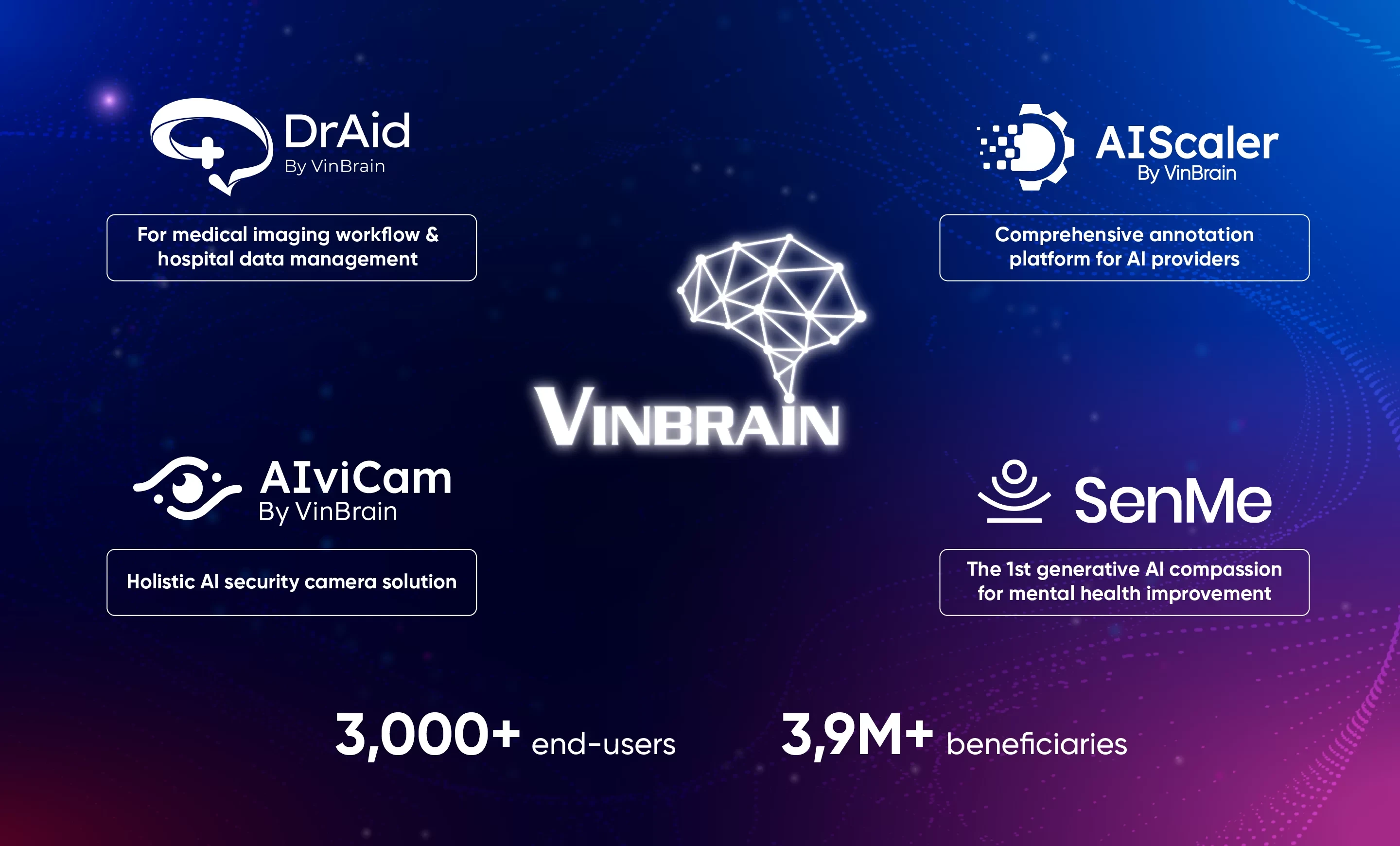
The growing interest of major AI companies in Southeast Asia signals the region's increasing integration into the global AI landscape. Southeast Asia's pivotal role is gaining prominence, potentially expediting the entry of these tech giants.
However, viewed pragmatically, as an emerging market, Southeast Asia still faces a challenging path ahead.
From my perspective, Southeast Asia currently shines as a promising frontier for AI development. It's no surprise that Nvidia is fervently pursuing its expansion goals in this region. With this overarching trend, investors are left to ponder: Can they skillfully navigate this wave and establish a foothold in AI-driven Southeast Asia?
As for more insights, let's save that for next time.
#nvidia hitting 4 trillion