
Asian Markets were Mixed Amid Geopolitical Crises and Global Economic Data

Go Wire
December 9, 2024
GoGPT Summarizes Articles

Asian stock markets had a divergent trend on Monday (December 9). Media reported that Syrian President Assad went to Russia after rebels controlled the Syrian capital Damascus, while Israeli forces entered Syria. Investors feared the geopolitical conflict in the Middle East, thus reducing their risk appetite. They also evaluated South Korea's political turmoil and China's and Japan's core economic indicators.
South Korea’s KOSPI index plunged 2.78% to its low since November 2023. Political turmoil in South Korea has deteriorated since prosecutors launched a criminal investigation against President Yoon Suk Yeol on Sunday for his martial law imposition. The heightened political turmoil sustained investor nervousness, triggering a chain reaction across Asian markets.
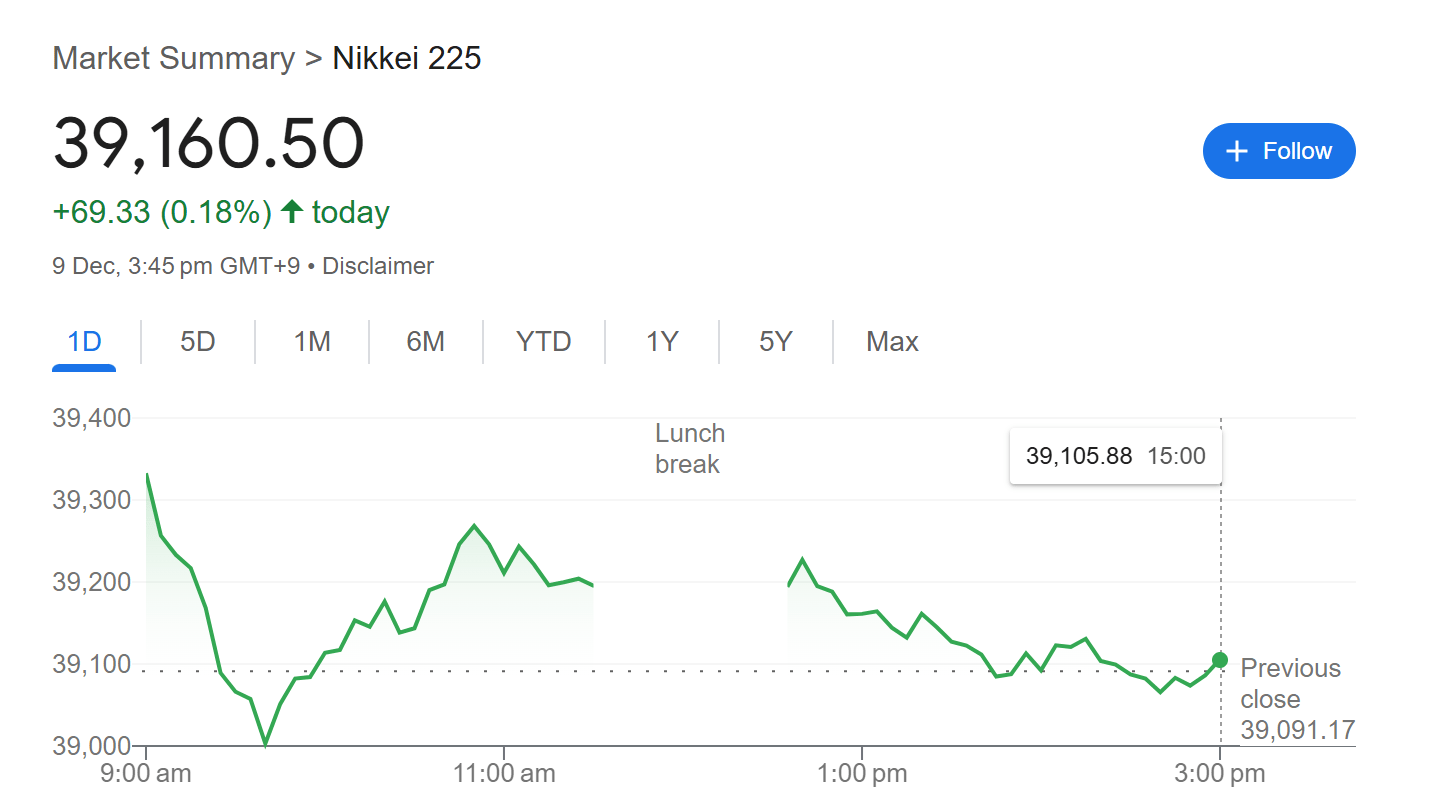
Japan's Nikkei 225 rose 0.18%, supported by better-than-expected third-quarter gross domestic product growth despite a quarter-on-quarter growth decline. The weak growth rate increases the likelihood of a rate hike. Markets are divided over whether the Bank of Japan will raise interest rates.
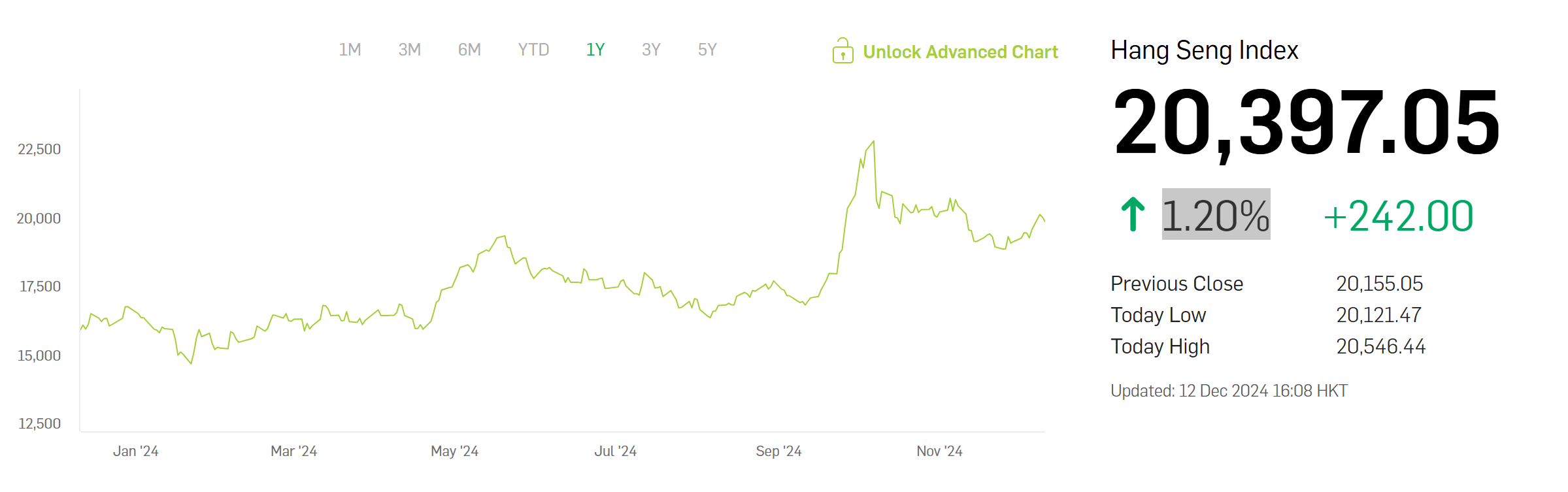
China's stock markets saw a varied trend, with the Shanghai Composite Index closing down 0.045% and Hong Kong's Hang Seng Index jumping up 2.76%. Inflation data released today indicated that China's consumer inflation in November shrank more than expected, reflecting the inability of previous stimulus measures to offset deflationary pressures. Attention now shifts to China’s Central Economic Work Conference for potential more stimulus measures.
Elsewhere, as of the press time, Malaysia's FTSE Bursa Malaysia KLCI falls 0.16%. Singapore's STI Index rises 0.01%. Otherwise, investors await the US consumer price index inflation data, due on Wednesday (Dec. 11), for clues about the Federal Reserve’s interest rate adjustment.
#AsianMarket