
U.S. CPI Data Out! Nasdaq Hits 20,000! Worthwhile U.S. Stocks Amid Rate Cut Speculation?

Magical Investor
December 12, 2024
GoGPT Summarizes Articles
On Wednesday, December 11th, prior to the U.S. stock market opening, the inflation data for November, released by the U.S. Department of Labor, closely matched market expectations. This led traders to increase their expectations of a Federal Reserve interest rate cut in December.
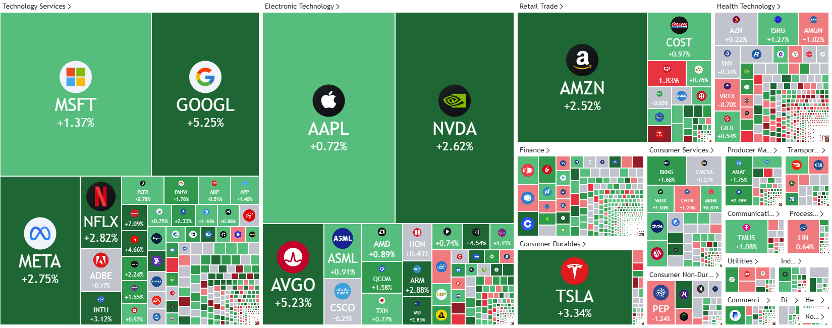
By the end of trading on December 11th, the Nasdaq Composite Index in the U.S. stock market surged by 1.77%, surpassing the 20,000-point milestone for the first time and achieving a new all-time high. Leading tech stocks like Tesla, Google, Amazon, Meta, and Netflix reached unprecedented levels.
Given these developments, which U.S. stocks remain promising for investment?
The "Smooth Landing" of CPI
On December 11th, data released by the U.S. Bureau of Labor Statistics revealed that November's CPI rose by 2.7% year-on-year, aligning with market predictions and slightly exceeding October's 2.6%.
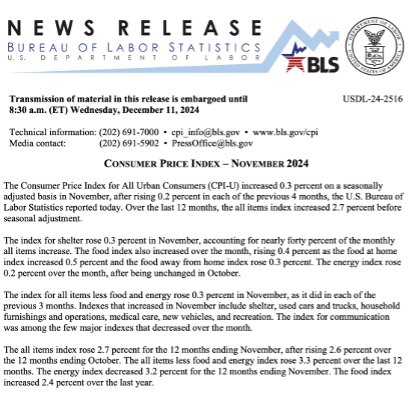
In month-on-month changes, November's CPI increased by 0.3%, meeting market forecasts. The core CPI, excluding volatile food and energy prices, remained at a 3.3% year-on-year and 0.3% month-on-month increase, consistent with October.
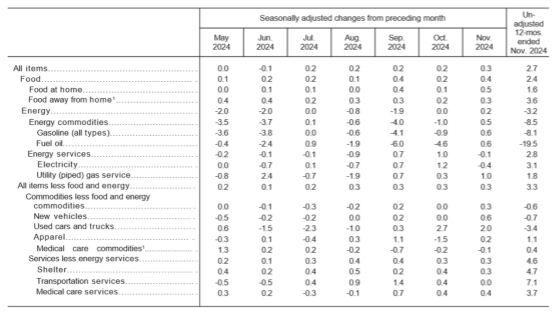
Housing prices primarily drove the November CPI's month-on-month surge, contributing nearly 40% to the rise. Additionally, food prices increased by 0.4% month-on-month, with household and non-restaurant food prices climbing by 0.5% and 0.3%, respectively.
Analysts suggest that while U.S. inflation growth is moderating, pressures from fixed expenses like housing and healthcare persist, potentially limiting consumers' purchasing power. This data will significantly influence the Federal Reserve's monetary policy as they convene for an interest rate meeting this month.
Following the November inflation data release, traders heightened bets on a December interest rate cut by the Federal Reserve. The FedWatch tool from the Chicago Mercantile Exchange indicates a sharp increase in the probability of a December rate cut to 97.9%, up from 88.9% the previous day.
Nasdaq Surpasses 20,000 Points, Tech Giants Hit New Highs
Post-data release, the Nasdaq Composite Index opened steadily and continued to rise.
Within the Nasdaq's component stocks, the ratio of rising to falling stocks was about 1,700:1,600, indicating that heavyweight stocks predominantly fueled the index's upward trend.
The collective ascent of the "Big Seven" confirmed this trend, with Apple, Amazon, Google, Meta, and Tesla all reaching new intraday highs.
Notably, Google saw the largest gain at 5.52%, poised for a fourth consecutive day of growth after unveiling a chip tailored for quantum computers two days prior.
Tom Hainlin, senior investment strategist at U.S. Bank Asset Management, anticipates no surprises in the December Fed meeting's interest rate cut, citing the market's robust upward trajectory.
The National Federation of Independent Business (NFIB) reported that the Small Business Confidence Index for November surged by 8 points to 101.7, its highest since June 2021, potentially reflecting strong support for former President Trump among U.S. small businesses.
Rumors indicate Trump's planned arrival in New York, which is scheduled to ring the New York Stock Exchange opening bell on Thursday morning.
Amidst the U.S. stocks' prolonged bull market, investors may question the opportune moment for investment. With expectations of an interest rate cut intensifying, those interested can refer to the previously published article titled "The Christmas Rally."
Historically, growth stocks in IT, healthcare, and cyclical sectors like finance have excelled pre- and post-interest rate cuts, benefiting from liquidity easing. Financial stocks such as Upst, AFRM, and SOFI could be attractive options.
Biotech stocks provide certainty post-rate cuts and capitalize on global investment trends driven by AI advancement. Public utility stocks benefit from increased power investments due to rate reductions, serving as a hedge against economic downturns.
#Fed Rate Outlook