
The Fed Cuts Rates Again as Expected, But Why Did the Market React So Strongly?

Shearing sheep
December 19, 2024
GoGPT Summarizes Articles
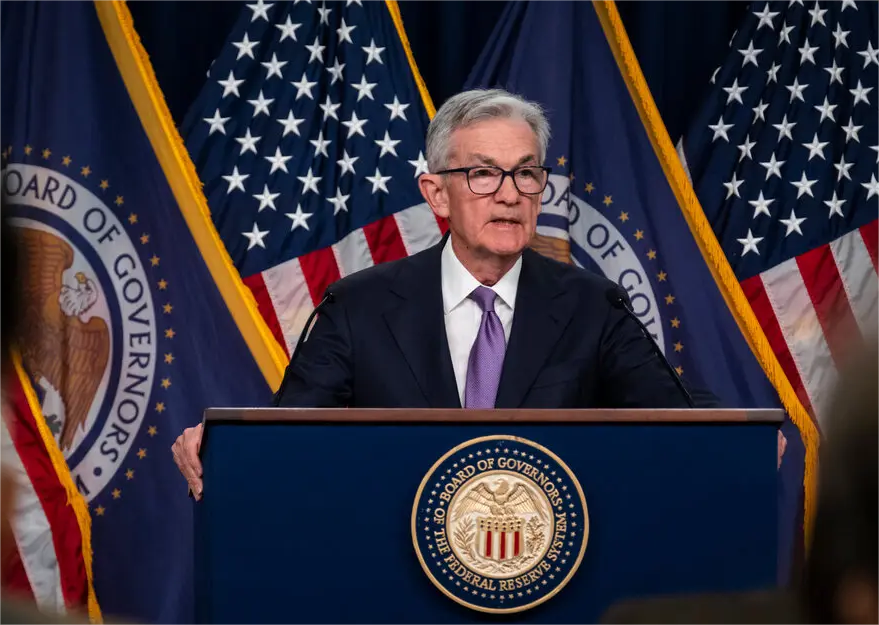
On December 18th, the Federal Reserve dropped interest rates by 25 basis points, bringing the Federal Funds Rate to a range of 4.25%-4.5%. This marks the third rate cut of 2024, and while the move wasn’t exactly a surprise, it’s what happened afterward that really shook the markets.
In their official statement, the Fed acknowledged that the U.S. economy is still growing at a solid pace. Unemployment has ticked up slightly, and while inflation is down from its peak, it still remains above the Fed’s 2% target. The latest CPI shows a 2.7% year-over-year increase for November, and core CPI is sitting at 3.3%.
Despite some progress on inflation, the Fed is not ready to declare victory yet. They noted that both inflation and the job market pose risks that are roughly balanced, so they’re continuing to monitor the situation closely. There's still a lot of uncertainty ahead.
When we look ahead to 2025, Fed Chair Jerome Powell took a more cautious stance. Rather than signaling more aggressive rate cuts, Powell made it clear that future cuts will likely be slower and fewer in number. In other words, don’t expect the easy-money era to last much longer.
This shift in tone from Powell caught markets off guard. After the Fed's rate cut announcement, stocks took a dive—S&P 500 dropped over 3%, and the NASDAQ lost nearly 4%. Gold prices also took a hit, and bond yields surged. The 10-year Treasury yield reached a seven-month high, showing just how strongly markets reacted to Powell’s remarks.
Up until now, markets had priced in continued rate cuts into 2025. Powell’s comments dashed those hopes, suggesting that the Fed's easing cycle might be nearing its end.
The Fed seems ready to slow the pace of rate cuts, with predictions now pointing to only two more 25-basis point reductions in 2025. Analysts like Goldman Sachs' Jan Hatzius have even removed the expectation for any aggressive policy shift.
Some Fed officials, including Cleveland Fed President Beth Hammack, have hinted that they are nearing the point where they would slow the pace of rate cuts, waiting for more definitive signs that inflation is improving before making further moves.
And with Trump re-entering the White House, his policies—such as tax cuts and tariffs—could further complicate the Fed’s job by affecting inflation and employment, adding another layer of uncertainty.
So, what does all this mean for us? It looks like the easy-money days are over for now. Markets, especially growth stocks, may need to adjust to this new reality. Fewer rate cuts could lead to more volatility in tech stocks in the short term. For investors, it might be time to start looking at more stable sectors like healthcare or consumer staples for safer bets. Fixed-income assets could become more attractive too if rates remain steady or even rise.
But here's the real question: Will Powell stick to this cautious approach, or will the Fed change course if inflation doesn’t improve as expected?
#ratecut#fedrate