
Can AMD Catch Up in 2025 After Falling Behind AI Peers?

Shearing sheep
December 25, 2024
GoGPT Summarizes Articles
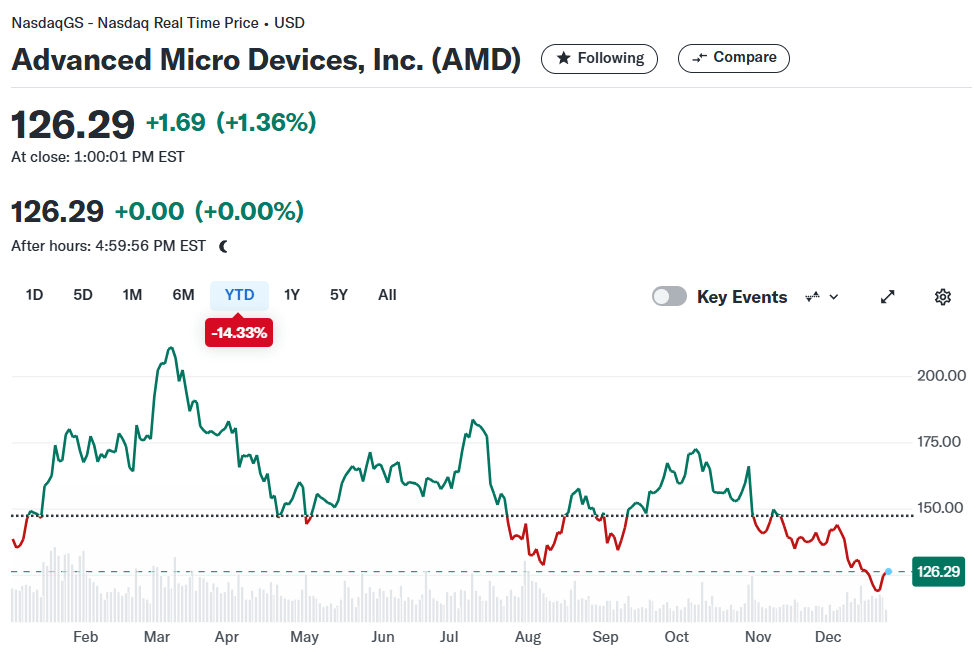
The generative AI boom has been a major catalyst for the semiconductor sector, and we’ve seen some spectacular stock surges this year. Nvidia ($NVDA) and Broadcom ($AVGO) have been front-runners in this race, with their shares up 183.15% and 114.72% respectively in 2024. But Advanced Micro Devices ($AMD) has largely been sitting on the sidelines while its competitors have ridden the AI wave. As of Tuesday, AMD’s stock is down 14.33% year-to-date—definitely not the performance we expected, given the AI hype. So, what’s been holding AMD back, and can it turn things around in 2025?
What's Holding AMD Back?
Let’s start with the revenue. AMD is making decent progress in the AI space, particularly with its data center revenue, which surged 122% last quarter. That’s impressive, but while AMD’s data center segment is growing, its gaming and embedded segments are facing struggles. The gaming segment, in particular, saw a 69% drop in revenue. That’s a big dip, especially compared to Nvidia’s dominance in the GPU space.
AMD’s GPUs, particularly the MI300 series, have actually impressed in certain benchmark tests, even outshining Nvidia's H100 in some areas. However, AMD is still playing catch-up overall. Nvidia’s grip on the AI chip market is strong, with shipments of its Hopper GPUs soaring. AMD’s slice of the GPU pie remains relatively small, and that’s a significant roadblock.
Then there’s the supply chain issue. AMD is still dealing with tighter constraints, and with cloud providers increasingly turning to custom silicon solutions from players like Marvell Technology ($MRVL) and Broadcom, it’s clear that AMD faces intense competition. Honestly, the supply chain issue and market share could be the most significant roadblocks for AMD right now.
Can AMD Bounce Back?
Despite these challenges, there’s still room for AMD to recover. CEO Lisa Su has been bullish on the data center market, especially as the AI accelerator total addressable market (TAM) is expected to grow by over 60% annually, reaching $500 billion by 2028. If AMD can capture even a small fraction of that, we could see substantial growth.
In fact, AMD has already taken steps in the right direction, like its involvement in a $3.5 billion growth financing round for Vultr, a cloud infrastructure company. This isn’t just about making chips—it’s about making sure those chips are optimized for AI and cloud computing. This partnership shows that AMD is positioning itself for a bigger slice of the AI market.
Additionally, there's the upcoming PC upgrade cycle. With AI becoming more integrated into everyday tech, AMD’s Ryzen AI Pro CPU series could see growing demand in the PC market. Plus, AMD’s expansion into autonomous vehicles and networking could provide additional avenues for growth.
xAI's $6B Boost – Could It Help AMD?
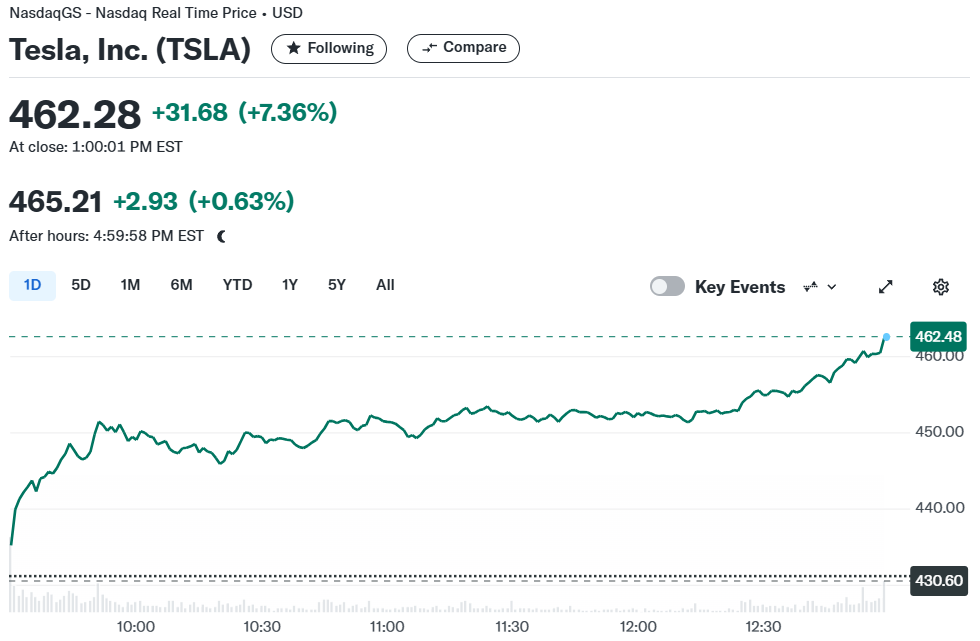
Meanwhile, AMD has also invested in xAI, Elon Musk’s AI startup, which just raised a staggering $6 billion in Series C funding, pushing its valuation over $40 billion. The news of this funding has already had a ripple effect in the market. On Christmas Eve, $TSLA’s stock surged by over 7%, leading the tech sector with a single-day market cap increase of over $100 billion. With xAI benefiting from this momentum, AMD could stand to gain as well from its strategic involvement in the venture.
While it's still early for xAI, the fact that AMD is investing in Musk-led AI ventures signals more than just financial backing. AMD could leverage this partnership to gain a competitive edge in the AI sector, especially as xAI looks to compete with heavyweights like OpenAI. The recent boost to Tesla shows that Musk’s ventures can create significant market momentum, and if xAI’s Grok AI models take off, AMD could benefit substantially from being part of that ecosystem. But this remains a high-risk, high-reward play. The question is: will Musk’s ventures disrupt enough to benefit AMD in a meaningful way?
What’s Next for AMD?
Overall, while AMD has been playing catch-up, it does have a solid strategy in place. Its growth in data centers and AI, along with strategic moves like the Vultr partnership and its role in the xAI funding round, position it well for 2025. If AMD can sync up its GPU and data center growth, act fast to capitalize on the massive AI boom, it could find itself in a stronger position next year.
In fact, analysts from Rosenblatt are optimistic about AMD’s potential, issuing a "Buy" rating with a target price of $250. This suggests a potential 100% upside for the stock, reflecting confidence in AMD’s growth trajectory, particularly in the server and data center spaces. If these projections hold true, AMD’s comeback in 2025 could be much more robust than expected.
So, what do you think? Could AMD turn things around in 2025?
#$Broadcom Inc. Common Stock(AVGO)#$Nvidia Corp(NVDA)#$Advanced Micro Devices(AMD)#$Marvell Technology Inc. Common Stock(MRVL)#$Tesla Inc. Common Stock(TSLA)