
Elon Musk vs. Sam Altman: Why Their Battle Could Shape the Future of AI — and Who Could Win

Shearing sheep
December 31, 2024
GoGPT Summarizes Articles
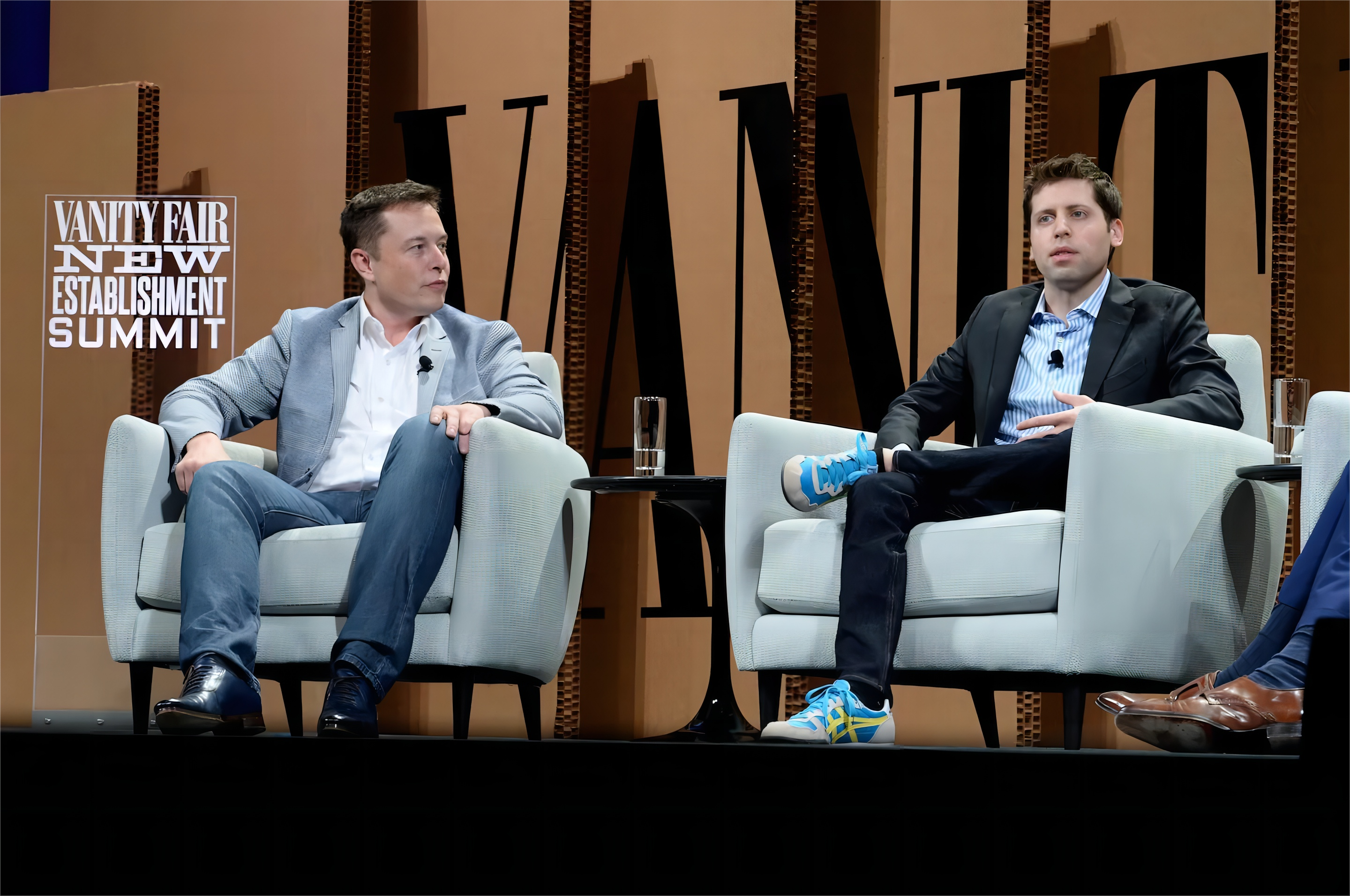
Once friends and business partners, now rivals. Elon Musk and Sam Altman, who once worked together in the AI space, are now engaged in a courtroom battle over the direction of OpenAI. This conflict isn't just about personal animus; it has far-reaching implications for the future of AI development, especially generative AI.
The roots of this feud date back to 2015 when Altman expressed his concerns to Musk about the potential for Google (Alphabet) ($GOOGL) to dominate the AI landscape. At the time, Altman's message was clear: if artificial general intelligence (AGI) were going to be developed, it shouldn't be Google that gets there first. OpenAI was born out of this shared concern — a mission to make sure AGI wouldn't be controlled by one corporate giant, but rather by humanity as a whole.
But as we know, AI research is expensive. OpenAI's initial nonprofit structure couldn't meet the capital demands needed to drive its vision forward. After Musk left OpenAI in 2018, a new hybrid model was implemented: a nonprofit board overseeing a for-profit entity designed to raise the necessary funds. Microsoft became OpenAI's first major investor in 2019, with a $1 billion stake, followed by a staggering $10 billion in 2023. Despite these injections of capital, the funding pipeline wasn't enough to keep up with the astronomical costs of running AI at scale — and that's where the conflict really started to heat up.
In August, Musk and his AI startup, xAI, filed a lawsuit against OpenAI. The lawsuit alleges that OpenAI violated its original nonprofit charter by creating a for-profit entity, arguing that Altman misled Musk by playing on his altruistic views of AI to build a for-profit empire. Musk is now seeking to block OpenAI's latest move to raise additional funds, a step that is crucial to its continued growth.
This isn't just courtroom drama; it's a battle for the future of AI itself. OpenAI, with its ChatGPT model, currently leads the charge, holding a commanding 29% share of AI usage among U.S. adults, according to a recent survey by researchers from Vanderbilt University, the Federal Reserve Bank of St. Louis, and Harvard University. In comparison, Google's Gemini is lagging at 16%. However, despite OpenAI's strong position, the competition is intensifying. Musk's xAI has raised over $17 billion, backed by big players like Nvidia, Advanced Micro Devices, and Sequoia Capital, signaling a fierce rivalry in the making.
The core issue now is that OpenAI needs more capital to stay ahead in this AI arms race. According to OpenAI's recent blog post, "the hundreds of billions of dollars that major companies are now investing into AI development show what it will really take for OpenAI to continue pursuing the mission." OpenAI's plan to raise more capital involves a more traditional funding structure — the very thing Musk's lawsuit seeks to block.
If Musk wins, OpenAI may find it more difficult to raise the funds it needs to compete, which could open the door for its competitors, including Google, to close the gap. If OpenAI prevails, it will be business as usual — more funds, more innovation, and a greater hold on the AI space. The implications of this trial are monumental: the winner could determine the future of AI development and the companies that will shape it.
Can OpenAI Keep Its Lead?
Despite the legal challenges, OpenAI still holds a dominant position in the AI space. Yet, with competitors like xAI and Google closing in, the future is uncertain. Musk's xAI is aggressively raising capital, and with backing from some of the world's top investors, it's clear the AI race is far from over.
#$Alphabet Inc. Class A Common Stock(GOOGL)#openai#elonmusk