
US Port Workers Threaten Strike Again – Trump’s First Big Test?

Shearing sheep
January 2, 2025
GoGPT Summarizes Articles
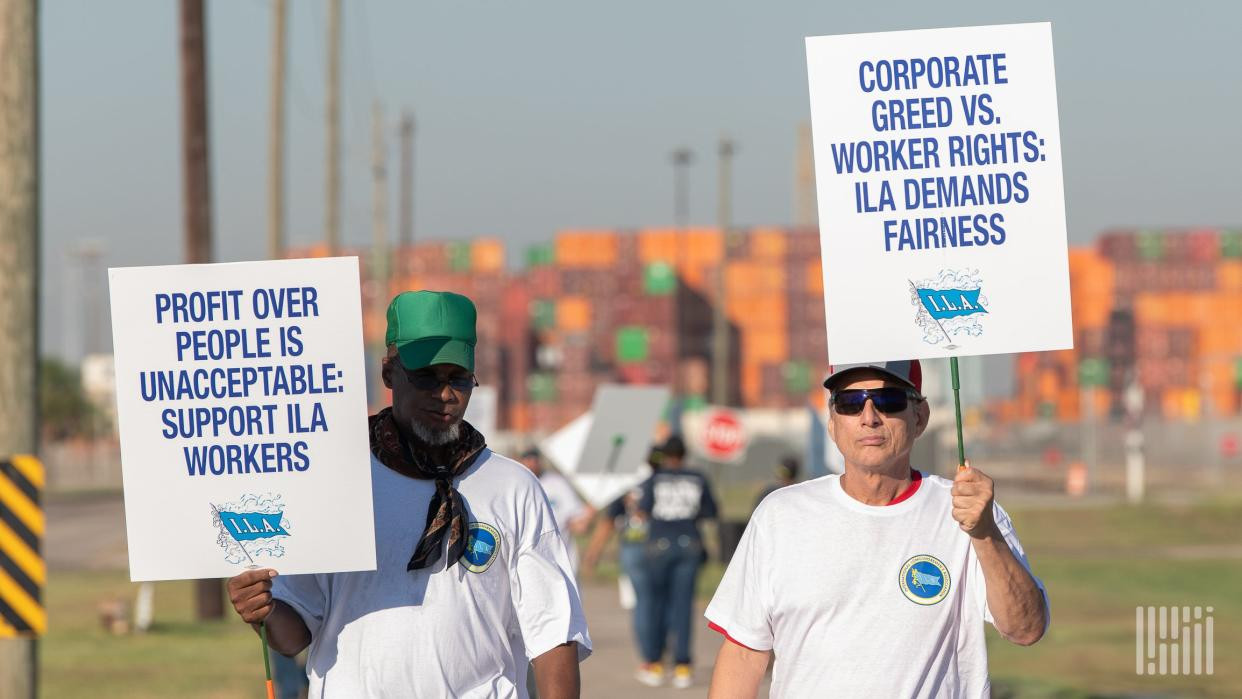
As President-elect Trump gears up for his inauguration on January 20, he’s about to face his first major challenge – and it could impact both the US economy and his political future. Thousands of port workers across the East Coast and Gulf Coast are threatening a large-scale strike starting January 15. The reason? They want stronger protections against automation in the shipping industry.
While this might seem like just another labor dispute, it could have significant consequences for both the economy and Trump's political standing. Let’s dive into the details:
Automation and the Fight for Jobs
The International Longshoremen’s Association (ILA), which represents over 47,000 workers, is pushing for stronger protections against automation. As ports adopt semi-autonomous equipment, many workers fear they will lose their jobs. The issue at hand? The ILA wants to close any loopholes in their contracts that allow employers to use automation to replace human workers for certain tasks. Last October, a brief three-day strike over pay led to some generous concessions, but the automation problem remains unresolved.
What’s at Stake for the US Economy?
If this strike goes ahead, delays and higher freight costs are almost a certainty. Shipping giants like Hapag-Lloyd have already warned of additional surcharges – $850 for a 20-foot container, and $1,700 for a 40-foot container – which would likely be passed on to consumers.
If the strike drags on for weeks, things get worse: capacity shortages, delayed shipments, and possibly cancelled voyages. The knock-on effects could disrupt the global supply chain, echoing the chaos we saw during the pandemic.
A Blip or a Major Blow?
Economists are divided on the potential impact. Some argue that a short strike – lasting no more than a couple of weeks – won’t have a major impact on the US economy. Sure, delays would cost between $1 billion and $5 billion per day, but in the context of a $29 trillion economy, that’s a relatively small dent.
However, if the strike lasts longer, the consequences could be more severe. Shortages of components and products could slow manufacturing and hurt consumer confidence. Similar to what we saw during the COVID pandemic, disruptions can snowball as panic buying exacerbates supply shortages.
The Trump Dilemma
Here’s where it gets tricky for Trump. Under the Taft-Hartley Act, the president can end the strike and order workers back to their jobs. But intervening might put him in a difficult political position. On one hand, Trump has voiced support for workers and their fight against automation. On the other hand, a prolonged strike could hurt the economy and his image, just days before his inauguration.
The real long-term issue lies in the possible compromise between the ILA and the employers. If USMX (the employers’ group) agrees to freeze automation for the next six years, US ports might lose their competitive edge. As automation improves efficiency in global trade, US ports could become less competitive if they don’t keep up.
Potential Impact on Shipping Stocks
Considering that the ILA is one of the largest port labor unions in the US, I think investors should keep an eye on how this potential strike might shake up the stock prices of major US shipping companies. Disruptions at US ports could hurt operational efficiency, leading to increased costs for shipping firms. In my opinion, stocks of companies like Matson, Inc. ($MATX), XPO Logistics ($XPO), and FedEx ($FDX) could face volatility. If the strike drags on, these companies might face higher freight costs, operational delays, and reduced demand in certain sectors, potentially causing stock price declines.
If the strike extends long enough, it could lead to supply chain disruptions that affect even global giants like FedEx, which operates in international logistics. XPO Logistics, which also handles global freight, could see its performance impacted by rising shipping costs and delays in operations. Matson, a major player in the Pacific shipping market, might see its shares affected by port congestion and service interruptions along the West Coast.
For investors in these stocks, keeping an eye on the situation in the coming weeks could be crucial. A short-term disruption might create a temporary dip in prices, but prolonged strikes could lead to more lasting consequences for these companies.
What’s Your Take?
So, what’s going to happen? Will Trump step in to end the strike before it escalates? Or will this turn into a battle over automation that impacts everything from shipping prices to job security in the US?
#$Matsons Inc.(MATX)#$XPO Inc.(XPO)#$FedEx Corporation(FDX)#economy#trump