
AI Glasses: Will 2025 Be the Year They Go Mainstream?

Shearing sheep
January 8, 2025
GoGPT Summarizes Articles
As CES 2025 kicks off in Las Vegas, one of the hottest topics on the tech scene will undoubtedly be AI-powered smart glasses. With companies like SHARGE, Vuzix, Ambiq, and others showcasing their latest innovations, it's clear that we're on the cusp of a new era for wearable tech. From sleek, discreet designs to powerful AI assistants, the promise of AI glasses is undeniably enticing. But will 2025 be the year these glasses finally go mainstream? Let’s dive in.
Innovations on Display at CES 2025
Several key players have unveiled impressive new AI glasses at CES 2025, each bringing unique features to the table.
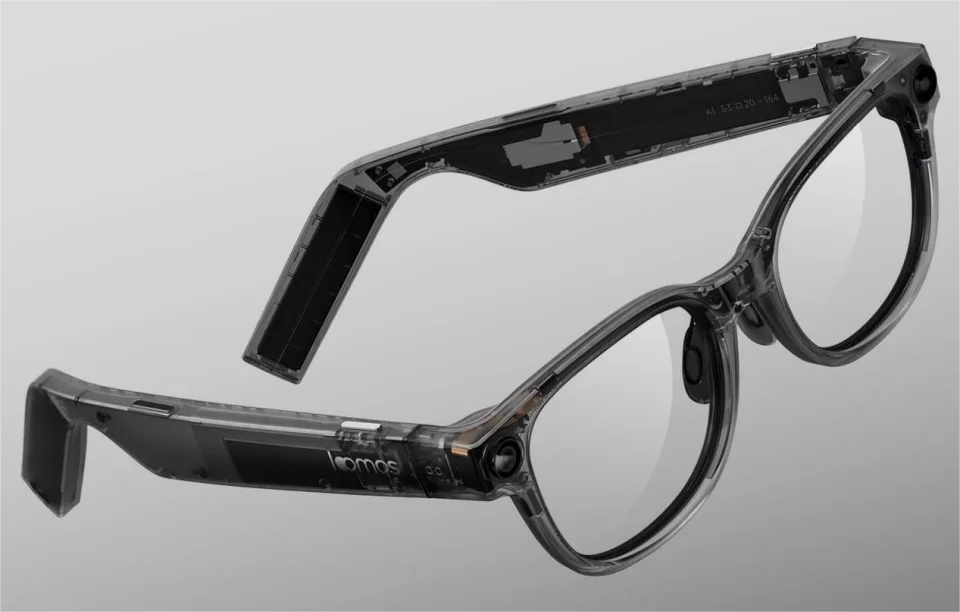
SHARGE's Loomos AI Glasses: These glasses offer a blend of photography, high-fidelity audio, and AI assistance. With a 16MP camera capable of shooting 1080p video, an open-ear Hi-Fi audio system, and a voice assistant powered by GPT-4o, the Loomos glasses aim to be a versatile lifestyle gadget. They also offer impressive battery life—up to 40+ hours on standby—and a lightweight design at just 49g.
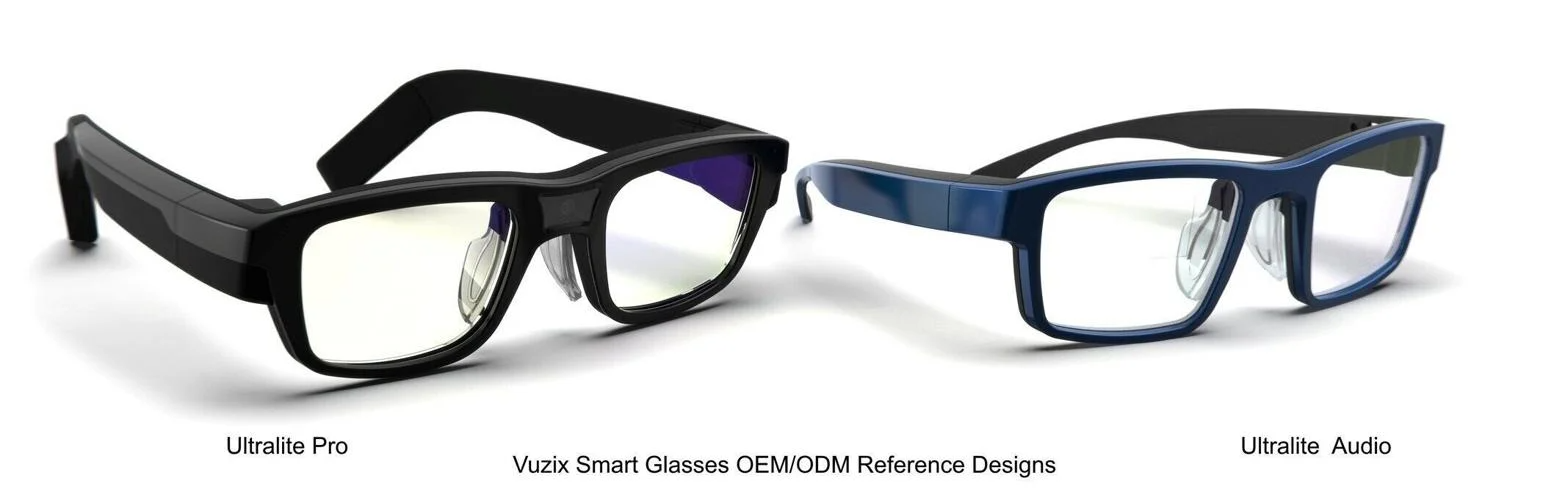
Vuzix & Quanta's AR Glasses: Vuzix introduced the Ultralite Pro OEM Platform and the Ultralite Audio OEM Platform, two advanced smart glasses reference designs developed in partnership with Quanta Computer. These glasses are focused on enterprise applications, featuring advanced AR displays and voice control, providing seamless connectivity with business platforms. Tailored for industries such as logistics, healthcare, and defense, they deliver real-time information and enable hands-free operation.
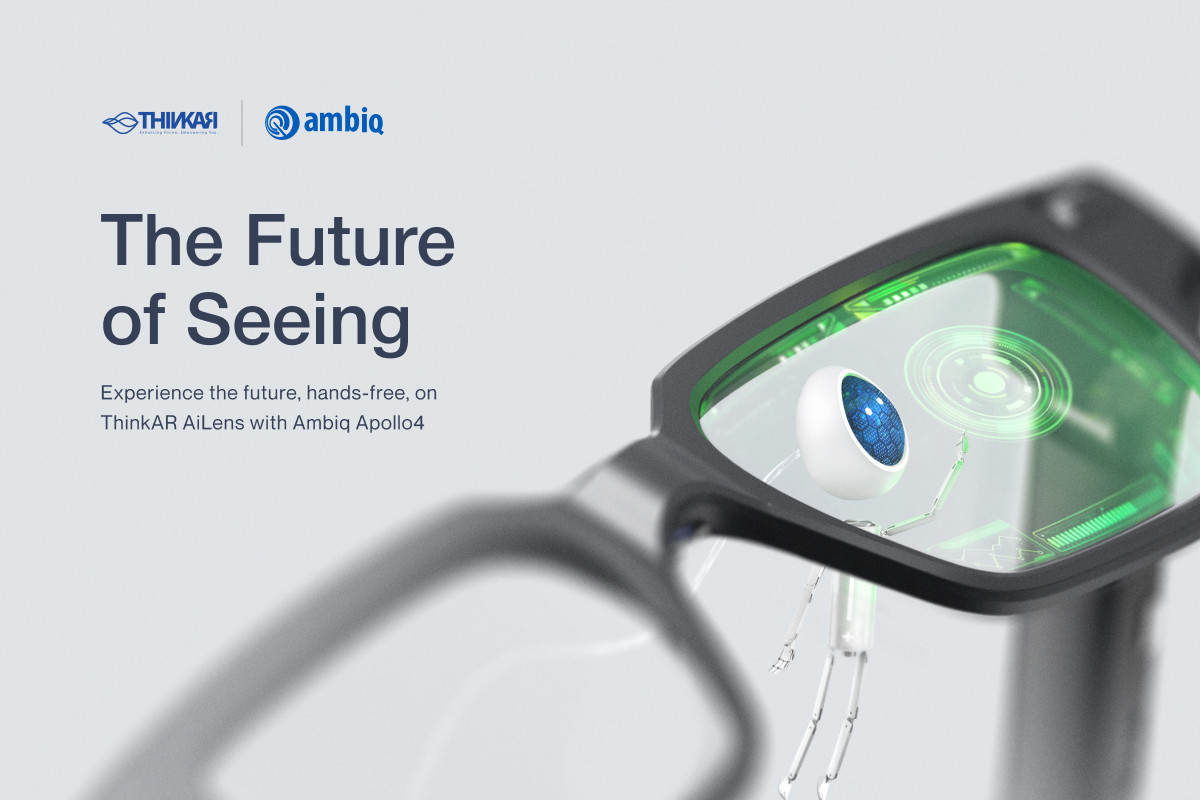
Ambiq & ThinkAR's AiLens: Aimed at consumers and professionals alike, AiLens offers a lightweight, efficient AR experience with over 10 hours of battery life. Powered by Ambiq's Apollo4 SoC, the glasses feature voice-activated AR capabilities and provide tailored insights, making them suitable for everything from healthcare to personal productivity.
While each of these innovations brings something unique, they all share a common theme: the integration of AI to enhance functionality, whether through smarter voice assistants or immersive augmented reality experiences.
The Growing Market for AI Glasses
The global market for smart glasses is expected to grow rapidly in the coming years. According to market research, global sales are projected to reach 1.4 billion units by 2035, with the market size set to grow 10 times over the next 12 months. The rise of AI-powered glasses can be attributed to their ability to combine augmented reality (AR) and artificial intelligence, making them highly versatile across personal entertainment, business solutions, and more.
One of the key drivers of this growth is the increasing demand for hands-free, immersive experiences. Consumers want devices that provide information seamlessly, without the need to pull out a smartphone or other device. This is where AI glasses shine—they can deliver real-time data, media, and assistance directly in front of the user’s eyes, offering a more natural, intuitive experience.
Stock Market Momentum in the AI Glasses Space
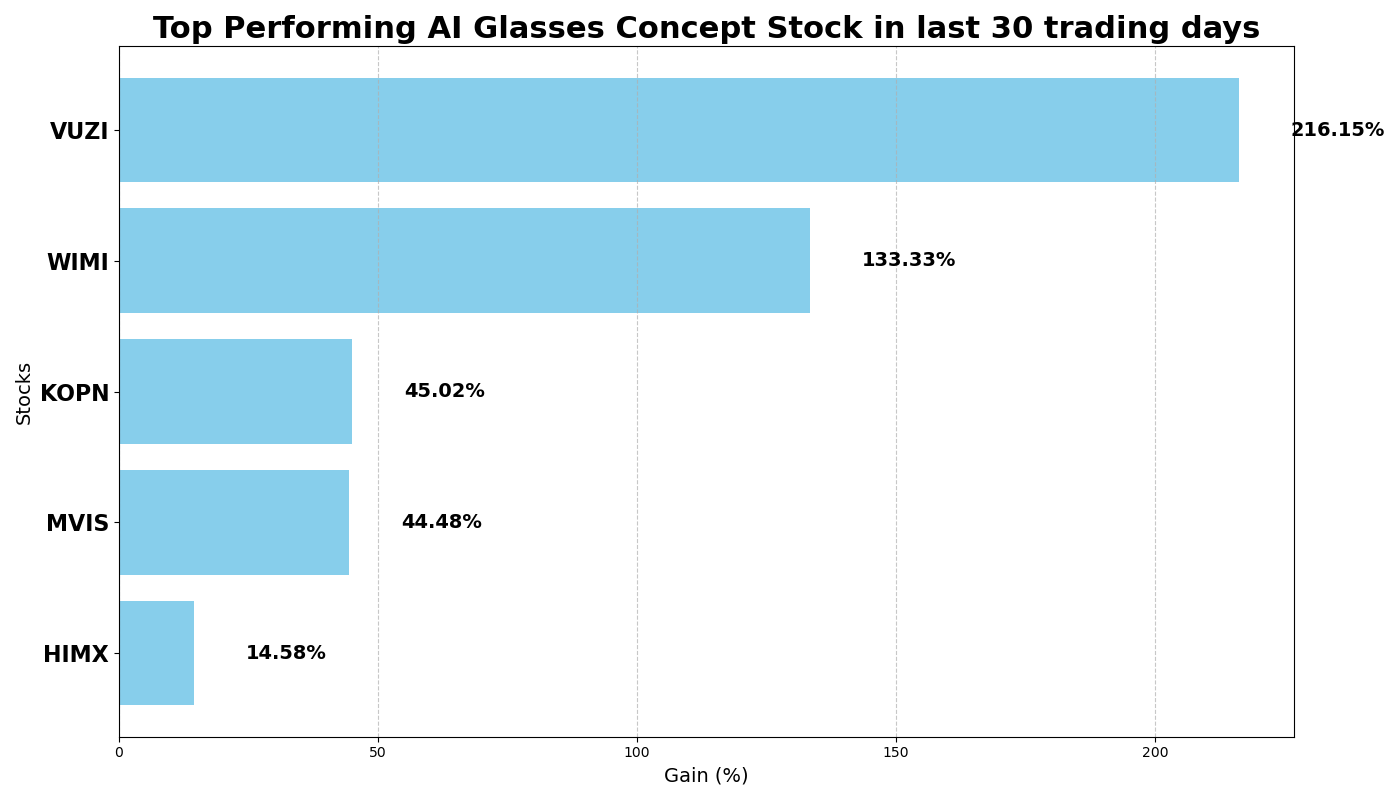
As the AI glasses market heats up, so does investor interest. Companies like Vuzix ($VUZI) and WiMi Hologram Cloud ($WIMI), which are heavily involved in the smart glasses space, have seen impressive stock price increases in recent weeks.
Vuzix has surged by 216% in just 30 trading days, a dramatic rise fueled by the growing demand for augmented reality solutions and the company’s focus on AR glasses for both enterprise and consumer applications.
WiMi Hologram Cloud has also experienced a notable 133% jump over the same period, reflecting increasing investor optimism around the development of AR and AI-powered glasses technologies.
This sharp rise in stock prices indicates the market’s growing confidence in the future of smart glasses and the potential for major breakthroughs in the AI-powered wearables sector.
The Challenges and Obstacles for AI Glasses
Despite the exciting potential, AI-powered glasses still face several challenges before they can go mainstream. Comfort and design have seen improvement in some recent models, but practical wearability remains a concern. Battery life has also seen strides, but long-lasting, all-day use is still a work in progress. Cost is another significant barrier—AI glasses are still relatively expensive compared to smartphones, making them less accessible for many consumers.
The biggest obstacle, however, is privacy concerns. With AI assistants like ChatGPT-4o collecting real-time data, privacy issues become critical. Ensuring robust data security will be essential in building consumer trust and ensuring widespread adoption.
The Rise of Big Tech
The AI glasses market is becoming increasingly competitive as major tech players enter the field. For example, NVIDIA ($NVDA) recently unveiled a new AR glasses patent, while Alibaba ($BABA) is venturing into the AI + AR glasses space with a custom model for its Thunderbird project. Apple ($AAPL) and Alphabet ($GOOGL) are also gearing up to become key players in the smart glasses market, with Apple’s “Atlas” project slated for mass production in 2025 as part of its ecosystem.
Previously, the partnership between Meta and EssilorLuxottica to launch Ray-Ban smart glasses highlights the power of combining tech innovation with established brand recognition. These collaborations, where traditional eyewear brands team up with tech giants, are expected to significantly boost consumer adoption in the coming years.
Aside from technological competition, brand power and consumer recognition will play a pivotal role in success. As AI glasses evolve, those that seamlessly integrate into consumers' daily lives while offering real, tangible value will likely have the upper hand.
Conclusion: Will 2025 Be the Year AI Glasses Go Mainstream?
AI-powered smart glasses are undoubtedly exciting and have the potential to revolutionize the way we interact with technology. However, for these devices to truly go mainstream in 2025, several hurdles remain. Improvements in design, longer battery life, stronger privacy protections, and a more affordable price point will be essential factors in determining their success.
Ultimately, the success of AI glasses may hinge on their ability to blend into everyday life without feeling like a “gimmick.” If companies can deliver products that offer genuine value, resonate with a broad audience, and tackle practical challenges, 2025 could indeed be the year AI glasses finally go mainstream. For now, however, the future of wearable tech remains very much a work in progress.
#$Vuzix Corporation(VUZI)#$WiMi Hologram Cloud Inc. American Depositary Share(WIMI)#$Nvidia Corp(NVDA)#$Alibaba Group Holding Limited American Depositary Shares each represents eight Ordinary Shares(BABA)#$Apple Inc.(AAPL)#$Alphabet Inc. Class A Common Stock(GOOGL)