
Will Rate Cuts Be Paused? All Eyes on This Week's CPI and PPI Data!

Shearing sheep
January 13, 2025
GoGPT Summarizes Articles
Last Friday, the U.S. non-farm payrolls data took everyone by surprise with an insanely strong showing: 256K jobs added, about 100K higher than expected, a dip in the unemployment rate to 4.1%, and wage growth coming in at a more modest 3.9% year-on-year. While that’s all great for the economy, it’s also fueling the belief that rate cuts will be slower than expected this year. The stock market took a hit, with the Dow and Nasdaq both closing down 1.63%, and the S&P 500 falling 1.54%.
Before last week’s data, some were betting that the Fed would cut rates sometime soon—maybe even as early as January. But those hopes have been dialed back significantly after the non-farm payrolls report. The solid employment numbers make it harder for the Fed to justify a drastic policy shift, especially since it’s been trying to cool down the job market. Some major Wall Street players, like Bank of America, are now saying that the rate cut cycle may be over for now, and the next move might actually be a hike, depending on inflation expectations. In fact, some economists even think we could be looking at tighter conditions in 2025 if inflation refuses to ease. According to the Fedwatch tool, markets are now pricing in a 97.3% probability that rate cuts will be paused.
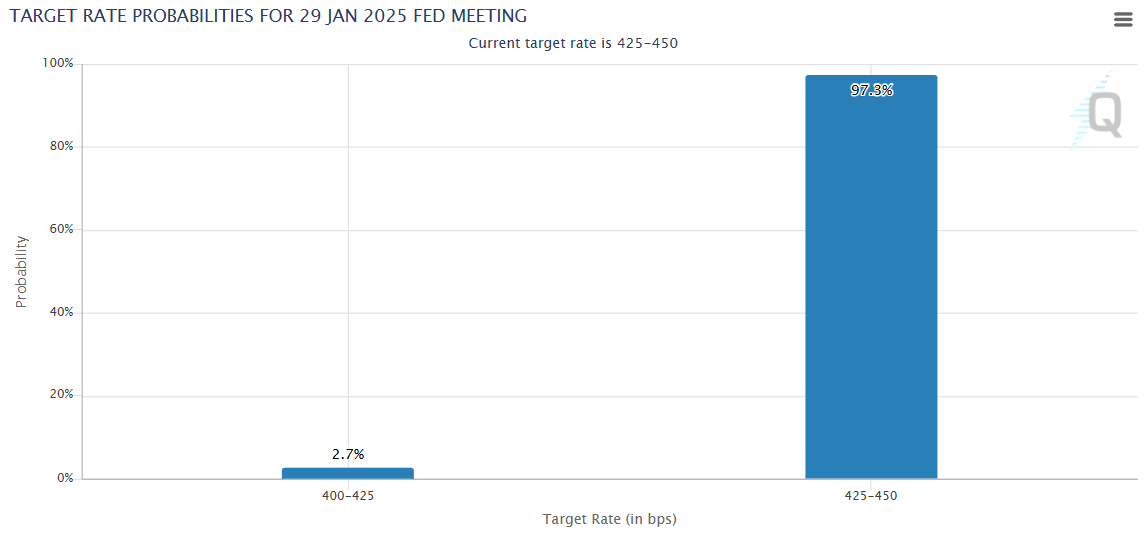
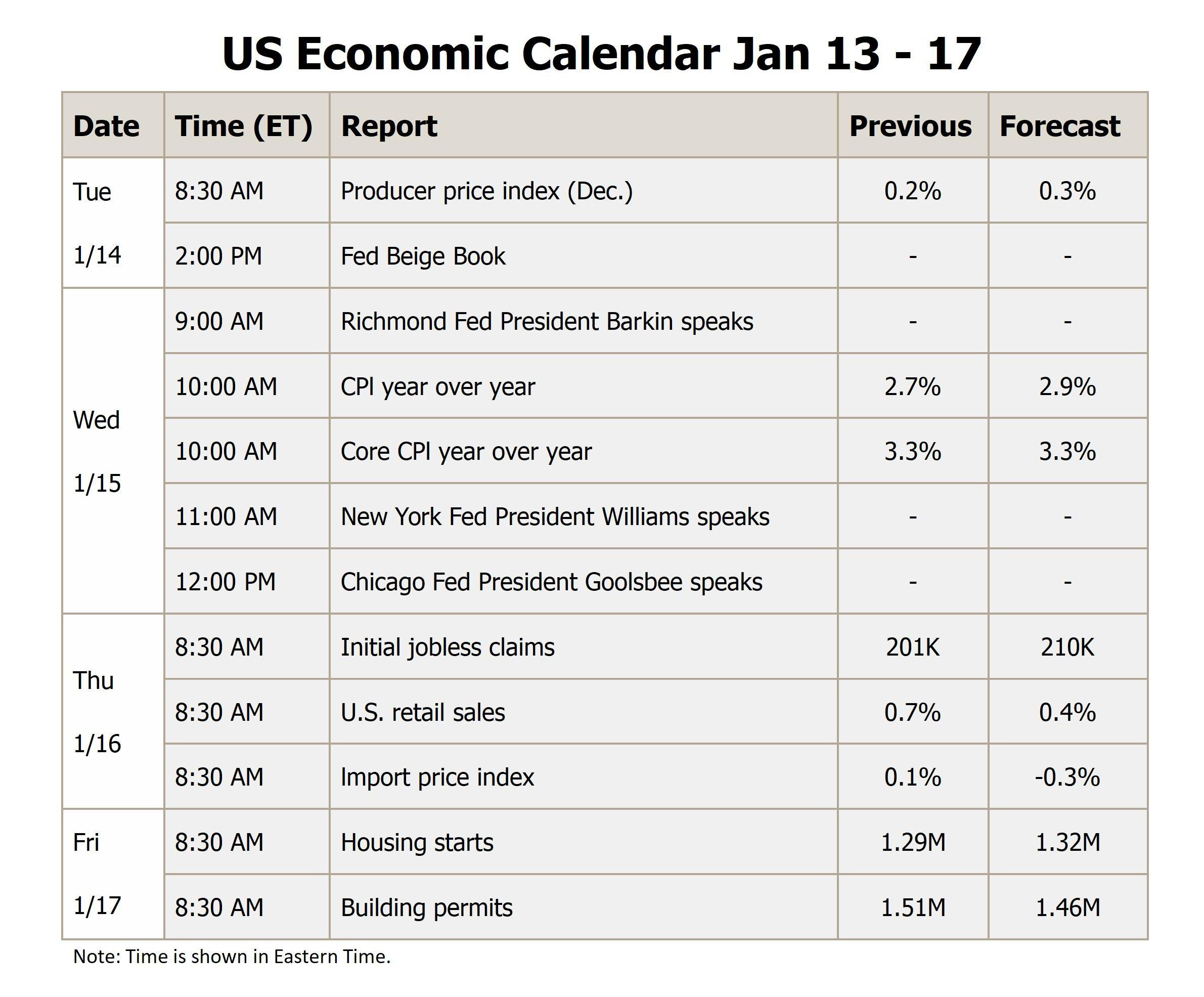
While the job market is certainly hot, it’s all about inflation now. The PPI (Producer Price Index) data set to drop this Tuesday and the CPI (Consumer Price Index) data set to drop this Wednesday are huge for determining where the Fed goes from here. These are the next major data points that could shift the narrative on rate cuts.
Over the past two months, year-on-year inflation has been rising, showing a positive trend. The inflation rate for November came in at 2.7%, up slightly from October’s 2.6%. Markets are expecting December’s inflation rate to rise to 2.9%, a 0.2% increase from the previous month. This could help alleviate concerns about persistently high inflation. Strong auto sales should boost retail numbers, but aside from that, we might see signs of weakness, especially given the recent soft consumer credit data.
If producer prices show any signs of persistent inflation, it could reinforce the idea that the Fed has more work to do in keeping prices under control. Any signs of stubborn inflation could further dim the prospects of rate cuts. Additionally, retail sales data, due out this Thursday, will provide further insight into consumer spending, which has remained resilient.
U.S. Treasury yields have also surged, with the 10-year benchmark breaking the key 4.70% resistance level. This move signals increasing confidence in economic growth and inflation expectations. The Fed’s cautious stance on rate cuts, especially with persistent inflation, has fueled the rise in yields. The market now expects the Fed to be less aggressive with rate cuts, and the likelihood of either rate hikes or cuts in the short term remains low.
Honestly, it’s likely the Fed will pause on rate cuts for now. If inflation continues to show resilience, even the idea of a rate cut in March could be off the table. However, there’s also a chance that any signs of cooling inflation might prompt the Fed to reassess its strategy later in the year.
The central bank is also concerned about the potential effects of President Donald Trump’s upcoming expansionary and protectionist policies, which could support inflation and interest rates in the long term. Trump's tax cuts and deregulation agenda may benefit short-term economic growth, but his focus on immigration control and trade protectionism could put upward pressure on inflation in the medium to long term. Goldman Sachs’ equity strategist David Kostin noted, “How companies adjust their behavior ahead of the incoming presidential administration, including preparation for potential tariffs, will be crucial for 2025’s outlook.”
So, we’re stuck in this waiting game. But here’s my take: if inflation keeps rising, especially on the PPI side, the dollar might keep strengthening. We could see bond yields rise even more, which could dampen hopes for a market recovery. On the flip side, if inflation cools faster than expected, then the rate cut narrative could be revived.
What’s Your Take? Will the Fed stay on pause? Or are rate cuts still in the cards for 2025? #fedrate #ratecut #cpi #economicindicator
#fedrate#ratecut#cpi#economicindicator