
Dollar Surge & Gold's Rally: How Trump's Tariffs and Inflation are Shaping Markets

Shearing sheep
January 14, 2025
GoGPT Summarizes Articles
With Trump gearing up for his second term and promising some serious tariff action, it looks like the dollar's upward trend is here to stay for a while. As of Monday, the Bloomberg Dollar Spot Index rose for the fifth consecutive trading day, and Wall Street is feeling bullish on the dollar. Goldman Sachs, TD Securities, and Deutsche Bank are all forecasting more strength in the USD this year, with speculative bets on the dollar at their highest level since 2019—around $33.7 billion. That's a whole lot of optimism!
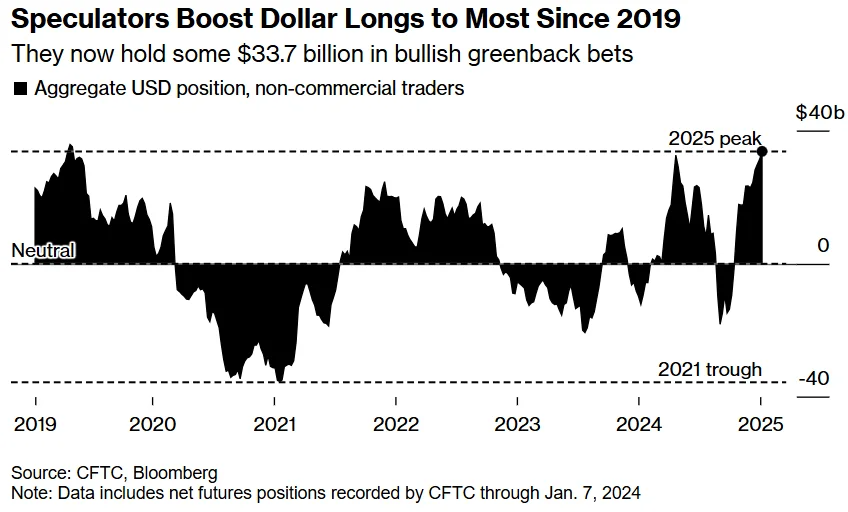
What's Driving the Dollar Rally?
So, what's fueling this rally? First off, the U.S. economy is holding strong, and with interest rate cuts now looking less likely, the dollar's dominance continues to shine. The U.S. is continuing to show resilience amid global economic challenges. Non-farm payrolls came in strong recently, leading to a downward revision in rate cut expectations from some of the biggest banks like JPMorgan and Goldman Sachs. A stronger-than-expected economy means the Federal Reserve doesn't need to act as aggressively to cut rates, allowing the dollar to hold its ground, if not rise. We're just 2.8% away from the USD Index testing its peak from November 2022.
Analysts, including Paresh Upadhyaya from Amundi, suggest that a more cautious Fed could keep the dollar's strength intact. "Due to heightened tariff concerns adding uncertainty to global growth and inflation, the Federal Reserve may pause rate cuts, which would expand the rate gap and benefit the dollar," he said. This widening gap between U.S. interest rates and other major economies, particularly the Eurozone, is helping to fuel demand for the greenback.
To top it off, Trump's tariff plans—likely to include sweeping, far-reaching measures—are adding fuel to this fire. Tariffs are expected to hurt global growth, which means traders are rushing to hedge against a weaker global economy. In this environment, the U.S. dollar becomes the go-to currency for investors seeking stability. As much as we've seen some huge market volatility recently, it's hard to ignore that the dollar is still king of the forex market.
Gold: Rallying, But for How Long?
If you thought the USD was getting too much attention, gold is making waves of its own. It's been rallying strong, but the recent run-up has some analysts raising concerns about short-term overbought conditions. That being said, the long-term fundamentals suggest that gold's upward trend isn't over yet. Central banks are buying gold at an accelerating pace, especially as inflationary pressures and geopolitical risks remain elevated. For emerging markets, gold is not just a hedge against inflation, but a safe-haven asset against the volatility caused by U.S. monetary policy and the dollar's dominance.
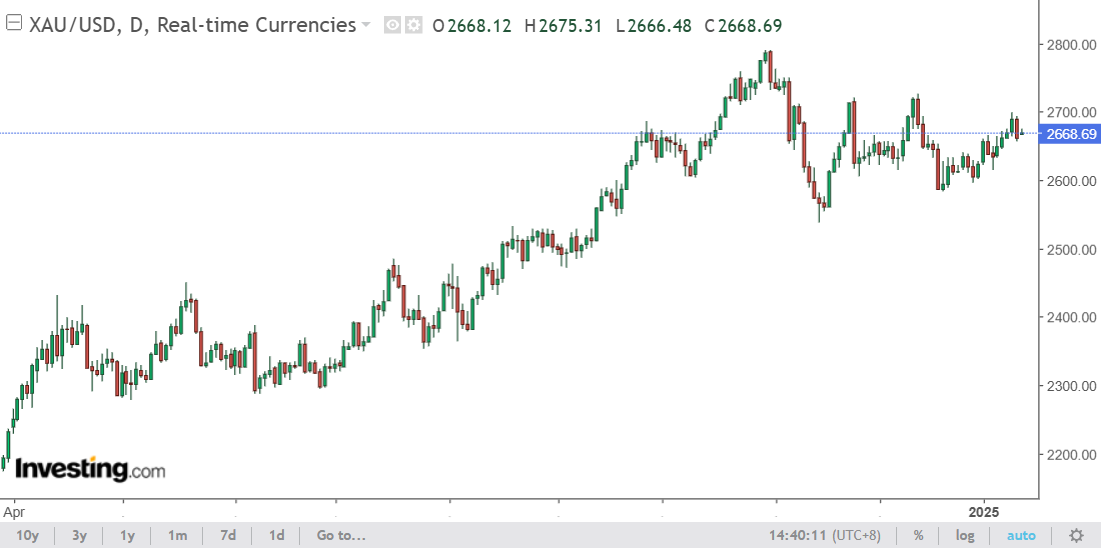
Goldman Sachs sees gold as a long-term winner, given that central banks continue to build their reserves. “Gold is going to remain attractive as central banks seek to diversify away from the U.S. dollar," Goldman's commodities research team said in a recent note. Furthermore, with governments continuing to print money and massive fiscal spending around the globe, the case for gold as a hedge against currency devaluation remains strong.
Still, we can't ignore the near-term headwinds. With the dollar gaining strength, gold is facing some pressure. In fact, gold's rally has been so strong that we're seeing it at historically high levels relative to most major currencies. Bloomberg's Simon White pointed out, despite rising real yields and the strong dollar, gold has still posted its best annual return since 2010. But with the USD set to potentially gain more strength, especially with Trump's tariffs pushing further uncertainty into the markets, gold might face a correction in the short term.
That said, the fundamentals for gold remain strong. If inflation continues to outpace interest rate hikes globally, or if geopolitical risks spike, investors will likely flock to gold. The precious metal has always been seen as a hedge against financial uncertainty, and despite short-term volatility, I believe the long-term trend still favors gold.
Trump's Tariff Impact on USD and Gold
One key factor to watch this year is Trump's tariff talk. If tariffs start spooking global markets, that could push more people into gold as a safe-haven asset, even as the USD continues to rise. Trump's tariff plan could lead to disruptions in trade, causing inflationary pressures, which would send investors looking for alternatives to fiat currencies. Historically, when geopolitical risk increases, gold tends to benefit, and we're likely to see that dynamic play out again.
At the same time, the dollar's strength might be here to stay, especially with a more cautious Fed and a higher-than-expected U.S. economic resilience. A growing rate gap between the U.S. and the Eurozone (and other developed markets) will likely keep pushing investors towards the USD.
What's Next?
So, what's next? I think the dollar's strength is likely to persist in the short term, especially with the Fed sticking to a cautious stance and Trump's tariff rhetoric adding to the uncertainty. As long as the U.S. economy remains relatively strong and interest rate cuts stay off the table, the USD is going to keep benefiting from its safe-haven status and that ever-widening yield gap.
However, that doesn't mean gold is out of the game. The long-term case for gold remains solid, especially with central banks loading up on reserves and the risk of inflation lingering. If geopolitical tensions heat up or inflation remains sticky, gold could very well see another surge. So, I'm leaning towards a mixed approach — keeping an eye on both markets and being ready to jump in when the timing feels right. Maybe a bit of both assets in the portfolio?
#xauusd#gold