
Bidenflation: How Much Have Prices Really Increased in the US Over the Last Four Years?

Shearing sheep
January 17, 2025
GoGPT Summarizes Articles
"Bidenflation"—you’ve probably heard this term tossed around a lot, especially by Republicans during election seasons. It’s the narrative where soaring prices under Biden have become a major talking point, with many Americans feeling like their purchasing power is shrinking by the day. But is this feeling all in their heads, or are they really struggling with inflation?
With the final CPI report covering Biden’s term released last night, we might finally get a clearer picture of how much prices have actually increased during his time in office.
The Numbers Behind "Bidenflation"
Official data through December 2024 shows that over the past four years, the Consumer Price Index (CPI) in the U.S. has increased by a staggering 21.2%. Meanwhile, household income has only grown by 19.4%. This means, on average, American families are falling behind when it comes to purchasing power—basic necessities are taking up a bigger chunk of their paychecks.
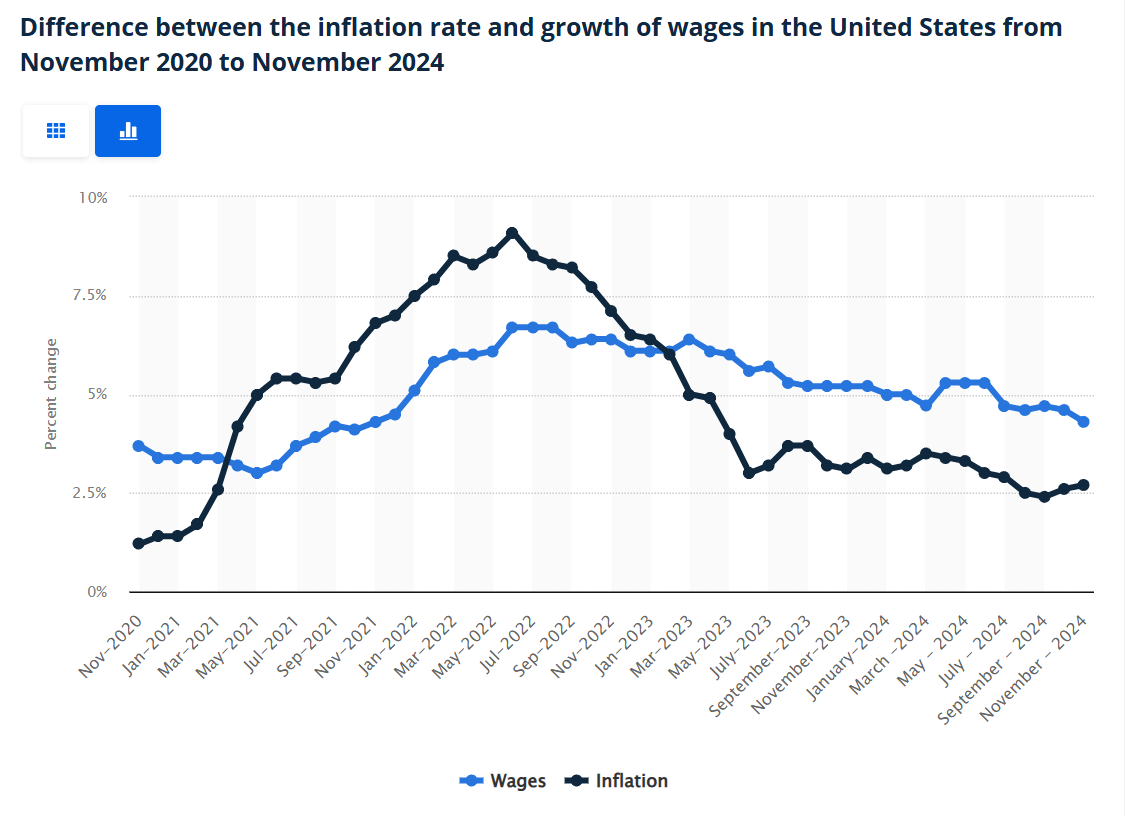
When Biden took office in 2021, inflation started creeping up. But it really hit the fan in mid-2022, reaching levels not seen in 40 years. The Fed’s aggressive interest rate hikes in 2022 helped bring inflation down, but by then, the damage to household budgets was already done.
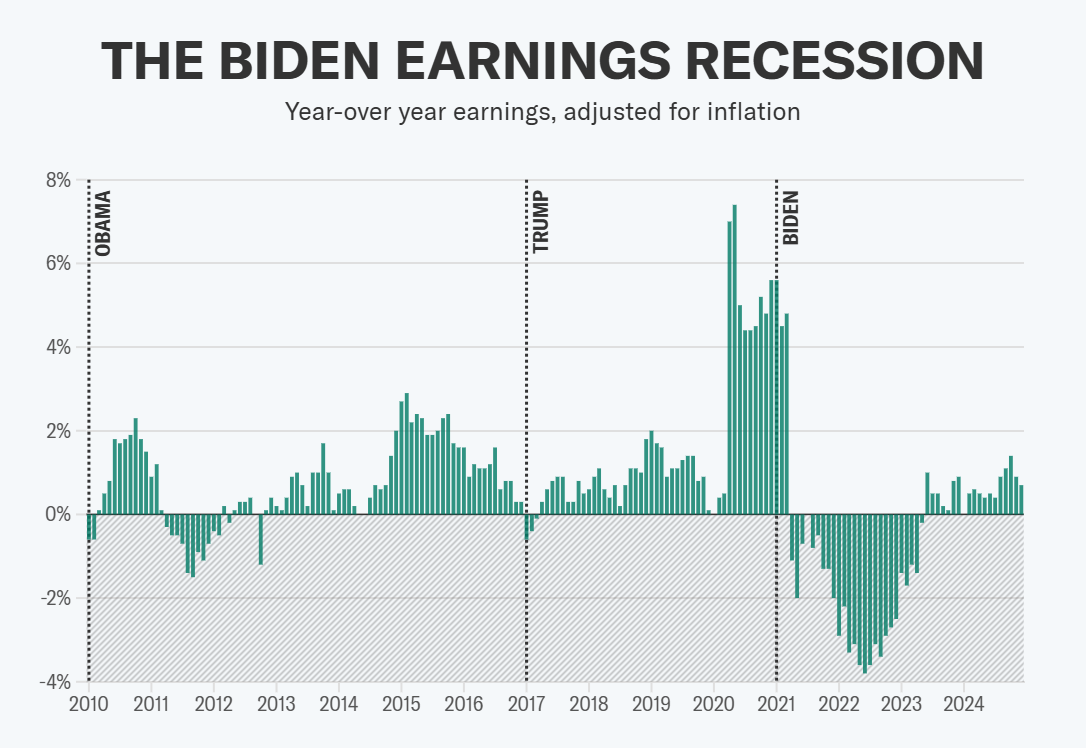
From April 2021 to May 2023, many American families saw their actual income growth lag behind inflation. It wasn’t until mid-2023 that real income growth turned positive again. But by then, the damage had already been done, and the political fallout was clear in the 2024 elections, with voters still blaming Biden and his administration for the rising cost of living.
A Comparison with Trump’s Term
While household income growth was lower during Trump’s presidency (15.4% from 2016 to 2020), inflation was much lower too—just 7.9%. This means that, despite slower income growth, everyday Americans actually saw their real wages rise during Trump’s first term.
This stark contrast is one reason why many voters still seem to point the finger at Biden for inflation. In 2024, inflation undoubtedly played a role in Vice President Harris’s defeat in the presidential election.
So, What Happened on Biden’s Watch?
A lot of the inflation under Biden’s watch can be attributed to a series of unfortunate events:
- Supply chain disruptions during the pandemic
- A massive stimulus package in 2020-2021 that spiked demand while supply was still catching up
- The Russia-Ukraine war in 2022, which sent oil prices soaring and pushed food inflation to near double digits
Not to mention, shortages in sectors like housing, autos, and energy didn’t help either. Gasoline hit record highs in 2022, car prices skyrocketed, and rent saw significant increases. For context, new car prices rose by 10% in 2022, and used cars went up by 13%. At one point, used car prices spiked 41% year-over-year in January 2022.
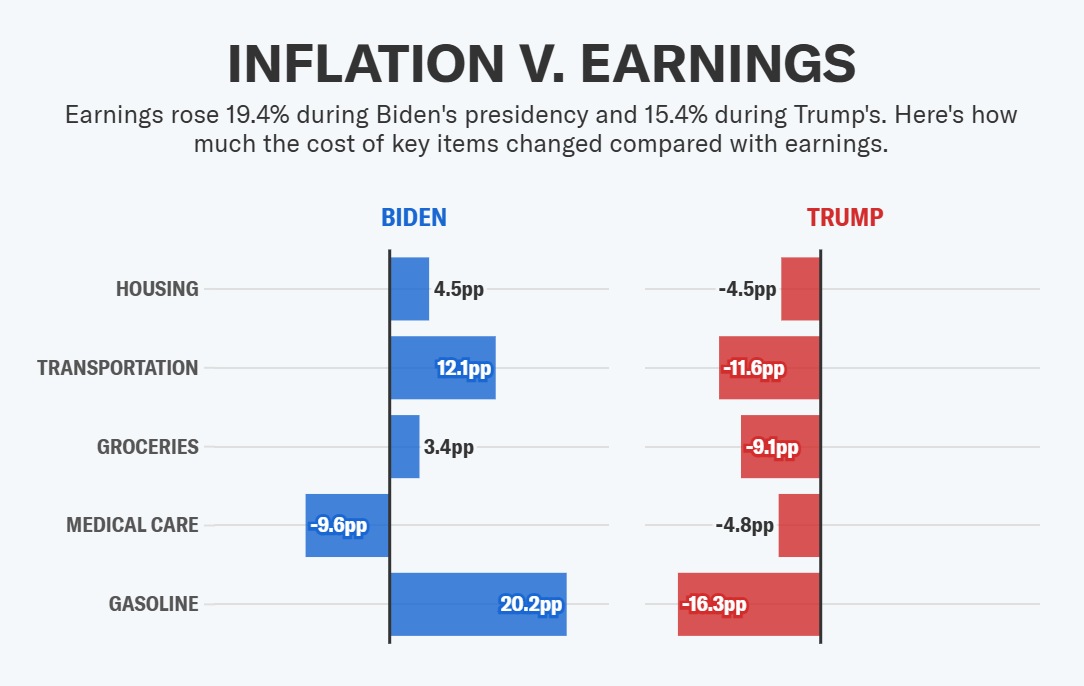
Industry insiders have compiled data on inflation in 26 major categories during Biden’s presidency, covering most of the things people spend money on. The results show that in 12 of these categories, the price increases outpaced income growth. Housing, transportation, and food were the top three areas where American households were hit the hardest.
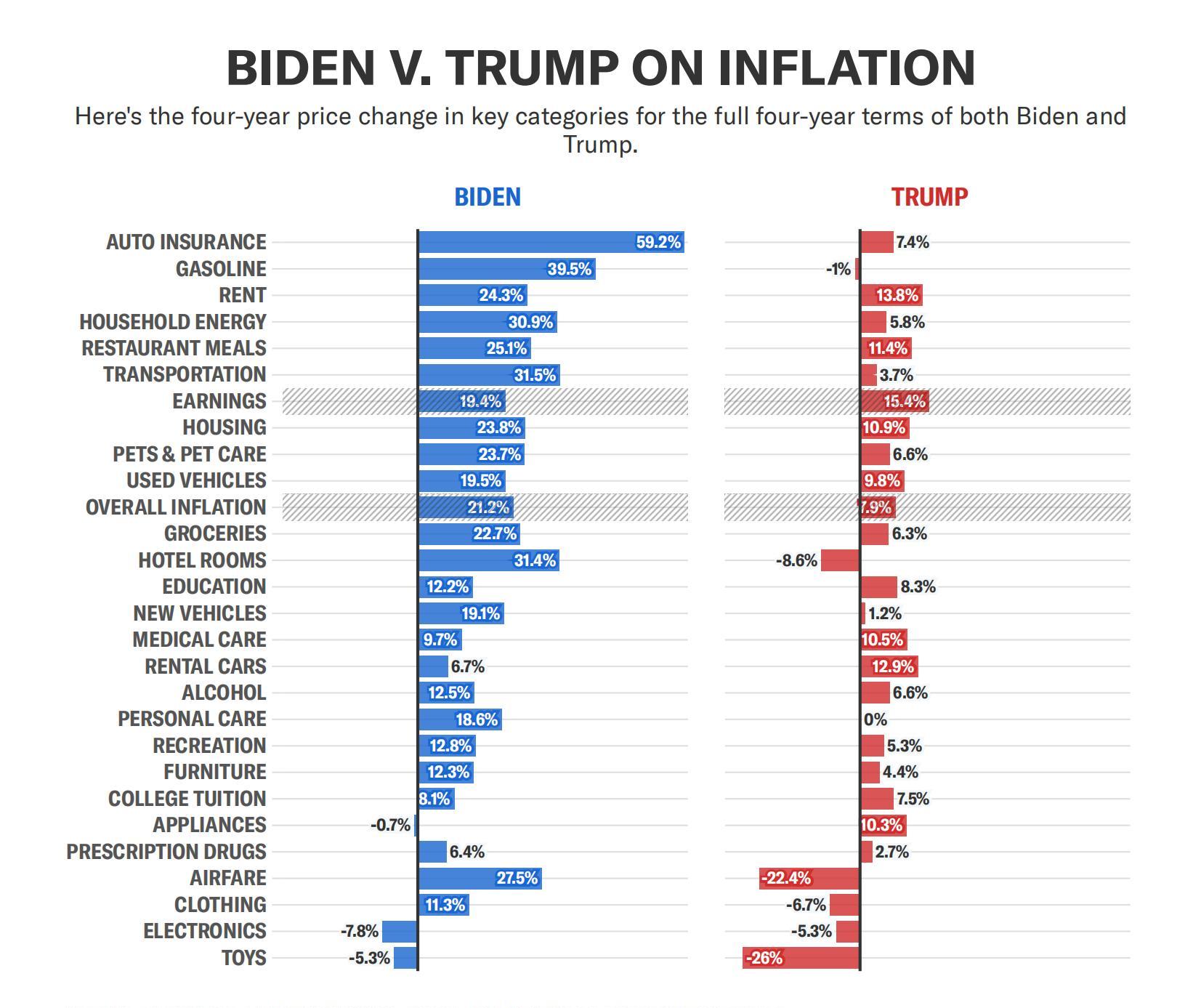
Biden’s presidency has essentially been a battle against inflation. Factors like the pandemic, stimulus spending, the Ukraine crisis, and supply chain issues all piled on. Sure, he couldn’t control the global economy, but the political narrative has turned him into the face of this massive price spike. Let’s not forget that the Federal Reserve’s delayed response to inflation early on didn’t help either.
Can Trump Avoid Biden’s Inflationary Pitfalls?
Despite the economy stabilizing somewhat in 2024, most voters are still feeling the pinch and blaming the current administration. In fact, many would argue that inflation played a significant role in boosting Trump’s chances in the 2024 race.
While Biden’s term is defined by struggling with inflation, Trump’s first term could be remembered as the last of the “good old days” when prices were relatively stable. But now, with rising trade barriers, higher national debt, and the looming effects of climate change, will Trump’s next term see a return to stable prices—or more of the same? It’s still a question.
Looking ahead, inflation might still be a major issue. We’re likely to see higher energy prices, more expensive insurance premiums, and continued supply chain headaches. Even Trump may not be able to escape the grip of rising prices.
Biden’s “inflation struggle” might end up serving as a lesson for future presidents, including Trump.
#Trump Inauguration Is On 20th Jan: How Will the Market Move?#biden#trump