
Duolingo: Can This Real "RedNote-Related Stock" Ride the TikTok Refugee Wave?

Shearing sheep
January 20, 2025
GoGPT Summarizes Articles
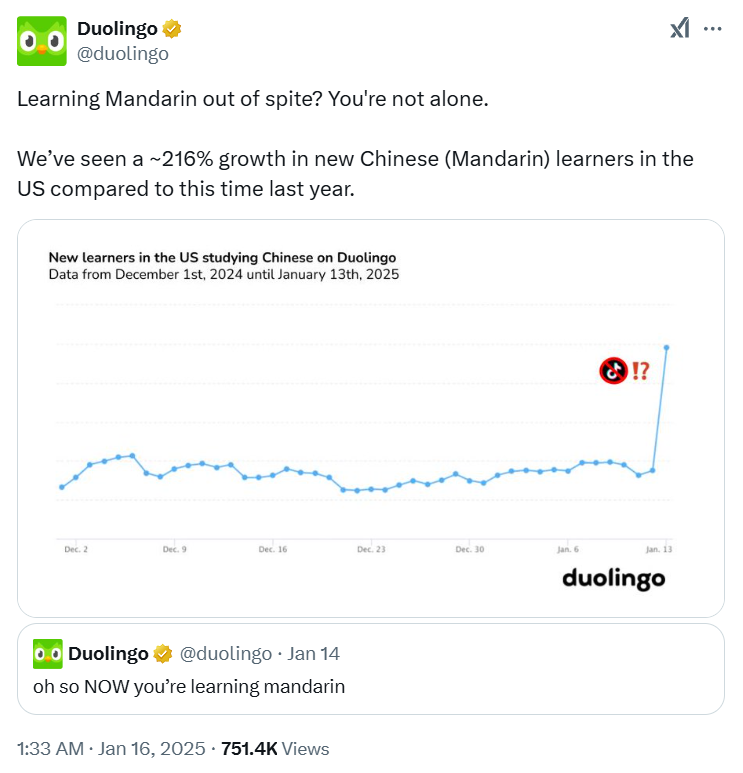
It looks like Duolingo ($DUOL) is having a moment right now—and I’m not just talking about the stock price popping like a balloon. The language-learning app has recently been getting some major love from analysts, especially after a huge surge in Chinese learners in the U.S., thanks to an influx of “TikTok refugees” flocking to RedNote.
So, why the hype? Apparently, this TikTok-to-RedNote migration trend has sparked a major interest in learning Mandarin.
Last week, as TikTok faced the looming threat of a ban in the U.S., countless American users rushed to RedNote. This unexpected shift reignited a passion for learning Chinese. At the same time, Duolingo reported a jaw-dropping 216% year-on-year increase in Chinese learners in the U.S. alone, from December 2023 to January 2024!
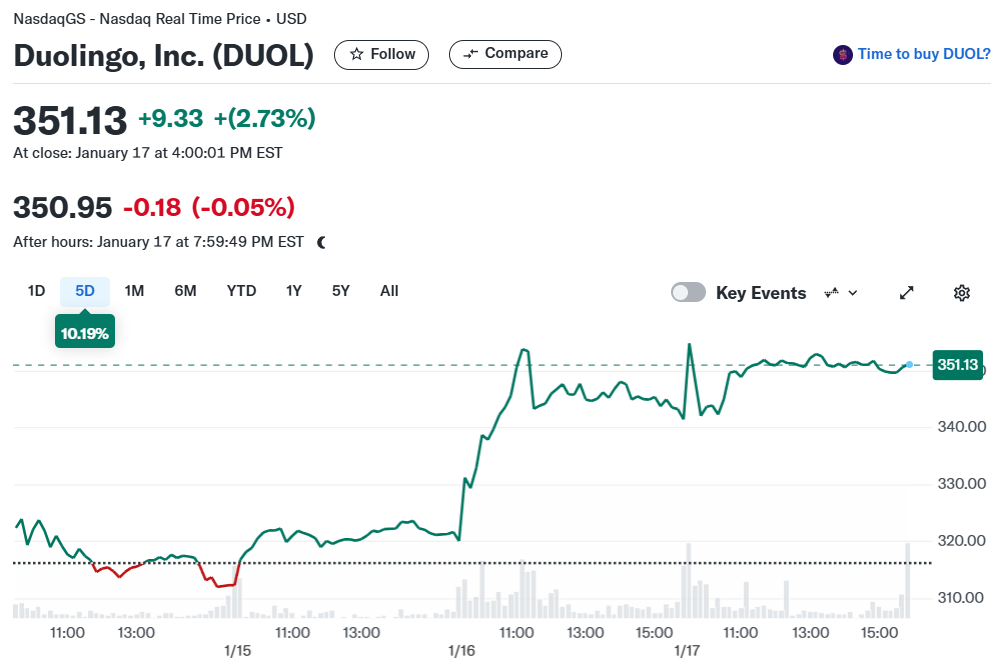
On January 16, Duolingo’s stock price surged by 7%, and the momentum continued with a 2.73% rise on January 17, reaching $351.13 per share, pushing its market cap to over $15.44 billion. JPMorgan even gave Duolingo an “overweight” rating, setting a target price of $400, a 14% increase from its recent closing price. With users looking to engage more deeply with Chinese culture, Duolingo’s Chinese language courses are becoming a hot commodity.
But while Duolingo’s stock price is on fire, it’s not all smooth sailing ahead.
JPMorgan’s report highlights that Duolingo needs to focus on a few key areas. First off, there’s the challenge of maintaining user stickiness as its user base grows. Sure, adding features like video calls and AI-powered tutors (shoutout to Lily) is cool, but how sustainable is that growth when other apps are quickly catching up with similar features?
Second, generative AI and large language models (LLMs) are putting serious pressure on companies like Duolingo to stay ahead of the curve. If Google or Microsoft launches a supercharged AI language tool, it could seriously compete with Duolingo’s entire business model. And don’t even get me started on regulation. With global internet crackdowns, Duolingo’s marketing strategy could face roadblocks.
However, Duolingo’s not sitting on its hands. The company is ramping up features like Duolingo Max, which is expected to bring in $153 million in revenue by 2025. With new language options, video call integration, and a gamified learning experience, Duolingo is actively shaping its future—not just riding the trend.
But what about TikTok’s unexpected comeback?
Just as Duolingo is hitting new highs, TikTok’s fate in the U.S. took a sharp turn. After a brief shutdown due to the threat of a ban, TikTok announced it’s back, thanks to Trump stepping in to help extend the ban deadline. So, what does this mean for Duolingo? Could TikTok’s revival put a dent in the growing buzz around language-learning platforms?
While TikTok’s return is a win for ByteDance, it might not fully derail Duolingo’s momentum. TikTok is all about entertainment and social connection, whereas Duolingo is carving out a niche in education. That said, RedNote could lose some of its "TikTok refugees" if TikTok regains its grip on users. If that happens, interest in learning Mandarin could take a hit, as many of these new learners might lose their motivation to study Chinese.
For now, though, the explosion in interest for learning Mandarin seems to be keeping Duolingo’s growth on track.
Duolingo is definitely one to watch. But with TikTok back in action, we’ll have to see if Duolingo can maintain its momentum in the face of shifting dynamics in the digital space.
So, what do you think? Is Duolingo’s model sustainable, or is this just a classic case of “jump on the bandwagon while it’s hot”?
#TikTok Ban Live Updates#$Duolingo Inc. Class A Common Stock(DUOL)