
Trump 2.0 Oval Office: A Symbol of Power, Personality, and Politics

Shearing sheep
January 22, 2025
GoGPT Summarizes Articles
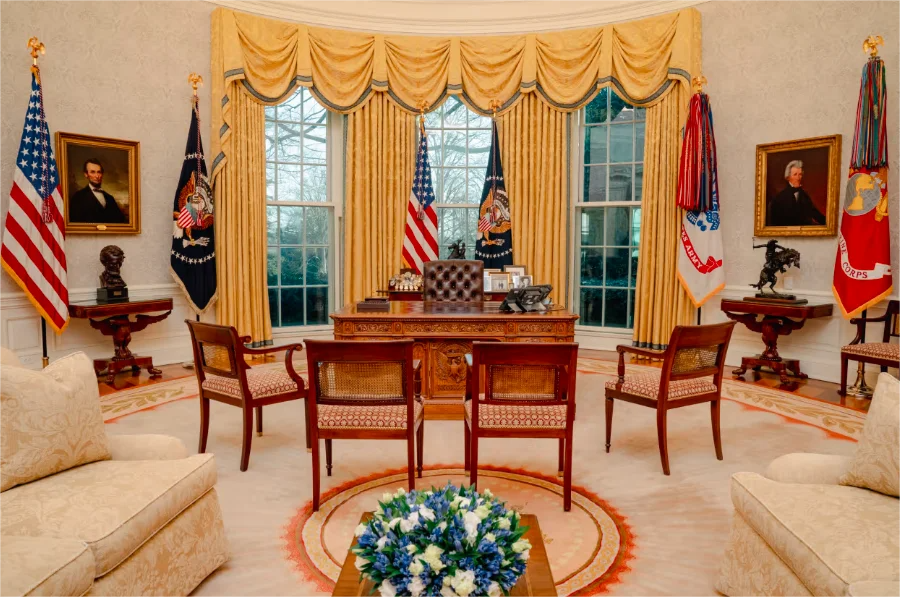
The Oval Office has long been regarded as the workspace of the U.S. President, perhaps the most iconic room in the White House. Historically, this is where presidents meet with foreign leaders, engage in discussions with Congressional leaders, and address the nation during pivotal moments in history. Unlike other meeting rooms in the White House, presidents have always personalized the Oval Office, choosing artwork and artifacts that emphasize their values and policy goals.
Now, with Donald Trump returning to the White House, it’s no surprise that his Oval Office has undergone some notable changes. After his inauguration, local media were granted access to his redesigned workspace. So, let’s take a look at the updates Trump has made to the Oval Office in the 2.0 era.
1. The Coca-Cola Button: The Return of Trump's Signature Touch
The most talked-about feature is, of course, the return of the iconic Diet Coke button on Trump's desk. This quirky button, removed by Biden in 2021, is more than just a personal touch—it’s an emblem of Trump’s distinctive style. As we all know, Trump doesn’t shy away from showcasing his personality, and this button is a prime example.
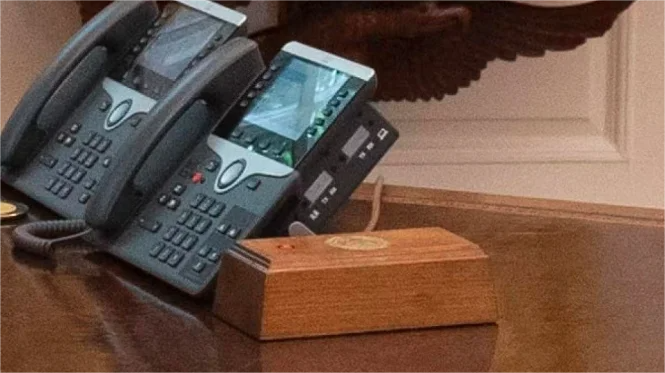
When Trump was in office before, he used it to call for a can of Diet Coke, clarifying in an interview that it was far from the "nuclear button" many joked about. While some might see it as a harmless joke, it stands in stark contrast to the more traditional and subdued nature of past presidential offices. It’s a small but powerful reminder that Trump’s presidency—both the first and second—has always emphasized personal brand and presence.
2. A New Portrait of Andrew Jackson: Populism Front and Center
Another significant change is the addition of a portrait of Andrew Jackson. Jackson, the seventh president of the United States, was a populist figure who rose to power amidst a wave of anti-establishment sentiment. It’s clear that Trump admires Jackson’s rise and policies, which align with his own populist messaging. Trump has always positioned himself as an outsider, someone who challenges the traditional political elite. Jackson’s portrait serves as a reminder of that philosophy.

But here’s the catch: Jackson’s legacy is highly controversial. His presidency is often linked to the forced relocation of Native American tribes, an event known as the "Trail of Tears," which led to the deaths of thousands. While Trump’s supporters may view Jackson as a symbol of strength and defiance against the political elite, many Native American groups and others view Jackson’s actions as deeply harmful. So, this portrait doesn’t just spark political conversations—it could reignite debates about how history and its figures should be remembered. This isn’t just art; it’s a political statement.
3. Family Photos and Personal Mementos: A Business-Centric Presidency
Trump’s Oval Office is also filled with personal photos that highlight the family-centric nature of his presidency. Pictures of him with Ivanka as a child, his wife Melania, and their son Barron adorn small tables and bookshelves. It’s a visual reminder of the family business Trump has built over decades.
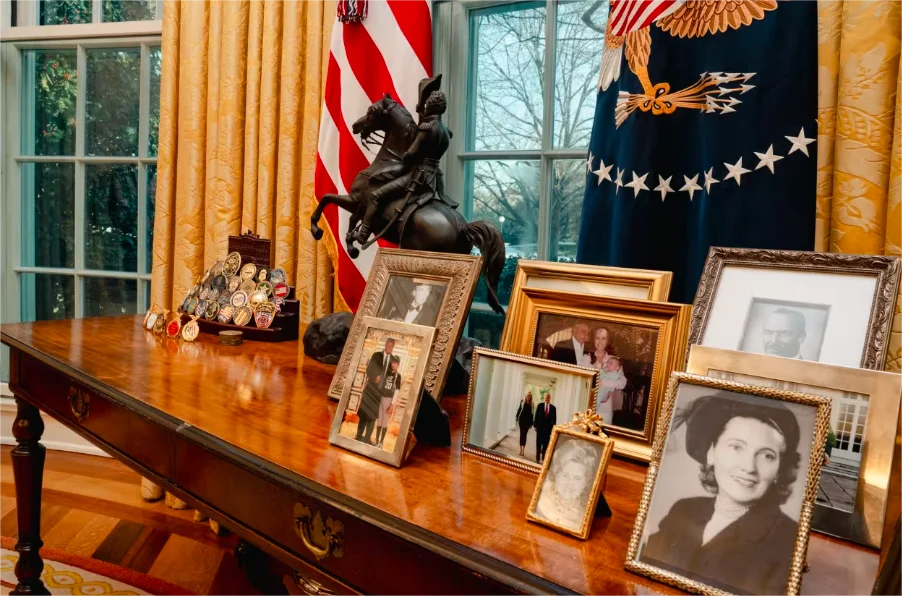
Whether you see it as a touch of warmth or as something that makes the presidency feel more like a family-run corporation, it’s part of the persona Trump has cultivated. When your name is literally the brand, it makes sense to put it front and center in the most powerful room in the world.
4. The Carpet Change: A Small Symbol with Big Meaning
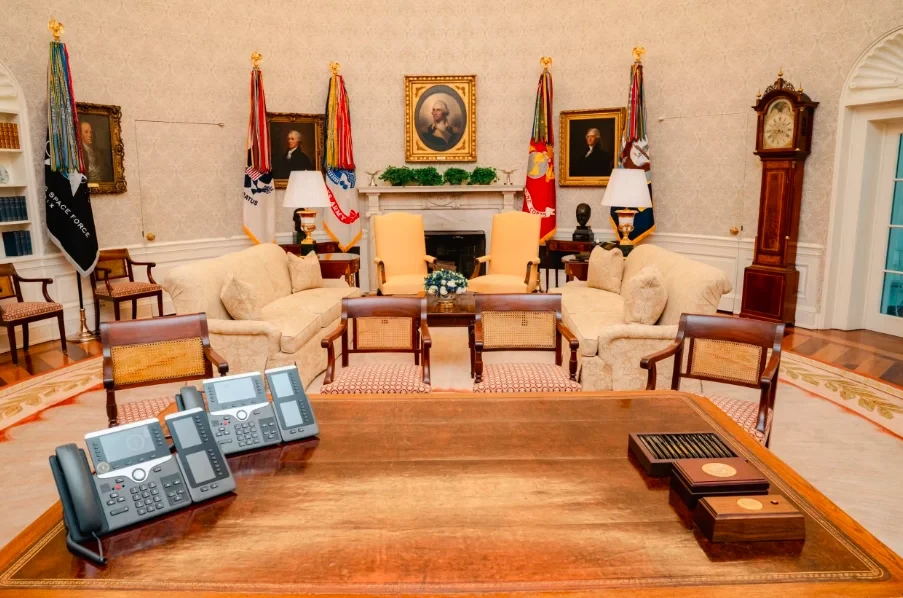
Another interesting, albeit seemingly trivial, change is the replacement of the blue carpet from Biden’s term with a more neutral-colored carpet—one Trump used during his first presidency. While it may seem like a simple design choice, every detail in a presidential transition sends a message. Changing the carpet—the one thing Biden left behind—signals a return to Trump’s political era and a subtle rejection of the policies and décor that preceded him. It’s a small but meaningful symbolic gesture in re-establishing power.
5. The Busts: A Nod to History and Legacy
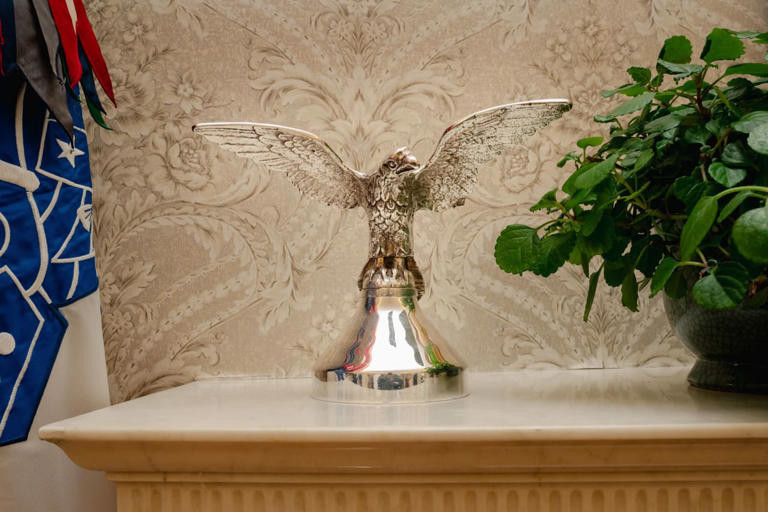
In terms of busts, Trump has kept some familiar faces, like that of Winston Churchill, which was present during his first term. The bust of Martin Luther King remains, serving as a symbol of civil rights and social justice. However, the bust of Robert Kennedy, placed near the fireplace during Biden’s term, has been removed and replaced with figures that better reflect Trump’s ideals. A Silver Eagle statue on the mantle further underscores Trump’s affinity for Americana and symbols of American power.
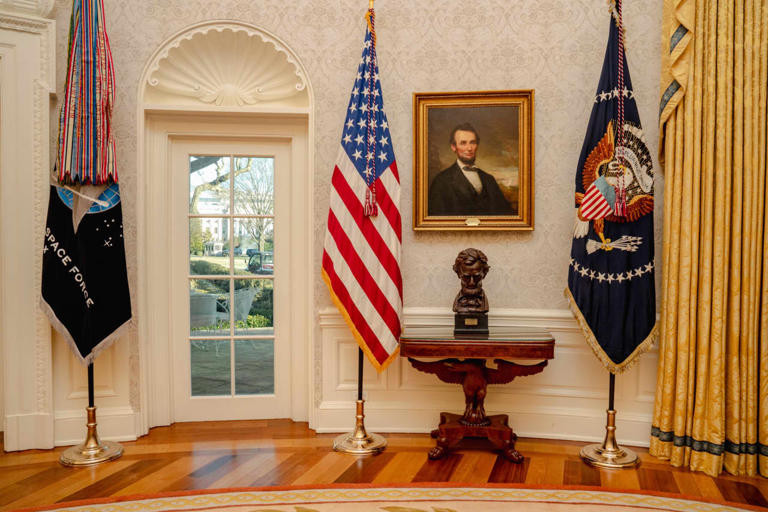
Perhaps the most significant aspect is Trump’s reintroduction of Jackson’s portrait. His love for populism is clear, and the political and historical figures he surrounds himself with reflect his core belief in challenging the political establishment. The question remains: Will this rebranding of the Oval Office solidify Trump’s place as the populist figure in U.S. history, or will it alienate voters who view these symbols as divisive?
So, What Does This All Mean?
At its core, the changes in Trump’s Oval Office reveal how he wants to be remembered and the political message he aims to send. This office is not just about governance—it’s a stage for his larger-than-life persona. It’s a blend of power, politics, and personality all rolled into one room.
Honestly, I kind of like the red button. Presidents have traditionally held a serious, authoritative image, but the bright red button, which is simply used to order a Diet Coke, adds a bit of humor and relatability. Family photos are pretty normal, too, like how many people have pictures of loved ones on their desks. But when family and business merge into a brand, that’s when concerns arise—especially when the Trump family is promoting cryptocurrency under their name. It’s hard not to wonder if these personal brands are being leveraged for other purposes.
And the changes with the photos and busts? It’s a double-edged sword. This focus on personal symbols and populist figures—does it help or hurt his political legacy? Will these decisions make him more relatable to his supporters, or will they deepen the divide in an already polarized political environment? I think his supporters will likely embrace it, while those who oppose him will only be further alienated.
#Trump Policy in 2025: Here's What to Expect#trump#$TRUMP/USDT BINANCE(TRUMP)