
Trump's Tariffs: Short-Term Pain, Long-Term Gain?

Shearing sheep
February 5, 2025
GoGPT Summarizes Articles
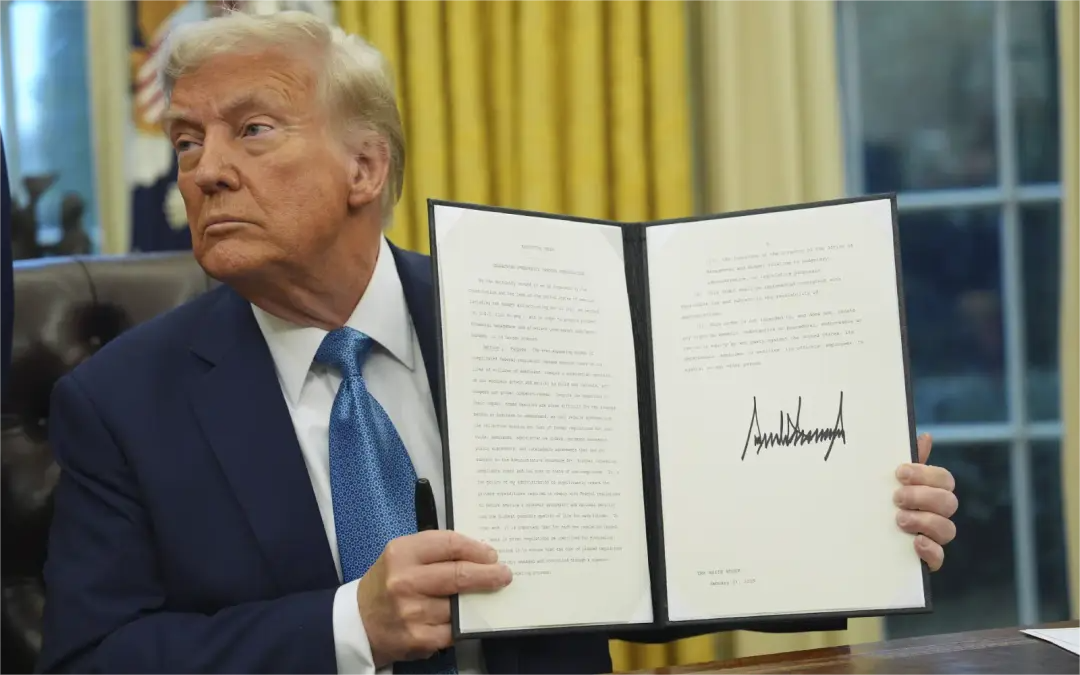
On February 1, 2025, Trump dropped a bombshell announcement—25% tariffs on goods from both Mexico and Canada, and 10% tariffs on imports from China. This isn't just about making a statement; it's the continuation of Trump's plan to "bring manufacturing back to the U.S." and to put a serious dent in the fentanyl trade. Let's unpack this a bit.
Why the Tariffs?
First, there's the obvious point: manufacturing. Trump is framing this as a way to protect U.S. jobs and boost local production. The logic goes like this—if you make foreign goods more expensive, consumers will lean toward buying American-made products. The reality? Well, history shows tariffs often don't do as much for manufacturing jobs as you'd hope. The 2018 steel tariffs didn't exactly bring a manufacturing renaissance. So, it's unclear how much of an actual job boost we'll see this time around, even though the idea is popular with some U.S. workers who feel left behind by globalization.
Then there's the fentanyl angle. Trump argues these tariffs are partly to curb the deadly flow of fentanyl from China and Mexico, which has been wreaking havoc on communities across the U.S. But here's the issue—Canada, which is also included in these tariffs, isn't the source of the problem. Canada's PM Justin Trudeau has already pointed out that less than 1% of fentanyl comes from his country. So, is this a strategic move or just a political tool to apply pressure?
The Reactions: Market Chaos and Negotiations
Naturally, the market didn't react kindly to this news. We saw a quick drop in stock prices, with the S&P 500 dipping before bouncing back a little, sitting at 6,037.88 as of February 4. That's a slight uptick from the previous close, but the markets remain jittery.
This is because Trump has postponed tariffs on Mexico and Canada for a month while he continues talks with these nations. This gives the market a little breathing room. On the flip side, China has already fired back with its own retaliatory tariffs on U.S. goods, signaling the potential for a trade war on multiple fronts.
The Real Cost: Consumers and Inflation
So, let's get down to brass tacks. Who's really going to pay for this? Answer: the consumers. When you slap tariffs on imported goods, the costs generally get passed down the supply chain, meaning higher prices for everything from cars to electronics. Imagine paying $2,700 more for a car thanks to a 25% tariff on automotive imports.
Economists are also warning that this could bump inflation up from 2.9% to as high as 4%, which could have far-reaching effects on the U.S. economy. In the long run, this might slow down consumer spending, especially as prices rise.
A Bigger Picture: Trade Wars and Global Supply Chains
More importantly, China, Mexico, and Canada make up a huge chunk of U.S. imports—40% last year alone. Disrupting this flow could cause chaos in global supply chains, especially in industries like automotive, where parts cross borders multiple times before a car is fully assembled. Any disruption there could lead to delayed production, higher costs, and more volatile markets.
If the tariffs hit the automotive sector as expected, we might see a ripple effect in everything from car prices to parts shortages. And it doesn't stop there—other industries like electronics, food, and pharmaceuticals could feel the pinch, leading to inflationary pressures across the board.
On the flip side, if Trump follows through on his threats to bring tariffs to the EU (he's already hinted at targeting Silicon Valley), the U.S. could face a wave of retaliatory measures, especially in the tech sector. The EU has a “bazooka” ready to fire, which could hit services, intellectual property, and investments—things that would hurt U.S. tech giants like Google and Facebook. This could cause a major disruption to the U.S. digital economy, with European consumers facing higher prices for U.S.-based tech products and services, while U.S. companies might be hit by new restrictions in Europe.
The Verdict: Short-Term Pain, Long-Term Gain?
So, what's the takeaway here? In the short term, expect price hikes, inflation, and possibly some trade war drama with multiple countries. There's no denying the fact that tariffs will hurt consumers and disrupt global markets. However, Trump's play to repatriate manufacturing and clamp down on fentanyl could have long-term benefits. If those goals are achieved, it might pay off down the road—but that's a big if.
More likely, as the trade war intensifies, we'll see prolonged economic uncertainty. Tariffs on goods could spill into tariffs on services, as we're already seeing with the EU's potential retaliations. The global supply chain will undoubtedly experience further strains, and industries like tech, automotive, and agriculture could be hit with higher costs and slower production timelines. If the U.S. becomes embroiled in a tech war with Europe and China, we might also see reduced investment and innovation in these sectors.
Ultimately, this could be a game of high-risk, high-reward. Whether it turns into a full-blown trade war or a quick, negotiated truce will be key to how this plays out for the global economy. But one thing is clear: for now, it's the consumers who are left holding the bill.
Will the tariffs really lead to a manufacturing boom, or are we just heading toward a protracted global economic battle? What do you think—are these tariffs a strategic move, or is this a dangerous game that could backfire? #trump
#trump