
Google's stock price plummeted after the release of its financial report, and its core business is facing challenges

Magical Investor
February 6, 2025
GoGPT Summarizes Articles
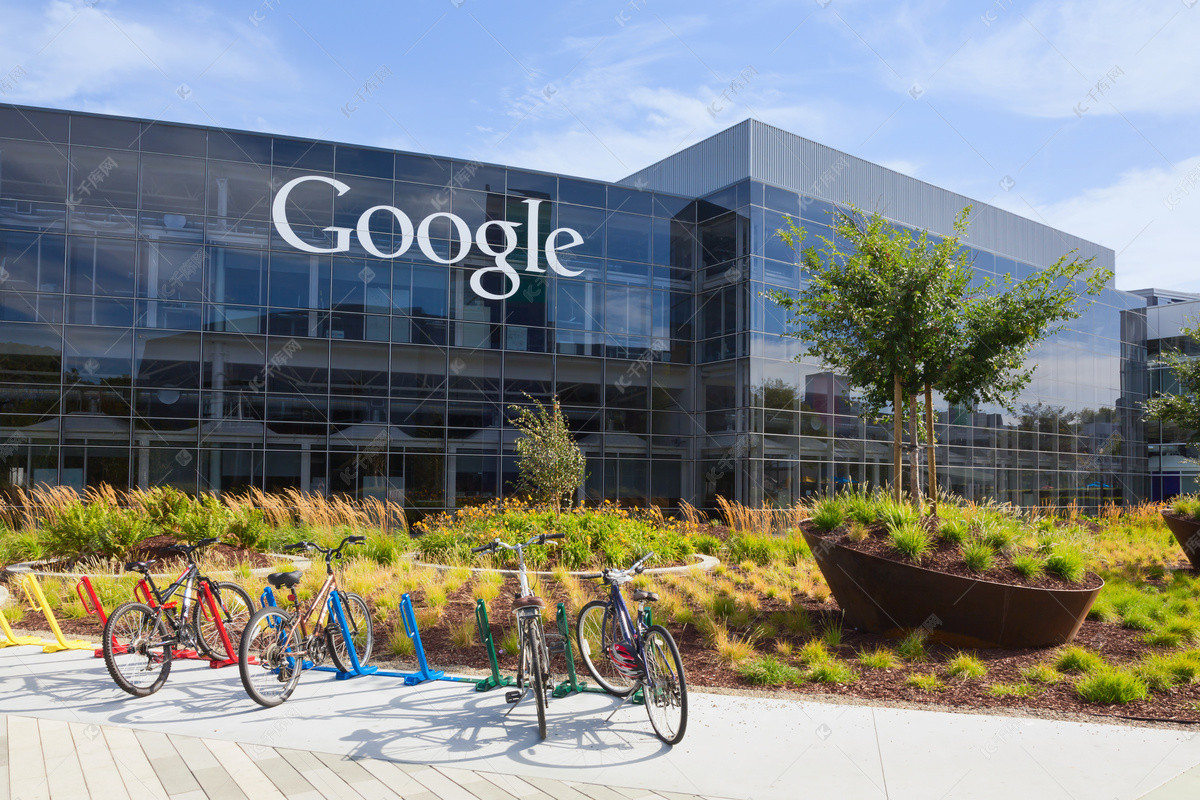
On February 4th, local time, Alphabet, Google's parent company, released its fourth-quarter 2024 financial report.
The underperformance of its cloud business led to a significant post-market slump in its stock price.
Let's take a closer look at the details.
Spending on AI continues to increase
The financial report shows that Alphabet's fourth-quarter revenue reached $96.469 billion, a 12% year-on-year increase, and its net profit was $26.536 billion, a 28% year-on-year increase.
Regarding the cloud business, which the market is more concerned about, the revenue was $11.955 billion.
Although it increased by 30% year-on-year, it fell short of the market's expected $12.19 billion.
In addition, Alphabet anticipates that its capital expenditure in 2025 will reach $75 billion, far exceeding analysts' estimate of $57.9 billion.
Analysts believe that although Alphabet achieved growth in both overall revenue and profit, the cloud business, as the second growth driver, failed to meet high expectations.
Coupled with the sharp increase in capital expenditure, this has triggered a revision of the market's valuation model for the company.
The high-level capital expenditure is mainly earmarked for the construction of data centers and artificial intelligence infrastructure.
While this reflects the company's long-term strategy, against the backdrop of the cloud business's slowdown in growth, the market is worried that the short-term profit margin will be squeezed, and investors are also skeptical about the return period.
Affected by the financial report, Alphabet's stock price dropped by more than 7.2% after the market closed.
The Clash Between OpenAI and Google: Search Business in Jeopardy
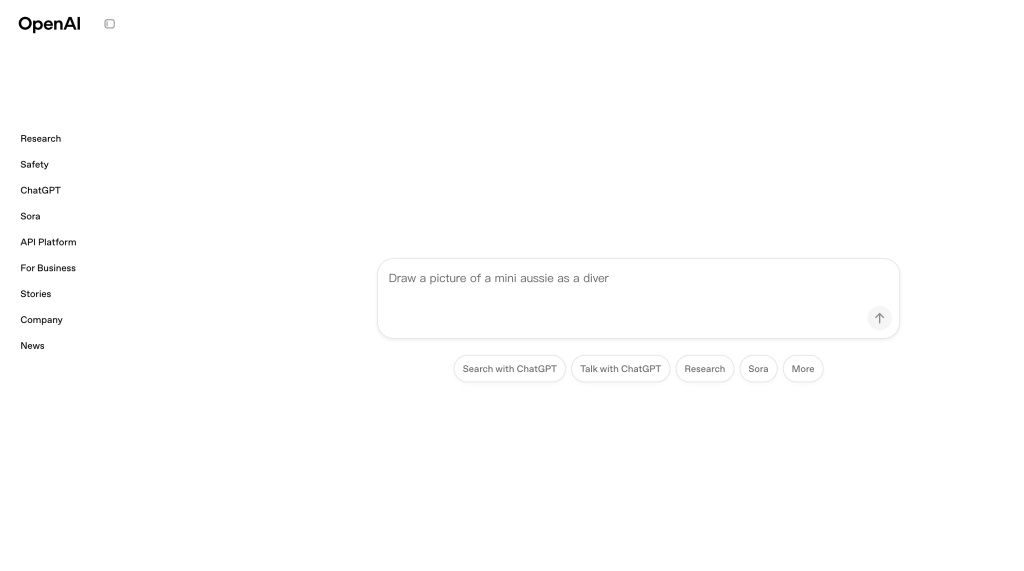
Today, OpenAI announced the opening of the ChatGPT search function to all users without the need for registration.
Compared with traditional search engines like Google that rely on an indexing model, ChatGPT search can crawl online information more rapidly and achieve minute-level analysis.
This is particularly beneficial for industries such as stocks, sports, and finance, which require immediate access to news content.
Moreover, leveraging the capabilities of large language models, it can better interpret users' search intents and provide the source addresses of search results. In response, some netizens have claimed that the Google era is over and that Google Search is set to decline significantly.
This was well within our expectations. As the traffic gateway to the internet world, search engines have always been a strategic battleground for various players.
AI-powered search is regarded as the next-generation search, with the potential to revolutionize the traditional search market landscape.
It's worth noting that just a few hours before OpenAI announced the full roll-out of ChatGPT Search, Google also announced the release of its latest Gemini 2.0 model to the public, including three versions: Flash, Pro Experimental, and Flash-Lite.
Google claims that this is the most powerful AI model suite it has ever developed. All models will feature multi-modal input and text output capabilities upon release, with more modalities to be fully introduced in the coming months.
Sundar Pichai, the CEO of Alphabet, Google's parent company, stated during the earnings conference call on February 4th, local time, that Google's Gemini 2.0 Flash model and 2.0 Flash Thinking model can rival DeepSeek R1 in terms of efficiency.
This isn't the first time OpenAI and Google have clashed. OpenAI has repeatedly "targeted" Google precisely, unveiling its latest developments immediately after Google launched new products, and Google has since retaliated on multiple occasions.
On the day OpenAI launched ChatGPT Search, Google announced the integration of Gemini into Google Maps.
Google also timed the release of Gemini 2.0 just before OpenAI's new product launch.
The next day, OpenAI promptly introduced ChatGPT Vision, which offers multi-modal interaction. Subsequently, after OpenAI officially launched Sora, Google suddenly rolled out its latest video-generation model, Veo 2... Additionally, Google added an investment of $1 billion to Anthropic, a competitor of OpenAI, this year.
Whether it's in terms of large language models or agents, the rivalry between OpenAI and Google is set to continue.
Antitrust Investigations
The challenges facing Google don't end here.
On the afternoon of February 4th, the State Administration for Market Regulation of China announced that it had launched an antitrust investigation into Google in accordance with the law due to the company's suspected violation of China's Anti-Monopoly Law.
However, the announcement did not disclose further details of the investigation.
Currently, Google faces antitrust regulatory challenges in multiple jurisdictions worldwide.
The US Department of Justice has stated that Google has unlawfully maintained its monopoly in the general search service and search text advertising markets by controlling the Chrome browser and Android operating system, depriving competitors of market opportunities and negatively impacting market innovation and competition.
In August 2024, the US District Court for the District of Columbia ruled that Google had illegally monopolized the online search market, violating US antitrust laws.
In November 2024, the US Department of Justice submitted a document to the District of Columbia Court, demanding that Google divest its Chrome browser to eliminate its control over search distribution channels.
Furthermore, the US Department of Justice also seeks to restrict Google's control over Android, proposing two options: one is to divest the Android system, and the other is to implement behavioral remedies to limit Google from using the Android system to favor its own search services.
The case is scheduled to go to trial in April 2025.
Additionally, Google is accused of violating the antitrust laws of the European Union, South Korea, Russia, India, Turkey, and other countries and regions due to its suspected abuse of market dominance.
Google is currently facing multiple hardships.
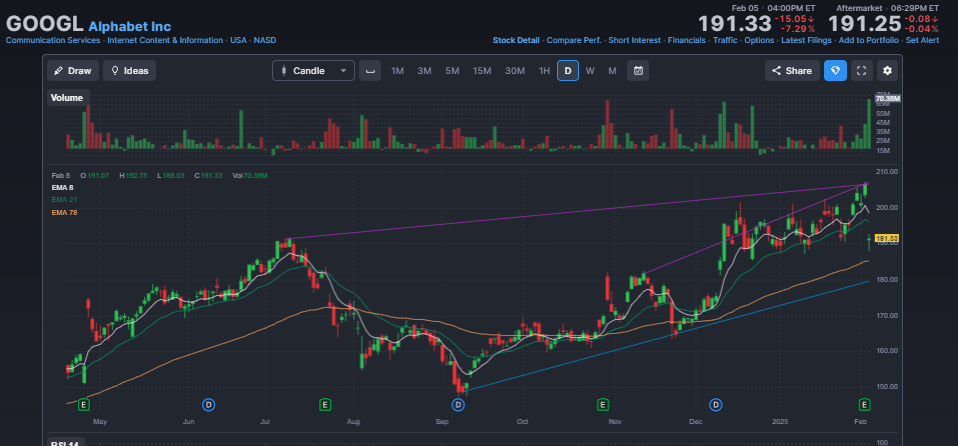
Judging from the K-line chart, the Google stock price has strong support at around $168.92.
In the short term, the rapid decline in the stock price may prompt some technical investors to engage in bottom-fishing. Moreover, the company's overall business still has a certain profit base and growth potential, suggesting a possibility of a rebound.
#Google Tumbles on Slowing Growth, Time to Buy?#google#$Alphabet Inc. Class A Common Stock(GOOGL)