
Volatility in the Financial Markets Will Persist:A Brief Discussion on the Non-Farm Payroll Report And Another major Data Looms This Week

Magical Investor
February 10, 2025
GoGPT Summarizes Articles

On February 7th, the U.S. Department of Labor released the non-farm payroll data for January 2025.
Although the non-farm payroll employment growth was lower than expected, the unemployment rate unexpectedly dropped to 4.0%.
And the number of new jobs added was 143,000, lower than the market expectation of 169,000 and much lower than the 307,000 in December 2024.
The too-rapid cooling of the employment market was completely beyond market expectations.
On Friday, the S&P Index and the NASDAQ Index declined, while the 10-year Treasury bond rose.Market performance reflected investors' sentiment towards this report.
The employment market is showing signs of downturn again, and the outlook is not optimistic.
The January report made investors feel somewhat uneasy.
First of all, the number of new jobs in the commodity-producing sector was zero.
The manufacturing and construction industries added 7,000 jobs, but this was completely offset by job cuts in the mining and logging industries.
Secondly, the service industry provided 111,000 jobs and remained the largest contributor to the job market.
Among them, the retail industry, which has the lowest hourly wage, added 34,300 jobs.
The professional, scientific and technical services sector provided 17,100 jobs, the healthcare and social work services provided 66,000 jobs, and the government sector provided 32,000 job opportunities (mainly local educational institutions).
Finally, the information service industry and the financial industry added 2,000 and 7,000 jobs respectively, while the management and support services, food service industry, and private education services cut 26,900, 17,500, and 4,400 jobs respectively.
Of course, just stating the data may be hard to understand, so let me give a brief summary here.
Judging from the data, the structure of the U.S. employment market has hardly changed: employment in the commodity-producing sector is approaching saturation, the healthcare industry still provides the most jobs, and the government sector steadily increases employment.
Although the manufacturing and construction industries added 7,000 jobs, the job cuts in the mining and logging industries completely offset this growth, indicating that the development of traditional resource-based industries and some parts of the industrial sector is unstable, being restricted by multiple factors such as resource limitations, environmental protection policies, and market competition.
The job cuts in the management and support services, food service industry, and private education services reflect the challenges these industries face in terms of market competition, operating costs, and policy adjustments.
At the same time, with the promulgation of various new policies by Trump and the continuous progress of technology, jobs that rely on labor and have low added value, such as in mining and logging, will continue to be impacted. This is certain, but too many job cuts at once should be avoided, otherwise the market will fall into panic.
The data of these employed people is directly linked to economic growth.
The adjustment of U.S. federal government agencies is also underway, and its impact will gradually become apparent, affecting the employment data in the coming months.
Due to differences in ideology from the Republican Party, many ESG (Environmental, Social, and Governance) project departments in U.S. companies have been downsized, and diversity, equity, and inclusion (DEI) project departments have also been cut, so the number of potential unemployed people will continue to increase.
Turmoil in the Financial Markets Continues: CPI and PPI to Be Released Soon
The financial markets will not over-interpret the January employment report. It is reasonable for companies to cut jobs after the Christmas sales peak.
Inflation is currently a major focus of concern in the financial markets.
The Consumer Price Index (CPI) report released by the U.S. The PPI data will be announced on Thursday, and the retail sales data for January will be released on Friday.
Department of Labor on February 12th will indicate the short-term change direction of the market.
Judging from the hourly wage in January ($35.87 per hour), there is still inflationary pressure in the United States, and the CPI index will only change slightly.
Media surveys show that the consumer price index excluding food and energy in January will increase by 0.3%, the fifth increase in the past six months.
Our key concern for this CPI report is whether it will rise continuously for four months to reach 3% or higher. If so, it means that the market's expectation of the Federal Reserve cutting interest rates in June may be postponed again.
If inflation cools down after consecutive rebounds, the market will readjust its expectation of an interest rate cut in light of Powell's speech the previous day.
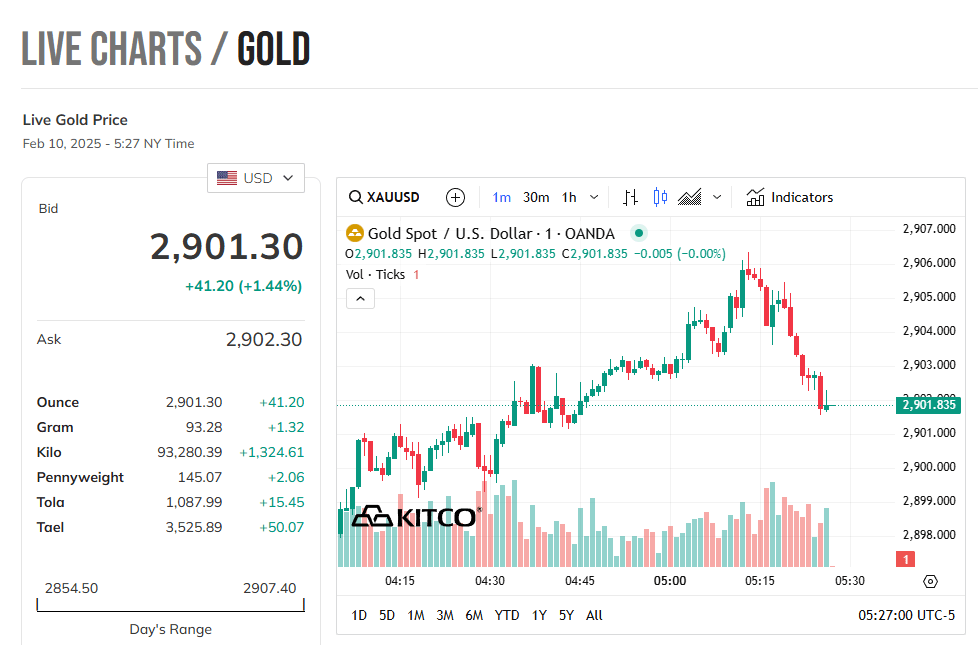
The tariff war has just started, and the gold price is approaching $3,000 per ounce. Currently, the financial markets are highly volatile.
NVIDIA's fourth-quarter earnings report will be released in two weeks. Coupled with the impact of Deepseek, the attention paid to this earnings report will far exceed that of the past. Therefore, the volatility of the U.S. financial markets will continue to increase in the coming period. Investors are advised to invest rationally.$NVDA
#Breaking Macro Events: Market Impact & Analysis#$Nvidia Corp(NVDA)