
Officially Rejects Musk!GPT-5 Will Be Free! OpenAI Is Playing a Big Game
Magical Investor
February 16, 2025
GoGPT Summarizes Articles
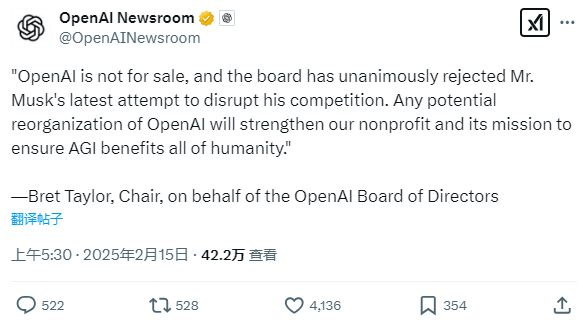
On February 14, local time, the board of directors of OpenAI, the developer of ChatGPT, unanimously rejected Elon Musk's offer to acquire the company's assets for $97.4 billion.
Just a day before, Sam Altman, the CEO of OpenAI, posted a message in the early morning, stating that GPT-4.5 and GPT-5 will be released successively.
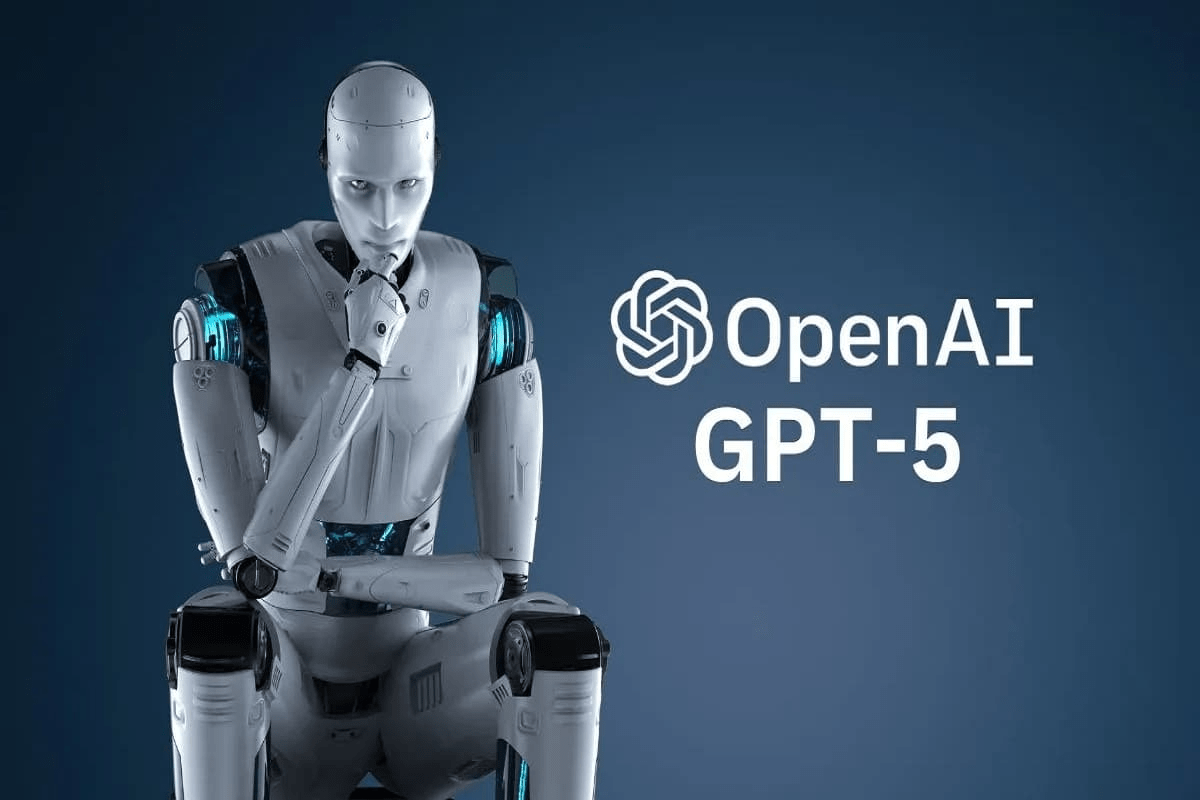
The free version of ChatGPT will be able to use GPT-5 for conversations without limitations under the standard intelligence settings, but there will be thresholds set to prevent abuse.
OpenAI has been making a lot of moves recently. In this article, we will discuss the OpenAI.
Musk and OpenAI
In fact, the market may have forgotten that Musk is also one of the founders of OpenAI.
In 2015, Musk co-founded OpenAI with Sam Altman, Greg Brockman, Ilya Sutskever, etc.
At that time, they promised to invest $1 billion with the goal of promoting the development of artificial intelligence in a direction that benefits all mankind.
They positioned OpenAI as a non-profit research company, committed to developing and promoting friendly artificial intelligence in a responsible manner.
As the main angel investor, Musk personally invested tens of millions of dollars, providing important financial support for the early research and development of OpenAI.
At the same time, Musk also used his influence to attract some top talents in the AI field to join OpenAI, laying a talent foundation for its technological research and development.
In February 2018, Musk resigned from the board of directors of OpenAI on the grounds of potential conflicts of interest with Tesla's AI development.
In March 2019, OpenAI announced its transformation from a non-profit organization into a "limited profit" company, OpenAI LP.
In July of the same year, OpenAI received a $1 billion investment from Microsoft.
OpenAI's transformation was severely criticized by Musk at that time.
Musk believed that it deviated from the original non-profit and open-source purpose.
Musk thought that OpenAI placed profit above the public interest, while OpenAI stated that they realized that the non-profit model was difficult to support the development of artificial general intelligence (AGI), and they had reached a consensus in 2017 to adopt a profit-making model.
This acquisition by Musk is not just a simple investment in OpenAI. He hopes to redefine OpenAI through this action and bring it back to the path of philanthropy and safety for humanity.
Altman said in an interview that Musk's actions seem more like an attempt to hinder OpenAI's transformation into a profit-making model rather than a genuine intention to acquire it.
It seems that Musk is really a straightforward person, wholeheartedly wanting to bring OpenAI back to what he believes is the right path of the non-profit model.
GPT-5 Will Be Free! Simplify the Model
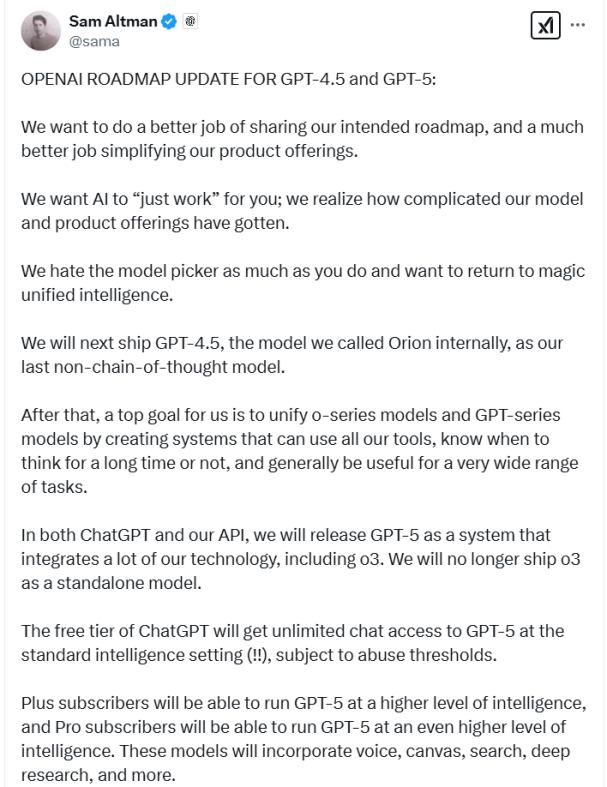
A few days ago, Sam Altman, the CEO of OpenAI, suddenly posted on X to update everyone on the product plan.
One of the points is that the model and product functions are too complex and will be unified in the future.
To be honest, I have been annoyed by the numerous model names of OpenAI for a long time.
Now, if you are a ChatGPT subscriber, you need to judge and choose the appropriate model to answer questions when using it.
It's like when you want to use a computer, you have to choose whether to use an ultrabook, a business laptop, or a gaming laptop today.
Every time you use it, you always feel like being forced to show off the large number of models.
The key is that it's very difficult to remember, and there is no pattern in the naming at all. You can say there are the GPT series and the o series, but there is also GPT-4o, right?
If you pay attention to OpenAI's news, you will see more names, such as GPT-4o Turbo, GPT-4o preview, or the Q* project, the Strawberry project...
This is simply a disaster.
And this optimization probably means that in the future, when you open ChatGPT, all the models you see will be "GPT-5", and there is no need to choose by yourself.
It's just that there will be differences in intelligence levels among GPT-5 for free users, Plus users, and Pro users.
If that's the case, it will be very convenient.
In addition, Altman also specifically emphasized that "free users will be able to access GPT-5 without limitations under the standard intelligence settings."
Coincidentally, on February 6, Google released the more powerful Gemini 2.0 Pro and the low-cost preview version of Gemini 2.0 Flash-Lite. The latter costs $0.3 per million tokens, which is Google's cheapest model currently.
Its latest AI model suite, Gemini 2.0, was also officially announced to be available to all users recently.
It seems that the rapid rise of DeepSeek, even if it hasn't caused serious damage to OpenAI and others, is enough to make them break out in a cold sweat. OpenAI has started to set a bigger "hook" for free users.
Just as I said, DeepSeek has rushed into the AI circle like a catfish, rampaging around, making these originally lazy AI "tunas" start to swim.
What's Next for OpenAI?
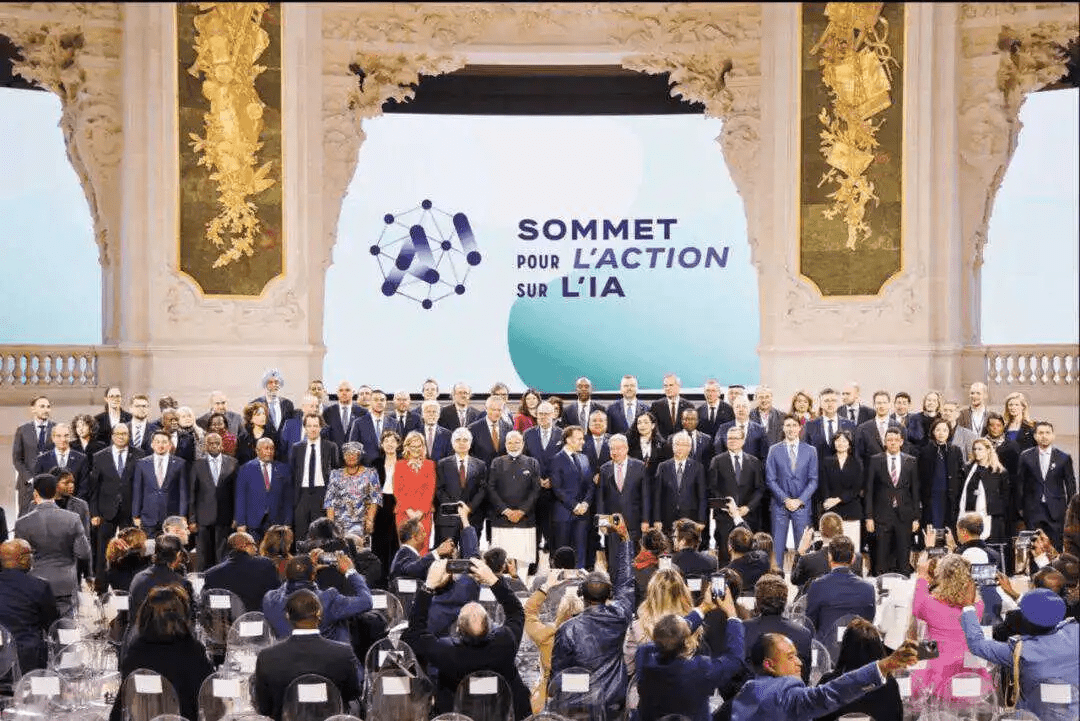
There is another thing about OpenAI recently. Sam Altman, its CEO, publicly stated at the Paris Artificial Intelligence Summit that he is willing to cooperate with China in the field of AI and will do his best to achieve this.
Obviously, OpenAI doesn't want to give up the huge Chinese market and wants to further globalize.
However, due to the particularity of the industry, it is still very difficult to cooperate with China.
And a recent report released by Goldman Sachs indicates that the rise of DeepSeek means that the development of the AI industry is shifting from the hardware infrastructure layer to the software application layer, providing new opportunities for the diversified development of the global market.
Many cloud platforms, various car manufacturers, and even the financial and medical industries are gradually announcing the integration of large models.
The era of artificial intelligence for all has arrived. Whether OpenAI can maintain its leading edge in the AI competition, we still need to wait and see.