
Intel's Potential Split: TSMC and Broadcom's Bid – What's Next for the Iconic Chipmaker?

Shearing sheep
February 17, 2025
GoGPT Summarizes Articles

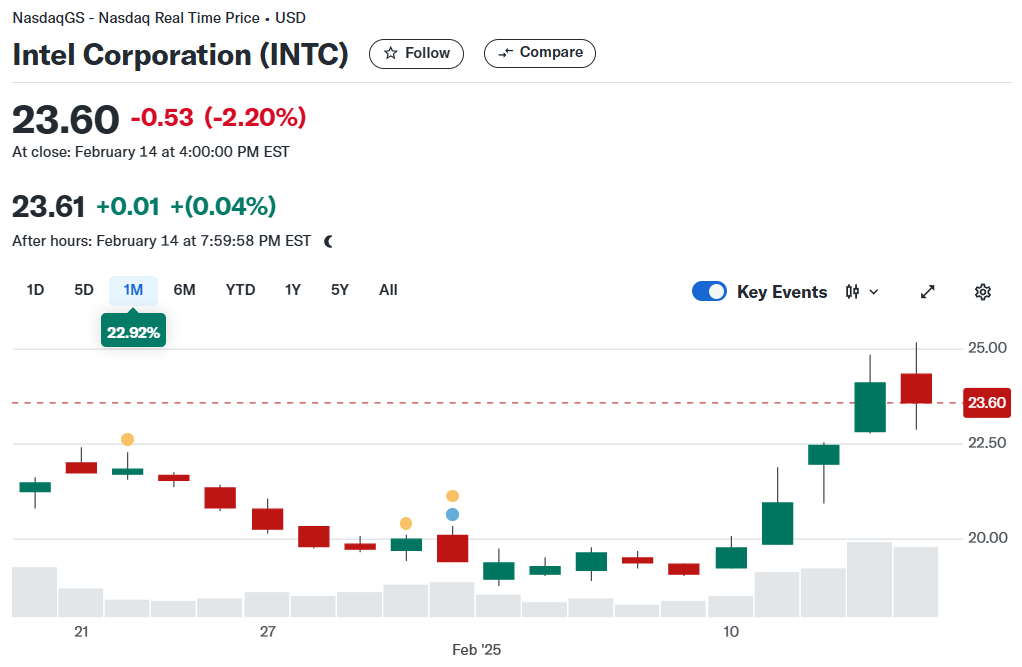
Last week, Intel's ($INTC) stock surged by a whopping 22.6%, driven by two key factors: U.S. Vice President Vance's commitment to bolstering domestic AI chip production, and whispers of a possible joint venture between Intel and TSMC ($TSM). But now, the plot thickens—TSMC and Broadcom ($AVGO) are reportedly in early talks to potentially split Intel into two separate entities. If this move materializes, it could reshape the semiconductor landscape significantly.
The Background
The semiconductor industry has been moving towards specialization—companies either design chips or manufacture them, but rarely both. Intel has been one of the last holdouts, maintaining both design and manufacturing capabilities. However, Intel has been lagging behind TSMC and Samsung in advanced chip manufacturing for years. Its recent attempts to turn things around under the former CEO Pat Gelsinger didn't pan out, and the company has been shedding non-core businesses to streamline operations.
A breakup could be a strategic move to refocus its efforts and unlock shareholder value, aligning Intel with the industry trend of specialization, potentially making it more competitive. According to insiders, Broadcom is interested in Intel's chip design and marketing operations, while TSMC is eyeing control of Intel's manufacturing side. Splitting Intel into two—one focused on design, the other on manufacturing—sounds like a promising strategy.
Potential Impact
While the talks are still in the early stages, the potential implications are enormous. For Intel, this could be a way to unlock shareholder value by focusing on its core competencies. For TSMC and Broadcom, it's a chance to expand their influence and capabilities.
However, the political and regulatory hurdles are significant. The U.S. government's stance on foreign control of critical infrastructure could be a major roadblock. With the recent shift toward strengthening domestic manufacturing through initiatives like the Chips Act, any such move would require a lot of regulatory approvals. The cultural and operational integration of such a large acquisition is no small feat.
My Take
While the idea of splitting Intel is fascinating, I'm skeptical about how feasible it is. For one, TSMC and Broadcom have yet to formally present a proposal to Intel, and there's no guarantee that a deal will happen. For two, the operational challenges are immense. Intel's factories are optimized for its own chips, and retooling them to produce chips for external customers—especially using TSMC's advanced processes—would be a costly and complex endeavor. Additionally, the U.S. government's stance on foreign ownership of critical infrastructure could be a significant roadblock.
That said, if a deal does go through, it could reshape the semiconductor landscape. Broadcom acquiring Intel's design business would make it a formidable player in the chip design space, while TSMC taking over Intel's manufacturing could further solidify its dominance in chip production. However, the devil is in the details, and we're still in the early stages of these discussions.
What's Next?
Intel's board is currently searching for a new CEO, and the direction the company takes will likely depend on the outcome of these talks. If a breakup happens, it could open up new opportunities for investors, but it also comes with significant risks. For now, I'm keeping a close eye on how these negotiations unfold and what the U.S. government's next move will be. #intel #tsmc #broadcom
#U.S. Tech Giants: Tracking U.S. Market Leaders#$Taiwan Semiconductor Manufacturing Company Ltd.(TSM)#$Broadcom Inc. Common Stock(AVGO)#$Intel Corp(INTC)#intel#tsmc#broadcom