
Why Did Chinese Concept Stocks Plunge? Is It Still a Good Time to Be Bullish on Chinese Concept Stocks?

Magical Investor
February 25, 2025
GoGPT Summarizes Articles

Chinese concept stocks, which had been showing a rather fierce upward trend recently, generally declined overnight.
On February 24 local time, after the opening of the US stock market, Chinese concept stocks that had been continuously strong in the previous period encountered a wave of adjustments.
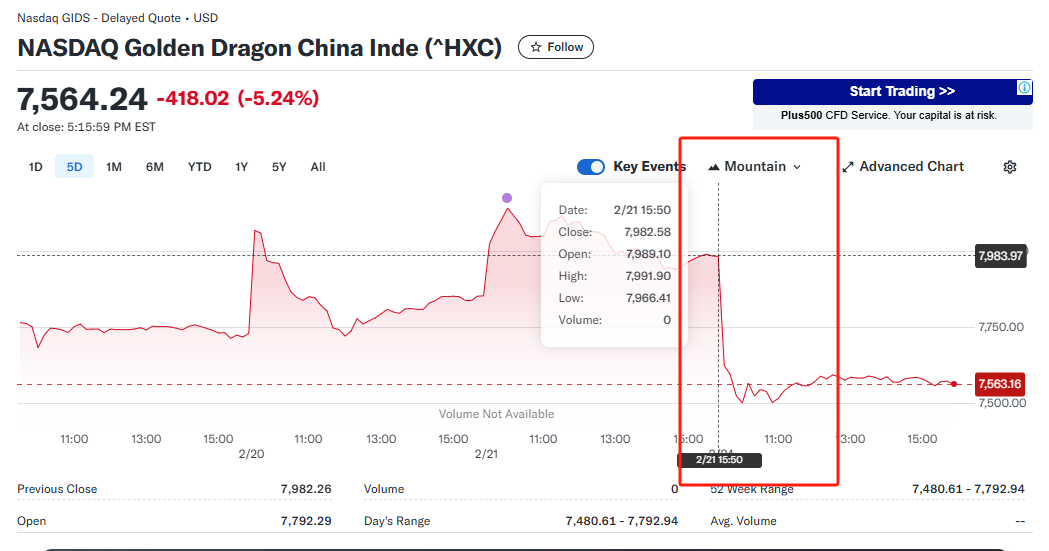
As of the close, the Nasdaq Golden Dragon China Index fell by 5.24%. Popular Chinese concept stocks declined. The Wind China Concept Technology Leading Index dropped by 6.77%, Tiger Brokers fell by more than 13%, GDS Holdings fell by more than 11%, and Kingsoft Cloud, Alibaba, and Bilibili fell by more than 10%.
Basically, all the previously popular Chinese concept stocks experienced a general decline.
So, what exactly happened? And is this decline an opportunity to buy? Let's have a brief discussion today.
Chinese Assets Favored by Various Investment Banks
With the technological advancements in China, such as those of DeepSeek, attracting international attention, Chinese technology stocks are at a point closest to a collective "revaluation" in recent years.
Many major banks, including Goldman Sachs and Morgan Stanley, are bullish on Chinese assets.
Goldman Sachs' latest report believes that supported by valuation advantages and policy expectations, A-shares are expected to surpass Hong Kong stocks within the next three months. The relatively low valuations and potential macroeconomic policy stimuli are expected to drive a catch-up rebound in A-shares and narrow the return gap with H-shares.
Morgan Stanley maintains a cautiously optimistic outlook on the Chinese market, believing that high-dividend and defensive stocks such as banks, energy companies, and state-owned enterprises may perform well, and large blue-chip stocks and industry leaders may attract continuous capital inflows.
Jefferies is currently more optimistic about Chinese internet stocks because, in addition to technological applications, enterprises are also pursuing advanced technologies and cost-effective models. The recent earnings of most medium and large-sized enterprises under the artificial intelligence theme either met or exceeded expectations.
Therefore, against this backdrop, Chinese concept stocks listed in the United States are currently like a low-valuation depression, attracting a wave of purchases from investors. The share prices of leading stocks such as Alibaba have soared until now, with an increase of more than 50% in recent weeks.
Why Did They Decline?
So, why did these powerful Chinese concept stocks decline?
I think there are two reasons. The first is the concern caused by the America First Investment Policy" .
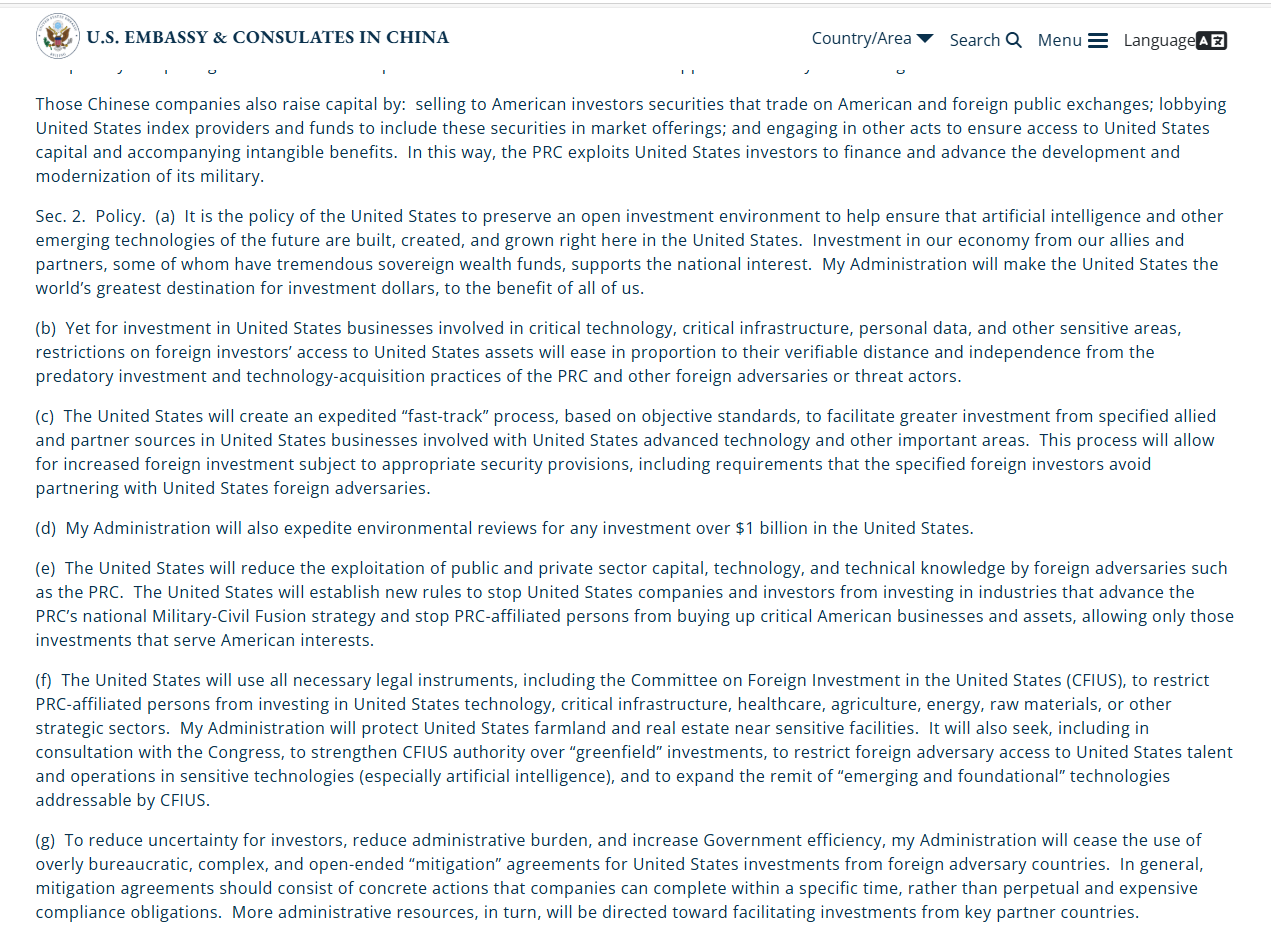
The White House of the United States issued the "America First Investment Policy" memorandum on February 24, clearly restricting two-way high-tech investments between China and the United States and requiring American companies to reduce their dependence on China's high-tech fields.
This policy directly hit Chinese concept technology stocks listed in the United States, especially those companies involved in sensitive fields such as AI and cloud computing.
Since the institutional investors in Chinese concept stocks are mainly American funds, the policy uncertainty triggered a rapid withdrawal of funds, resulting in a single-day decline of more than 5% in the Nasdaq Golden Dragon China Index.
The second reason, which I think is more credible, is that the short-term increase has been too high, and there is inherently a pressure for profit-taking at this stage.
Previously, Chinese concept stocks had already accumulated significant increases. The Hang Seng Technology Index had increased by 31% from the beginning of the year to before the sharp decline, and some individual stocks had increased by more than 50% in the short term. The market trading congestion level reached the warning level of 44%.
Technical indicators show that the 14-day RSI of the Hang Seng Index broke through 80 and entered the severely overbought range. The concentrated realization of profit led to a pullback. For example, Alibaba's American depositary shares fell by 10% in a single day, and Tencent's ADRs fell by 7%, both of which are normal adjustments after a large short-term increase.
Some of the short-term profit-making funds that previously entered Chinese concept stocks realized part of their floating profits. Yesterday, the stocks opened sharply lower, causing a stampede of subsequent funds fleeing.
Is It Still Worth Buying?
In the stock market, there is no myth of only rising and never falling, nor is there eternal prosperity or depression.
Truly successful investors often have a deep understanding of the reverse thinking logic of "buy when no one cares and sell when it's crowded".
In essence, the investment logic of Chinese concept stocks has not changed this time. However, it cannot withstand the profit-taking of funds. At this time, we can actually look for the bottom and seize the opportunity to buy.
#Chinese Equity Markets: Insights, News & Trading Signals#$Alibaba Group Holding Limited American Depositary Shares each represents eight Ordinary Shares(BABA)#$PDD Holdings Inc. American Depositary Shares(PDD)