
Overview of US Stock Earnings Reports: Plug, Which Hasn't Achieved Profitability in 28 Years and Is on the Brink of Delisting

Magical Investor
March 3, 2025
GoGPT Summarizes Articles

Updates of the earnings:
Plug Power (PLUG) reported a full-year 2024 diluted loss of $2.68 per share on Monday, widening from $2.30 per share in the previous year.
For the year ending Dec. 31, revenue declined to $628.8 million from $891.3 million.
The company announced plans to implement further operational improvements and cost-cutting measures, including additional workforce reductions in the coming weeks and cuts to discretionary spending.
___________
Preview of US Stock Earnings Reports: Plug, Which Hasn't Achieved Profitability in 28 Years and Is on the Brink of Delisting
This year, the hydrogen energy bubble is set to burst, especially in the transportation sector, and increasingly in all hydrogen energy projects used in the energy field.
One of the hydrogen energy companies that I am closely monitoring and which may go bankrupt is Plug Power.
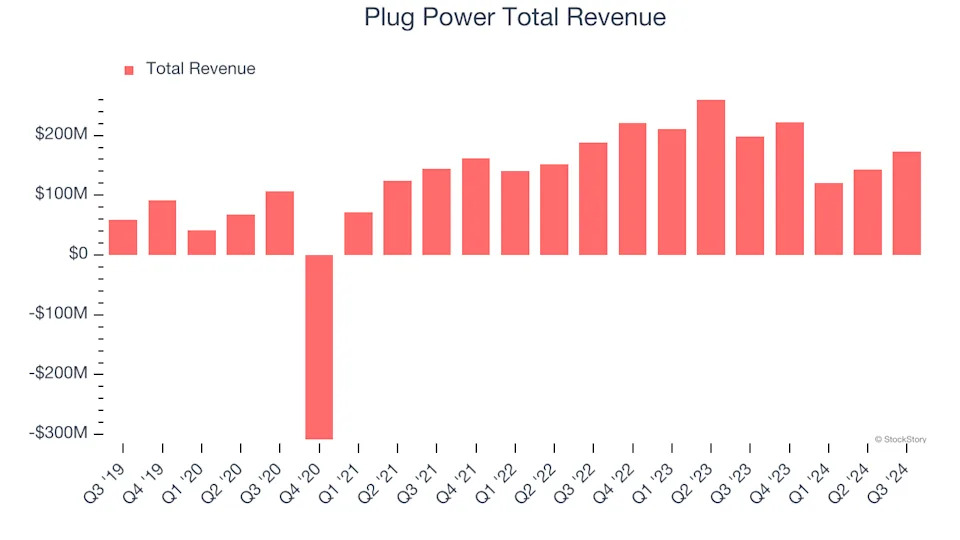
In the upcoming report, Wall Street analysts predict that Plug Power will report a loss of $0.23 per share, an increase of 78.5% compared to the same period last year. Revenue is expected to be $260.18 million, a year-on-year increase of 17.1%.
It should be noted that since 2010, the company has lost $3.12 billion, averaging about $200 million per year, and it has never achieved profitability in the 28 years since its establishment in 1997.
So what does Plug Power do?
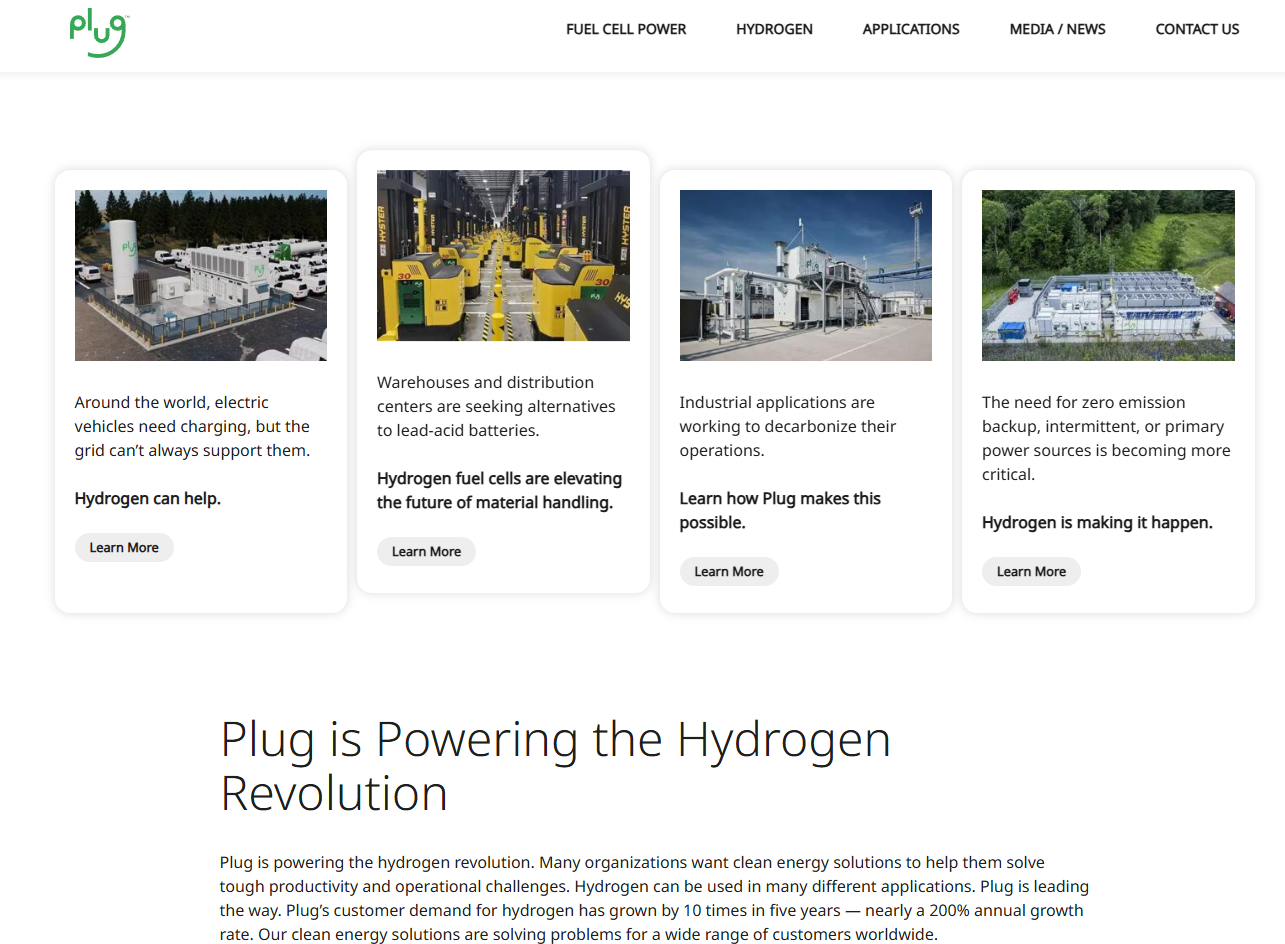
Founded in 1997, Plug Power is a joint venture between DTE Energy Company and Mechanical Technology Incorporated (MTI), focusing on the development of Proton Exchange Membrane (PEM) fuel cell technology.
Initially, the company targeted the stationary power supply application field, and later shifted its focus to hydrogen fuel cell systems for material handling and industrial vehicles.
Over the years, Plug Power has expanded its business scope, reached important partnerships and signed contracts, including providing fuel cell solutions for large warehouse operators such as Amazon and Walmart. The company has also invested in green hydrogen production, aiming to build a complete hydrogen energy ecosystem.
Many Overseas Hydrogen-powered Automobile Companies Have Gone Bankrupt And What's Wrong With The Hydrogen Market?
In August 2024, Tevva, a British pure electric and hydrogen fuel cell truck startup, announced the failure of its revival. The notice of the proposal by the joint administrators for Tevva Motors further clarified the company's plans for its collapse, the failure to find a buyer, and the final liquidation of assets such as vehicles, batteries, and manufacturing equipment at the Tilbury factory.
In October 2024, Quantron, a German zero-emission truck manufacturer, announced its bankruptcy. Quantron mainly produces fuel cell and battery electric heavy-duty vehicles. On the eve of bankruptcy, Andreas Haller, the founder and CEO of Quantron, resigned due to cardiac arrest, and Denis Muratov, the chairman of the company's supervisory board, served as the interim CEO. In 2023, Quantron launched a Series B financing aiming to raise 100 million to 200 million euros ($108 million to $216 million). However, the financing did not go smoothly.
And in February 2025, Hyvia, a joint venture established by Renault, a French automaker on the verge of bankruptcy, and Plug Power, a U.S. company, received a reprieve from bankruptcy by the Commercial Court of Versailles. The court gave Hyvia a few extra weeks to complete the bankruptcy process and find a buyer. However, the prospects are not optimistic.
Overall, from downstream automobile manufacturers to upstream enterprises engaged in hydrogen production, hydrogen refueling, material research and development, etc., enterprises in the hydrogen energy industry are actually facing great difficulties in survival.
At present, with the market yet to be opened up, the lack of infrastructure, a large funding gap, large project investments, high costs, and substantial research and development investments, the hydrogen energy market requires more time.
In 2000, the fantasy and hype about hydrogen energy reached its peak. For example, Ballard Power Systems, which has lost $1.3 billion since 2000 and has never been profitable, and FuelCell Energy, their stock charts look almost identical.
Incidentally, Plug Power's current stock price is only 0.1% of its peak value.
After South Korea's SK Group spent $1.5 billion to acquire about 10% of the company's shares in 2021, it remains an important strategic investor.
In the fourth quarter of 2024, Norges Bank more than tripled its stake in Plug Power, increasing from 26 million shares, which had already suffered significant losses, to 88 million shares (26 million + 62 million = 88 million). This move led to an additional loss of $18 million for it.
BlackRock Inc. has made multiple purchases, including several times before and after the small stock price fluctuations in 2021.
The SK Group bought shares at around $48 per share in February 2021, and most of the $1.5 billion investment has now been lost.
Plug Power have been struggling to maintain a stock price of $1 per share to avoid being delisted. However, given their rate of burning money, huge losses, and lack of substantial revenue, they are highly likely to fall into the delisting range and head towards bankruptcy.
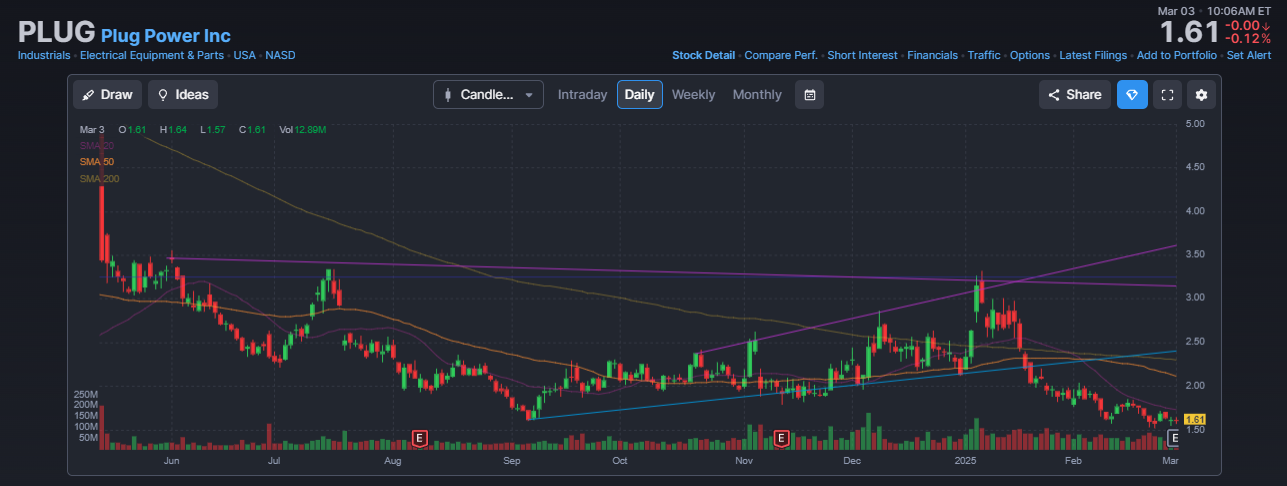
Judging from the K-line chart, Plug Power has still not emerged from the downward trend, and with the uncertain future of hydrogen energy, investors should exercise caution when making investments.$PLUG
#$Plug Power Inc.(PLUG)