
Brutal Start to March: Tech Stocks Plunge, Markets Bet on Three Rate Cuts

Shearing sheep
March 4, 2025
GoGPT Summarizes Articles
March kicked off with a brutal market selloff, and Wall Street is officially in panic mode. Stocks tanked, bond yields plummeted, and traders are now betting the Fed will have to cut rates three times this year. What’s driving the chaos? A mix of fresh tariff fears, weak economic data, and the growing specter of stagflation. Let’s break it down.
The Market Meltdown
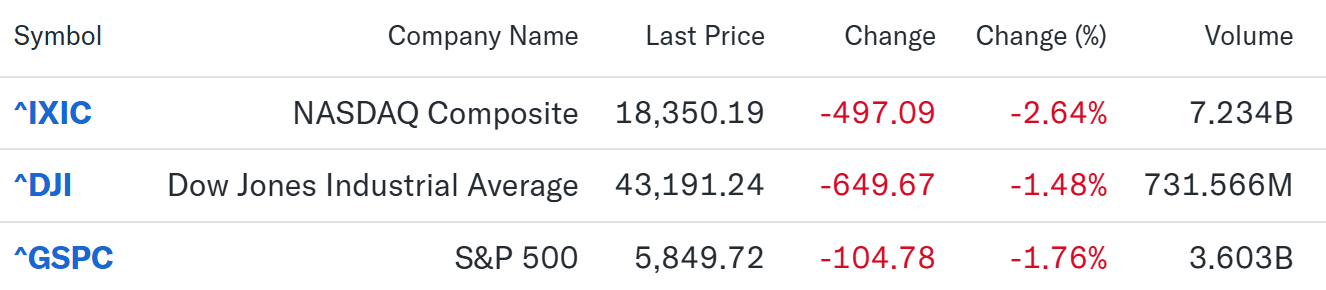
On Monday, the U.S. stock market took a serious beating, with the Dow Jones Industrial Average plunging 649.67 points (1.48%), the Nasdaq Composite dropping 497.09 points (2.64%), and the S&P 500 Index shedding 104.78 points (1.76%). According to Carson Group's Chief Market Strategist, Ryan Detrick, this was not only the worst single-day drop for the S&P 500 this year but also the second-worst start to March since records began. Only 2009 saw a worse debut for the month.
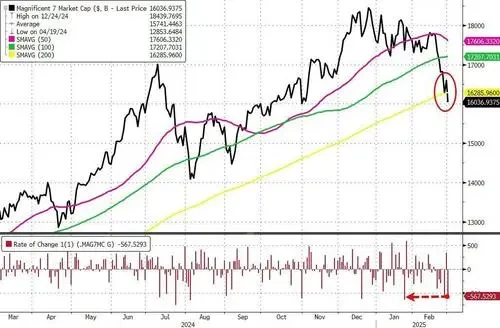
The “Magnificent Seven” tech giants collectively lost a staggering $570 billion in market cap.
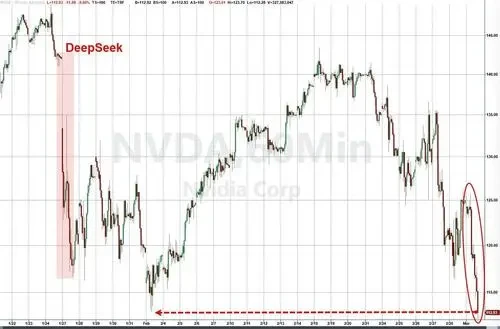
Nvidia alone saw $300 billion wiped out after tumbling nearly 9%.
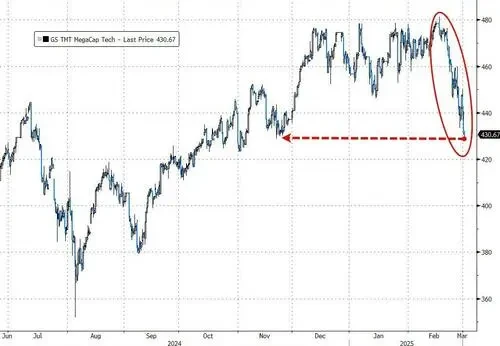
The TMT sector (Technology, Media, and Telecommunications) also hit its lowest level since November last year.
Adding to the selloff, a key index tracking these big tech stocks dipped below the crucial 200-day moving average (yellow line in the frist figure), a bearish signal that could suggest further downside.
The Culprits
So, what caused this turmoil? Two main factors are at play here:
-
Tariff Troubles: President Trump's announcement that the U.S. will impose a 25% tariff on goods from Mexico and Canada starting Tuesday has sent shockwaves through the market. The tariffs, especially with no negotiation room for Canada, have investors worried about the potential economic fallout. Fwdbonds' Chief Economist, Chris Rupkey, pointed out that the impact of these tariffs on the economy is uncertain, but it's clear they will bring some level of disruption.
-
Economic Data Woes: The economic data released on Monday wasn't exactly reassuring. The U.S. Manufacturing PMI fell from 50.9 in January to 50.3 in February, with the new orders index dropping into contraction territory at 48.6. This, coupled with other disappointing data like declining consumer spending and retail sales, is fueling fears of a potential stagflation scenario—a toxic mix of stagnant economic growth and rising inflation.
The Flight to Safety
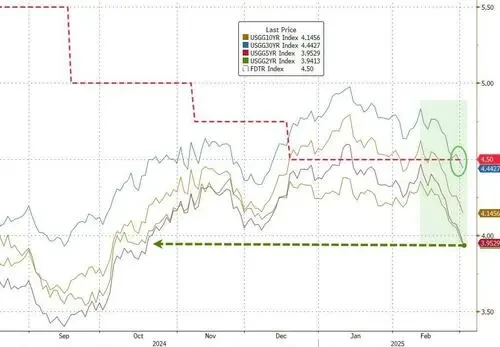
Amidst this uncertainty, investors are flocking to U.S. Treasuries, driving yields down to multi-month lows. The 10-year Treasury yield hit 4.168%, its lowest since December 9.
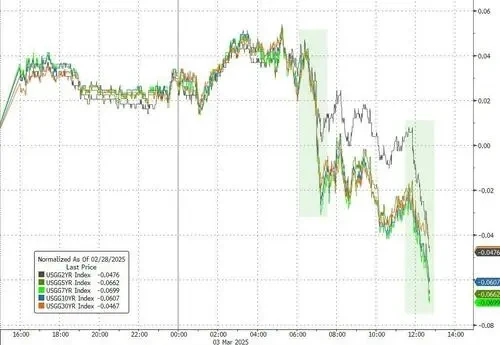
The entire yield curve is now below the upper bound of the Federal Reserve's target interest rate range, with even the 30-year yield falling below 4.5%.
What Lies Ahead?
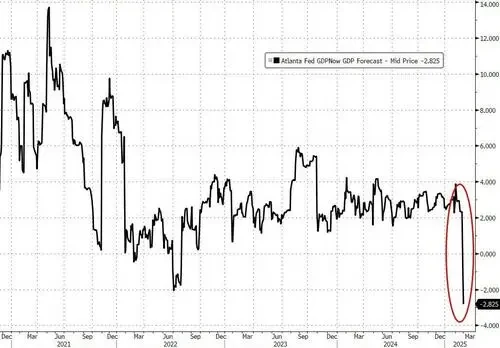
The market's reaction suggests that investors are bracing for a more challenging economic environment. The Atlanta Fed's GDPNow model is projecting a 2.8% contraction in Q1 GDP, a significant downgrade from the previous estimate of a 1.5% decline. This data, combined with the tariff threats, is making investors increasingly nervous about the future.
Traders are now pricing in 71.2 basis points of cuts this year, making three 25bps rate cuts the new base case. A week ago, markets weren’t sure if the Fed would cut even twice—now they’re leaning toward three.
My Take
In my view, the market overreacted, but risk sentiment is shifting. Nvidia’s drop was massive, and while some of it was justified, it feels like a short-term shakeout. That said, the tariff risk is real, and the tech sector’s weakness could drag down broader sentiment.
The Fed won’t rush to cut rates unless things get worse. Yes, the data looks bad, but Powell isn’t going to panic just yet. Inflation is still above target, and the Fed will want more clarity before committing to rate cuts. If markets are betting on three cuts, they might be setting themselves up for disappointment.
If tariffs escalate, we could see more volatility. Right now, markets are focused on Mexico and Canada, but if Trump’s tariff war expands (say, to China or the EU), expect another round of selling.
Investors were hoping for a smoother start to March, but the first trading day has shattered those expectations. The coming weeks will be crucial in determining whether this is a temporary blip or the beginning of a more prolonged period of market and economic instability. As always, markets are unpredictable, but staying informed and adaptable is key. Buckle up—March is shaping up to be a wild ride. #MarketPerformance #TechStocks $NVDA
#MarketPerformance#TechStocks#$Nvidia Corp(NVDA)