
Trump’s Congressional Address: Energy, Auto Tax Cuts & CHIPS Act

Shearing sheep
March 5, 2025
GoGPT Summarizes Articles
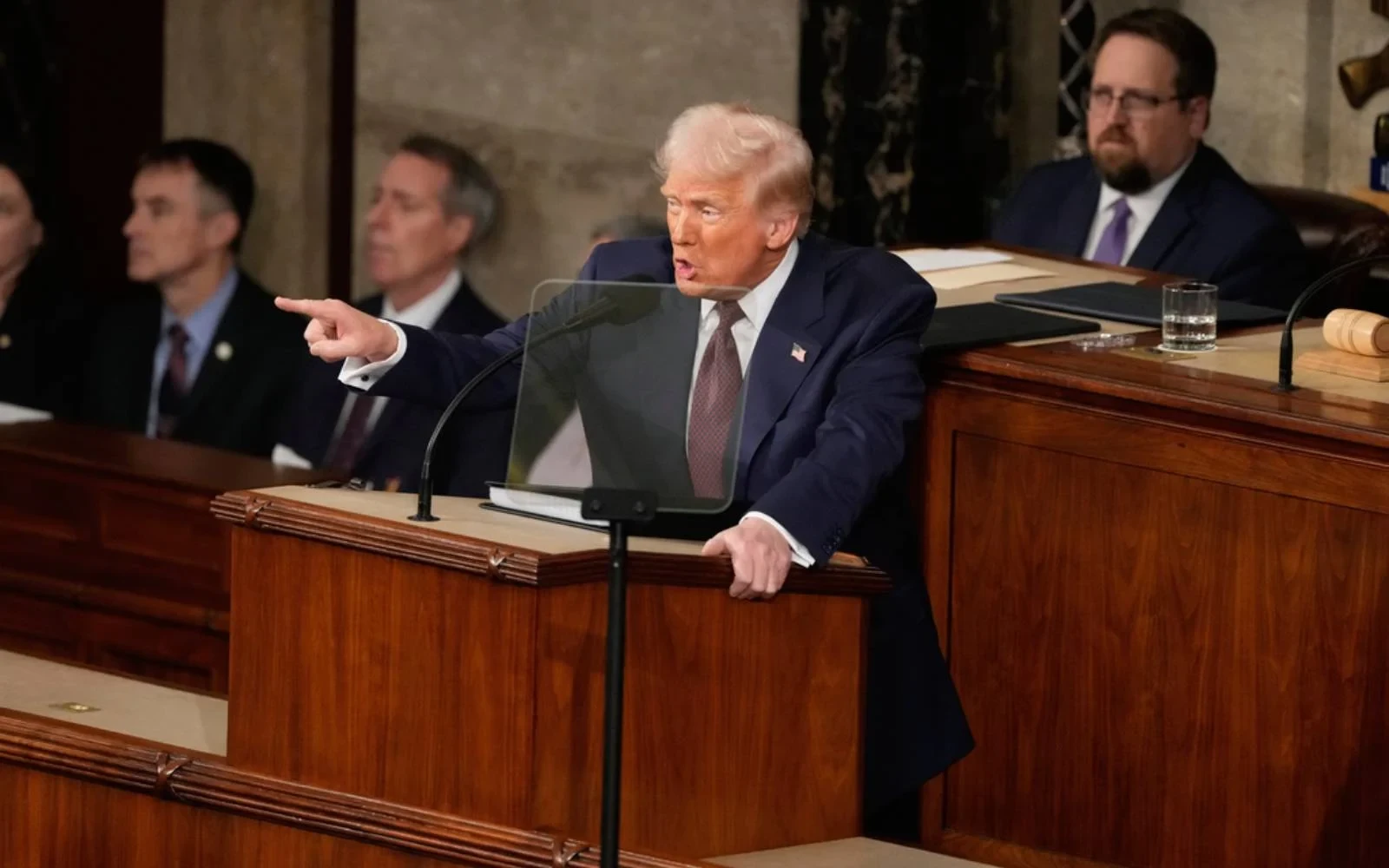
Hours ago, President Donald Trump delivered his first address to a joint session of Congress since returning to the White House. Titled "The Rebirth of the American Dream," the speech laid out his administration’s economic agenda, touching on energy independence, tax cuts, and trade policies that could have major implications for businesses, investors, and the broader economy.
Energy & Minerals
Trump reaffirmed his "drill, baby, drill" stance, emphasizing America’s vast energy resources. He announced plans to expand oil production, reopen power plants, and boost domestic critical mineral and rare earth production. Notably, he proposed a "gigantic natural gas pipeline in Alaska" to enhance energy infrastructure.
These initiatives could be a game-changer for energy companies and miners, especially as the U.S. seeks to reduce reliance on foreign suppliers. However, environmental concerns and regulatory challenges remain key hurdles.
Tax Cuts & Auto Industry
Trump’s call for permanent, across-the-board tax cuts was welcomed by businesses and workers alike. One standout proposal was making car loan interest tax-deductible—but only for American-made vehicles. This could provide a major boost to domestic automakers like GM ($GM), Ford ($F), and Tesla ($TSLA).
Additionally, Trump proposed eliminating taxes on tips, overtime, and Social Security benefits, a move aimed at putting more money into the pockets of workers.
CHIPS Act
One of the biggest surprises was Trump’s proposal to repeal the CHIPS Act, which was originally designed to bolster U.S. semiconductor manufacturing. Calling it a "terrible deal," he suggested reallocating its funds to reduce the national debt.
This sent shockwaves through the semiconductor industry, but stocks like TSMC ($TSM), Nvidia ($NVDA), and Broadcom ($AVGO) actually saw immediate gains. While repealing subsidies might seem like a negative for the chip sector, the reallocation of funds could improve fiscal policy. Additionally, higher tariffs could make it harder for foreign companies that previously relied on CHIPS Act subsidies, potentially benefiting domestic firms.
Trade, Tariffs & Other Policies
Trump confirmed that reciprocal tariffs will take effect on April 2—meaning the U.S. will match whatever tariffs other countries impose on American goods. While this could protect domestic industries and generate revenue, it also risks escalating trade tensions and disrupting global supply chains.
He also pledged to balance the federal budget—something that hasn’t been done in 24 years. He praised Elon Musk, head of the Department of Government Efficiency, for "working very hard" and claimed they’ve already identified "hundreds of billions" in wasted funds.
Other notable proposals included a $5 million "golden visa" program to attract wealthy, job-creating immigrants, using the proceeds to help reduce national debt. Trump also made bold geopolitical statements, including a promise to plant the U.S. flag on Mars, a push for the U.S. to regain control of the Panama Canal, and even floating the idea of Greenland joining the U.S.
My Take
Trump’s vision is undeniably ambitious, but it raises key questions about feasibility and long-term impact. Can the U.S. truly achieve energy independence, balance the federal budget, and maintain global competitiveness all at once? And at what cost?
Some of these policies could drive economic growth and create jobs, but others—such as the repeal of the CHIPS Act and new tariffs—carry risks of market disruption and geopolitical tensions.
As an investor, I’m cautiously optimistic about the focus on energy and tax cuts, but I’m keeping a close eye on trade and semiconductor policies. Execution will be key—will these policies deliver on their promises, or create unintended consequences? #trump
#Global Macro Policy: Central Banks & Governments in Action#trump#$General Motors Company(GM)#$Ford Motor Company(F)#$Tesla Inc. Common Stock(TSLA)#$Taiwan Semiconductor Manufacturing Company Ltd.(TSM)#$Nvidia Corp(NVDA)#$Broadcom Inc. Common Stock(AVGO)