
Will Trump’s Policies Destroy America’s Hopes for a Soft Landing?

Shearing sheep
March 11, 2025
GoGPT Summarizes Articles
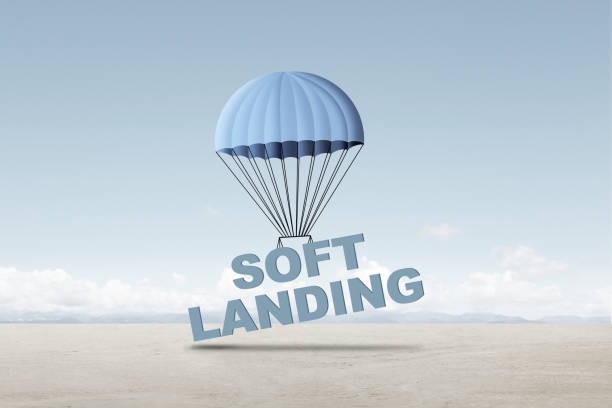
For the past year, the focus of the U.S. economy has been on achieving a soft landing—bringing inflation down without triggering a recession. But now, it seems the new team might be steering us toward a different path. President Trump and his senior advisers have shown a surprising indifference to the rising risks of trade uncertainty, which has already started to chill private-sector investment.
The Shift in Attitude
President Trump and his senior advisers have recently been signaling a kind of indifference to the rising risks that trade uncertainty is bringing. They’ve even suggested that a "detox" in spending and hiring might be necessary, and that falling stock values aren’t a big concern. In a recent interview on Fox News, Trump sidestepped questions about a potential recession, instead emphasizing the need to build a strong country, regardless of stock market fluctuations.
This shift has been particularly jarring for investors. Just a few months ago, the market was riding high on expectations of tax cuts and deregulation. But now, the optimism seems to have evaporated. The Dow Jones Industrial Average fell 890 points on Monday, and the tech-heavy Nasdaq saw its largest decline since 2022. All three major indexes are now below their levels from Election Day last November.
The Impact of Tariffs
One of the biggest concerns is the administration’s stance on tariffs. Trump has been vocal about his belief that tariffs will make the country rich again. But the reality is that tariffs are likely to create a one-time increase in prices, which could lead to a slowdown in consumer spending and business investment. Delta Air Lines, for example, has already noted a softening in domestic demand and a stalling of consumer spending.
The uncertainty surrounding tariffs is making businesses hesitant to invest. As Commerce Secretary Howard Lutnick pointed out, companies are pulling back in areas where they’re unsure of what’s going to happen. This kind of hesitation can create a negative feedback loop, where reduced spending leads to reduced hiring, which in turn leads to even less spending.
The Risk of a Recession
The risk of a recession has been steadily increasing. JPMorgan Chase now puts the risk at 40%, up from 30%, citing "extreme U.S. policies." Goldman Sachs has also revised its growth expectations downward, raising its 12-month recession odds to 20% from 15%.
What’s particularly concerning is the administration’s apparent willingness to accept economic turmoil as a necessary evil. As Dario Perkins from GlobalData TS Lombard put it, there’s almost a sense that if something goes wrong in the economy, then that’s fine. This kind of attitude is making investors nervous because it suggests that the administration is willing to push the economy into a recession without a clear plan for how to get it back on track.
The Fragile Equilibrium
The U.S. economy has been in a fragile equilibrium since the pandemic, characterized by slow hiring and slow firing. The administration’s current policies risk upending this balance. For example, efforts to shrink the federal workforce without a corresponding rise in private-sector hiring could lead to increased unemployment and reduced consumer spending.
Moreover, the administration’s impulsive trade and security behavior has already prompted China and Europe to increase spending on economic stimulus and defense. This could lead to a global economic slowdown, further exacerbating the risks to the U.S. economy.
Conclusion
Personally, I think markets are right to be nervous. There’s a difference between using tariffs as a strategic threat and actually making them a permanent fixture of economic policy — and right now, Trump seems all-in on the latter. And if we do slide into a recession, history tells us it's not as easy as flipping a switch to get out of it, especially when the Fed might be constrained by lingering inflation.
#economy#trump