
Beyond the Rollercoaster: Finding Steady Ground in a Wild Market with Private Investments

Market Whiplash – It's Real, and It Hurts
Let's face it: the market these days can feel like a rollercoaster. One minute it's soaring, the next it's plunging. This kind of volatility can be nerve-wracking, especially if you're looking for more consistent returns.
The CBOE Volatility Index (VIX), often called the "fear gauge," proves it. While the VIX's long-term average hovers around 19-20, recent years have been a wild ride. The 2010s saw a relatively calm average of 15. Then came the 2020s: a COVID-induced spike over 82, followed by consistently elevated levels (2020-2023) often exceeding 20 and sometimes 30. While 2024 saw a lower average near 17, with fewer dramatic spikes, volatility hasn't vanished. Geopolitical events, inflation, and central bank policies still trigger sudden shifts. As of early March 2025, the VIX sits around 14-16 – below the long-term average, and far from 2020's peaks, but not a return to the ultra-low volatility of the mid-2010s. The data is clear: while extreme volatility has lessened, the market remains prone to sudden shifts, making consistent returns challenging.
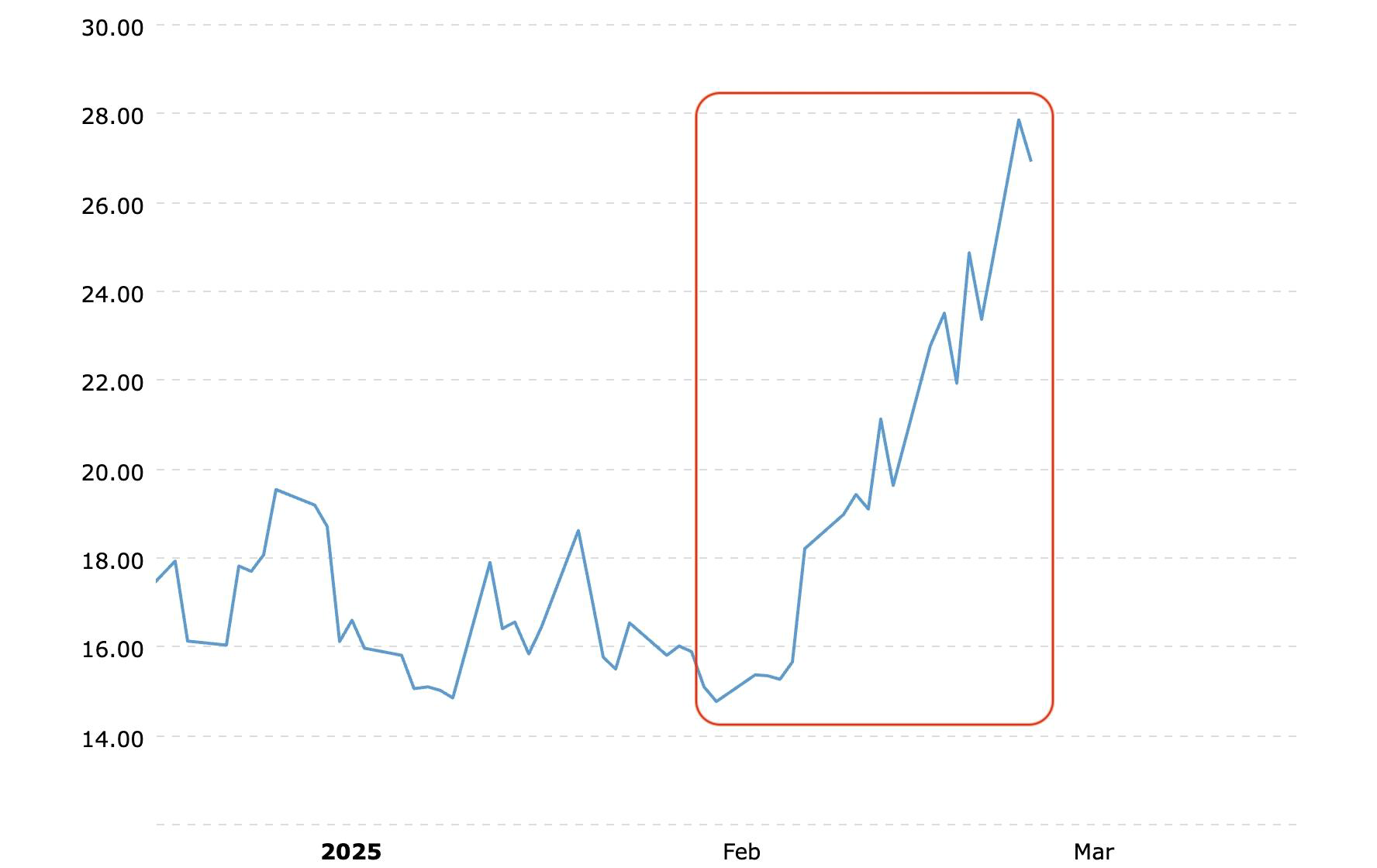
You've probably heard about the $ALLW ETF, which is trying to be an "all-weather" fund – smooth sailing no matter what. But what if you're looking for something beyond the usual publicly traded options? That's where the private markets come in.
Introducing the "Steady Hand Fund" (A Private Market Idea)
Imagine a fund – let's call it the "Steady Hand Fund" – that's designed to be like a skilled ship captain navigating stormy seas. It's not about chasing the biggest waves (the highest highs); it's about keeping the ship steady and on course, even when things get rough. This is a hypothetical private fund, meaning it's not something you can just buy on a stock exchange. It's for accredited investors – think high-net-worth individuals and institutions – who are looking for something different.
How It Works: Diversification is Key (and We Have the Data to Prove It)
The secret sauce of the "Steady Hand Fund" is diversification, but not just the usual stocks-and-bonds kind. We're talking about a whole mix of strategies that don't move in lockstep with each other, or with the broader market. Research consistently shows that low correlation between asset classes is a key driver of portfolio stability. A study by Cliffwater LLC found that a diversified portfolio of alternative investments had a correlation of only 0.2 to the S&P 500 over a 20-year period, compared to a correlation of 0.8 for a traditional 60/40 stock/bond portfolio. That means the alternative portfolio was significantly less affected by stock market swings.
Think of the fund's strategies like this:
- The Detectives (Relative Value): These guys are like financial detectives, finding tiny price differences between related assets and profiting from them. It's not about whether the market goes up or down; it's about spotting those little inconsistencies. Arbitrage strategies, for example, have historically exhibited low correlation to traditional asset classes.
- The Dealmakers (Event-Driven): They're focused on corporate events – mergers, acquisitions, restructurings. Think of them as capitalizing on the "behind-the-scenes" action of the business world. Merger arbitrage, a common event-driven strategy, has shown positive returns in both up and down markets, although with some volatility.
- The Globetrotters (Global Macro): These are the big-picture thinkers, making bets on currencies, commodities, and interest rates based on what's happening in the global economy. Global macro hedge funds have demonstrated the ability to generate positive returns during periods of market stress, acting as a potential diversifier.
- The Lenders (Private Credit): They provide loans directly to companies, often getting better interest rates than you'd find in the public bond market. Private credit yields have historically been higher than those of publicly traded bonds, and default rates have been comparable or lower in certain segments, according to data from Cliffwater Direct Lending Index.
- The Builders (Real Assets): They invest in things you can touch – real estate, infrastructure, maybe even commodities. These can be a good hedge against inflation. Real estate, for example, has historically shown a positive correlation with inflation, providing a potential buffer against rising prices.
- The Balancers (Long/Short Equity):Taking the long position in undervalued stocks and short position in overvalued stocks. Market-neutral long/short equity strategies aim to generate returns regardless of market direction, providing a valuable source of diversification.
The Captain and Crew (Active Management): Not Just Setting and Forgetting
This isn't a "set it and forget it" kind of fund. The fund managers are constantly adjusting the mix of strategies, like a captain steering the ship based on the weather and the currents. They're looking for the best opportunities and trying to avoid the biggest risks. This active management is crucial. A passive approach to alternatives wouldn't be nearly as effective in navigating volatility.
Why This Matters in a Volatile Market: Performance Under Pressure
- Less Drama: Because the fund is invested in so many different things that don't move together, the overall ride should be smoother. When one strategy zigzags, another might zag, helping to cushion the bumps. Historical data on diversified hedge fund portfolios shows lower drawdowns (peak-to-trough declines) compared to the S&P 500 during market crises.
- Potential for Gains, Even When Things Are Down: Some of these strategies, like global macro or the market neutral approach, can actually make money when the stock market is falling. This is a key differentiator from traditional long-only investments.
- Inflation Protection: Those real assets (like real estate) can help protect your money if inflation starts to rise. This is particularly relevant in the current economic environment.
- Unique Opportunities: The private markets open doors to investments you just can't find in the public markets. This access to a wider range of strategies is a significant advantage.
- Potentially Higher Returns: While there are no guarantees, private market strategies often aim for higher returns than you'd get from traditional investments. This is partly because they're less liquid (more on that below). The illiquidity premium is a well-documented phenomenon in finance.
Addressing the Skeptics and the Fine Print
- "It's too complicated!" Yes, private market strategies can be complex. That's why it's crucial to rely on experienced managers and do your due diligence.
- "It's too expensive!" Private funds do typically have higher fees. But you're paying for active management, access to unique opportunities, and the potential for higher, less correlated returns. The net-of-fees return is what matters.
- "I can't get my money out easily!" That's true. Private investments are illiquid. You need to be a long-term investor. This illiquidity is actually part of the reason why these strategies can potentially generate higher returns – you're being compensated for tying up your capital.
- "What about transparency?" Private funds are less transparent than publicly traded funds. You'll get regular reports, but not the same level of daily information. This requires trust in the fund managers.
- "Only for the rich?" These types of funds are typically only available to accredited investors, who meet certain income or net worth requirements. This is due to regulations designed to protect less sophisticated investors.
The Bottom Line: A Different Path, Not a Perfect One
The "Steady Hand Fund" isn’t just another investment option—it’s a gateway to the private markets, offering a chance to step off the rollercoaster of public market volatility. Private market investments can provide a different path, one that prioritizes steady, consistent returns over the chaos of daily market swings. But let’s be clear: this isn’t a magic solution, and it’s not for everyone. It’s about managing risk in a smarter way, not eliminating it entirely.