
The Singapore Stock Market under Global Competition: Reform and the Future

Magical Investor
March 13, 2025
GoGPT Summarizes Articles
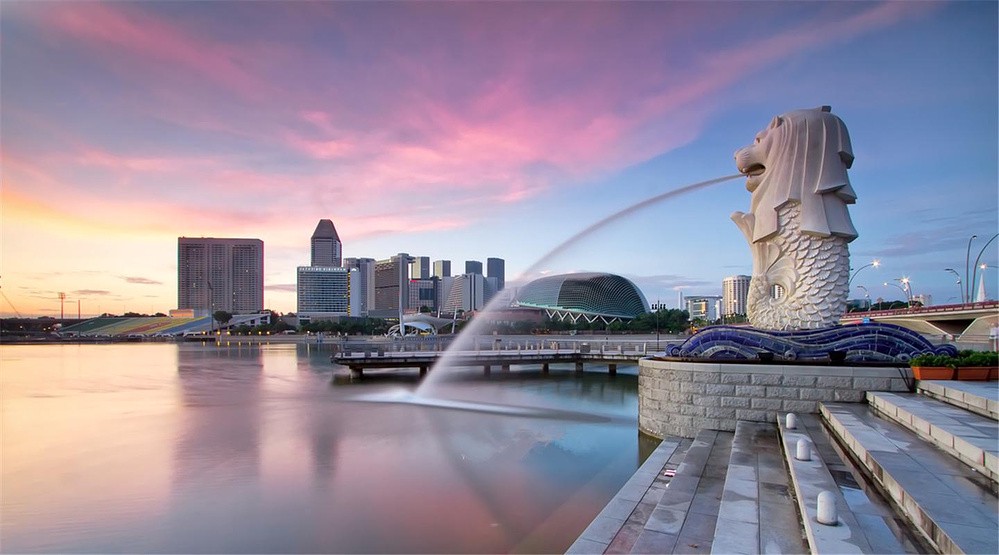 Some time ago, the financial sector in Singapore witnessed a major transformation. The Monetary Authority of Singapore (MAS) announced a plan worth up to S$5 billion to fully develop the Singapore stock market.
Reform of the Singapore Stock Market: Avoiding a Head-on Confrontation with NASDAQ
For a long time, the Singapore stock market has been deeply mired in difficulties. Issues such as unsatisfactory valuations, limited liquidity, and a shortage of newly listed enterprises are like three huge mountains, making it extremely difficult for the market to develop.
To reverse this situation, a review panel established in August 2024, after in-depth research, put forward a series of comprehensive and targeted measures. Now, these recommendations have been approved by Lawrence Wong, the Prime Minister of Singapore and Minister for Finance, officially kicking off the reform of the Singapore stock market.
I won't elaborate on the specific measures here. They include entrusting funds to fund managers who focus on investing in Singapore stocks, providing corresponding tax incentives and exemptions for fund managers and enterprises, and optimizing the listing process and a series of other procedures.
It is understood that this new policy is only the first-stage achievement of the review panel. The review panel will also carry out the second-stage work to explore other measures.
These plans will include: reducing the minimum trading lot of stocks, enhancing investors' confidence by strengthening the channels for investors to file claims, improving the participation ability of shareholders of listed companies and enhancing shareholder value, reviewing the business conduct requirements and expectations of issuing managers, promoting cross-border cooperation, and improving the efficiency of post-trade custody, etc. The second-stage work is expected to be completed by the end of 2025.
Ooi Beng Ee, the Second Minister for Finance of Singapore and Deputy Chairman of the Monetary Authority of Singapore, said, "Everyone has realized that it is necessary for us to take action to improve the situation faced by the Singapore stock market. This is a challenging task, and there is no simple solution, because most of the global funds are now concentrated in a few major stock exchanges.
The measures we will introduce are aimed at helping Singaporean enterprises obtain the funds needed for their continued development and growth, and attracting high-quality enterprises with regional influence to list in Singapore."
He also said, "This is a global competition. We don't expect that by making a single policy change, we can solve the problem immediately. There are many factors attracting global funds to the United States. So when we compete with the NASDAQ exchange, we can't confront them head-on, because we will definitely lose."
If we want to give full play to the advantages of the Singapore Exchange, Ooi Beng Ee believes that we need to consider which enterprises will be better off listing in Singapore than in New York.
"When these enterprises list in New York, they are like small fish in a big pond. If they list in Singapore, although we are not as big as New York, these enterprises are more likely to gain the attention of the market."
Review of the Overall Performance of the Singapore Stock Market in the Past Half Year and Future Projections
In the past half year, the Singapore stock market has shown obvious characteristics of structural differentiation.
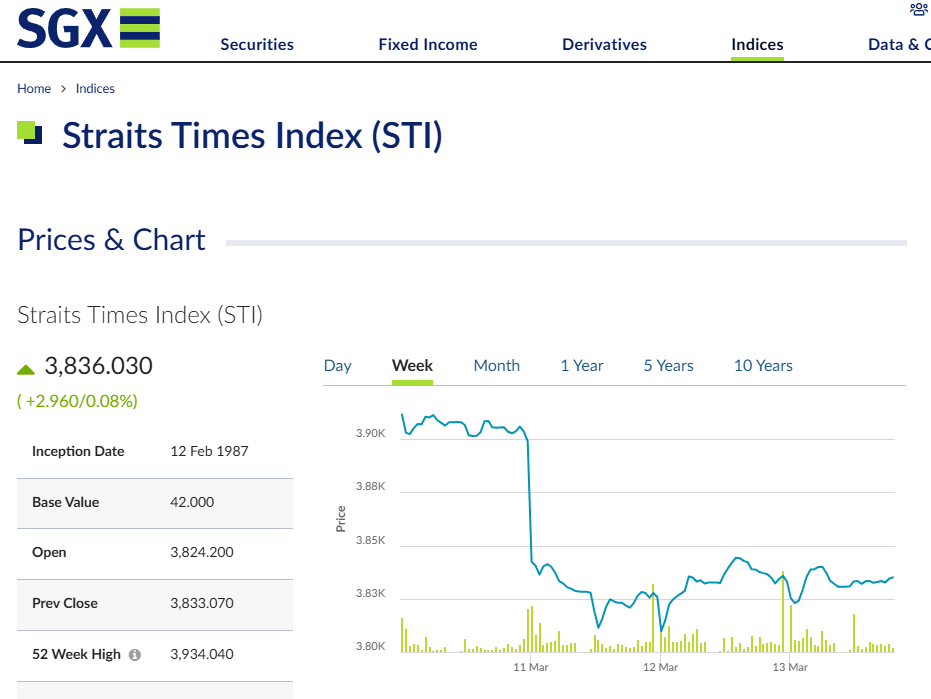
As of March 2025, the Straits Times Index (STI) has cumulatively increased by about 3.5%, but it has experienced significant phased fluctuations during this period.
In the fourth quarter of 2024, affected by the Federal Reserve's high interest rate policy and the slowdown of global economic growth, the index was under pressure for a while.
After entering 2025, with the increased expectation of the US interest rate cut and the gradual implementation of the Singapore government's policies to revitalize the stock market, market sentiment has warmed up. The STI reached a historical high of 3,951.64 points in February.
However, in March, affected by the "Black Monday" in the US stock market and the uncertainty of Trump's tariff policy, the index corrected to 3,825.83 points in the short term, with a decline of about 1.88%.
I think this policy should bring some positive effects, but the extent of the positive impact is limited. The scale of S$5 billion is not enough to fundamentally reverse the problem of insufficient market liquidity, and follow-up policies need to be strengthened.
In the next three months, the Singapore stock market will show the dual characteristics of "policy support + global risk game".
In the short term, the expectation of the Federal Reserve's interest rate cut and local reform measures may drive the index to challenge the 4,000-point mark, but we need to be wary of the risk of correction brought about by geopolitical conflicts and weak economic data.
From a medium- and long-term perspective, if the Singapore stock market can deepen structural reforms (such as attracting more technology enterprises to list and enhancing market liquidity), it is expected to gradually get rid of the current situation of "low volatility and low growth". However, its positioning as a regional financial center will still make it highly dependent on the global economic environment and the direction of capital flows.
Based on this, investors can lay out some leading value stocks in the Singapore stock market in advance and wait for the structural opportunities brought by the continuous strengthening of policies.