
U.S. Faces Another Government Shutdown? Inflation, Trade Wars, and Recession Fears Collide

Shearing sheep
March 13, 2025
GoGPT Summarizes Articles
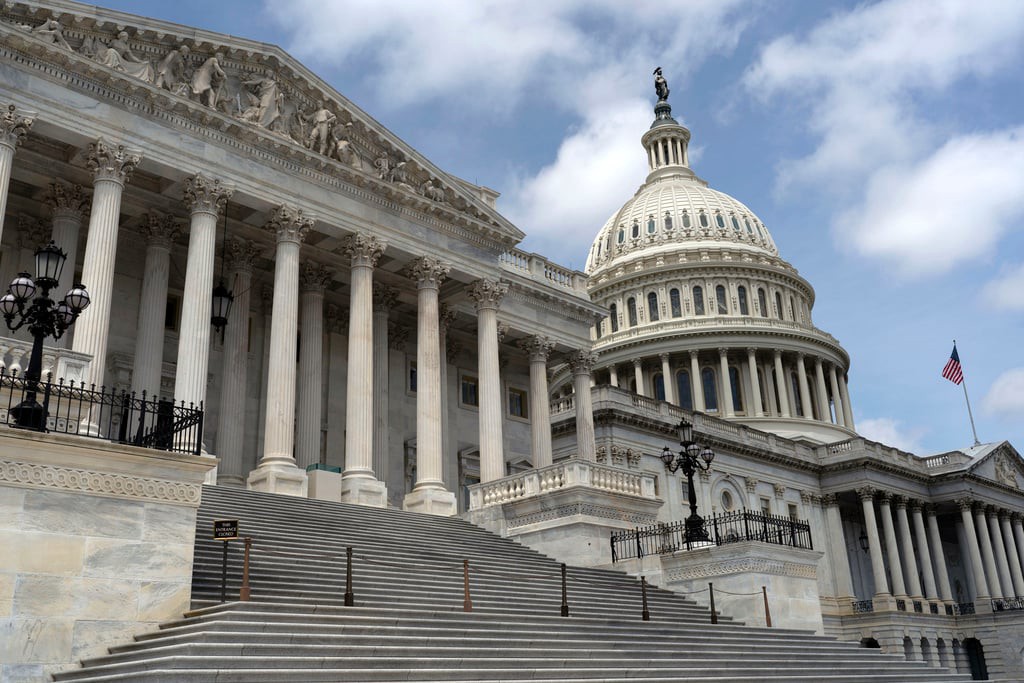
The U.S. government is once again teetering on the edge of a shutdown, with the Trump administration barely two months into its tenure. With just two days left before the March 14 deadline, the fate of the government hangs in the balance as the Senate debates a stopgap spending bill that barely squeaked through the House.
The House Bill
On March 11, the House passed a short-term funding bill by a narrow 217-213 vote, extending government funding until September 30. The bill maintains 2024 fiscal year spending levels but includes $13 billion in cuts to non-defense programs and a $6 billion increase in military spending. It also allocates funds for border enforcement and mandates a $1 billion budget cut for Washington, D.C.
However, the bill faces an uphill battle in the Senate, where it needs 60 votes to pass. With Republicans holding only a 53-47 majority — and Senator Rand Paul already pledging to vote against it — at least eight Democratic votes are required. But Senate Minority Leader Chuck Schumer has called the bill a "partisan proposal" that ignores Democratic input, signaling strong resistance.
Schumer has instead proposed a one-month funding extension to buy more time for negotiations. But with the House already adjourned after passing its bill, the Senate is left with a take-it-or-leave-it choice.
The Democrats’ Dilemma
Democrats are caught between a rock and a hard place. On one hand, they see this bill as their best chance to resist Trump’s aggressive push for government restructuring — including deep federal job cuts and agency downsizing. On the other hand, triggering a government shutdown could backfire, giving Trump even more power over which parts of the government keep running.
Under U.S. law, during a shutdown, non-essential federal operations must cease, and furloughed employees go without pay. However, the executive branch has broad discretion to determine what is "essential," effectively giving the White House significant power to shape the impact of a shutdown.
As Colorado Senator John Hickenlooper put it, "If we shut down the government, in some ways, we’re actually giving the president more power." He warned that Trump would control which agencies stay open and how funds are used.
Inflation and Trade Wars
Meanwhile, inflation is back in the spotlight. The latest CPI data shows a 2.8% year-over-year increase in February, with egg prices surging 58.8%. Core CPI rose 0.2% month-over-month and 3.1% year-over-year — slightly below expectations of 3.2%, but still well above the Federal Reserve’s 2% long-term target. While some of these price increases are linked to supply chain disruptions and avian flu, the broader trend of persistent inflation remains troubling.
Trump’s trade policies are further fueling uncertainty. His latest move to impose a 25% tariff on all steel and aluminum imports has sparked retaliation from the EU and Canada. While tariffs may shield certain domestic industries, they also drive up costs for businesses and consumers — potentially worsening inflation.
Recession Fears
Financial markets are showing clear signs of anxiety. The Nasdaq recently suffered its biggest single-day drop in over two years, and broader indices have been volatile as recession fears mount. Morgan Stanley now puts the probability of a U.S. recession at 31%, up from 17% last November. Goldman Sachs estimates a 23% chance, up from 14% in January. The Atlanta Fed’s latest forecast is even more alarming, predicting a 2.4% contraction in Q1 GDP.
My Take
In my view, whether the short-term funding bill passes or not will be a critical turning point — either way, it could shake investor confidence. If the bill fails and a shutdown occurs, markets could react sharply to the disruption and increased political uncertainty. If it passes, it might offer temporary relief, but the underlying issues — like inflation, trade disputes, and budget battles — will continue to weigh on the economy.
What makes things worse is Trump’s unpredictable approach to tariffs — sometimes imposing them, sometimes reversing course — which only adds to the uncertainty. For businesses and investors trying to plan ahead, this environment feels riskier than expected. #recession #usmarket #economy
#Global Macro Policy: Central Banks & Governments in Action#recession#usmarket#economy