
Market Volatility Sparks Opportunities: Key Sectors Poised for Growth Amid Economic Uncertainty

Investment Prospects in a Market Downturn
The recent sharp pullback in the U.S. stock market, fueled by recession fears, has prompted concerns among investors. However, historical data suggests that downturns often present golden buying opportunities. HSBC notes that while the market has priced in a mild recession, certain sectors—particularly technology, financials, and consumer discretionary—offer significant upside potential.
$SPX index has retraced all gains made since the last U.S. presidential election, with mounting concerns over policy uncertainty, declining consumer confidence, and lower expectations for 2025 GDP growth. However, HSBC maintains that the U.S. economy remains resilient, and with $SPX already down nearly 9% from its peak, the worst of the downturn may be over.
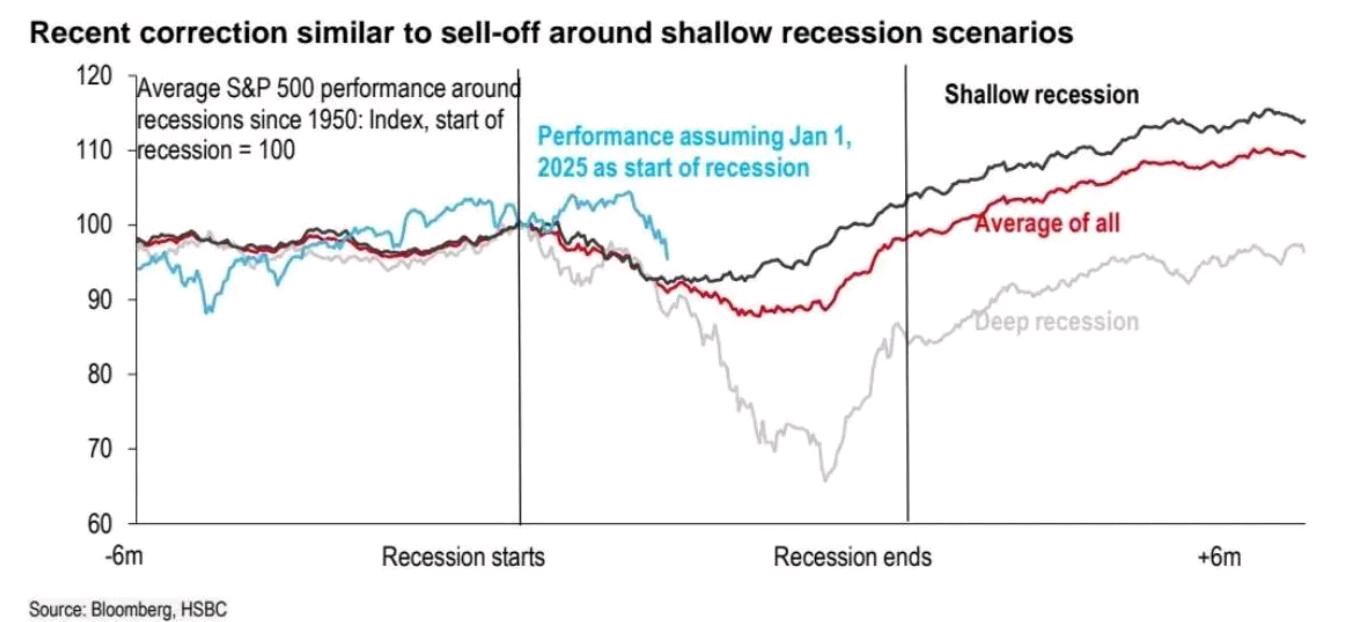
Financials have suffered due to declining interest rate expectations and fading optimism over regulatory rollbacks. Tech stocks have faced multiple pressures, including valuation concerns and weakening demand in hardware.
Meanwhile, the consumer discretionary sector has struggled with falling consumer sentiment and potential tariff-induced price hikes. Still, HSBC believes these pullbacks provide attractive entry points, particularly in companies with strong earnings resilience and solid fundamentals.
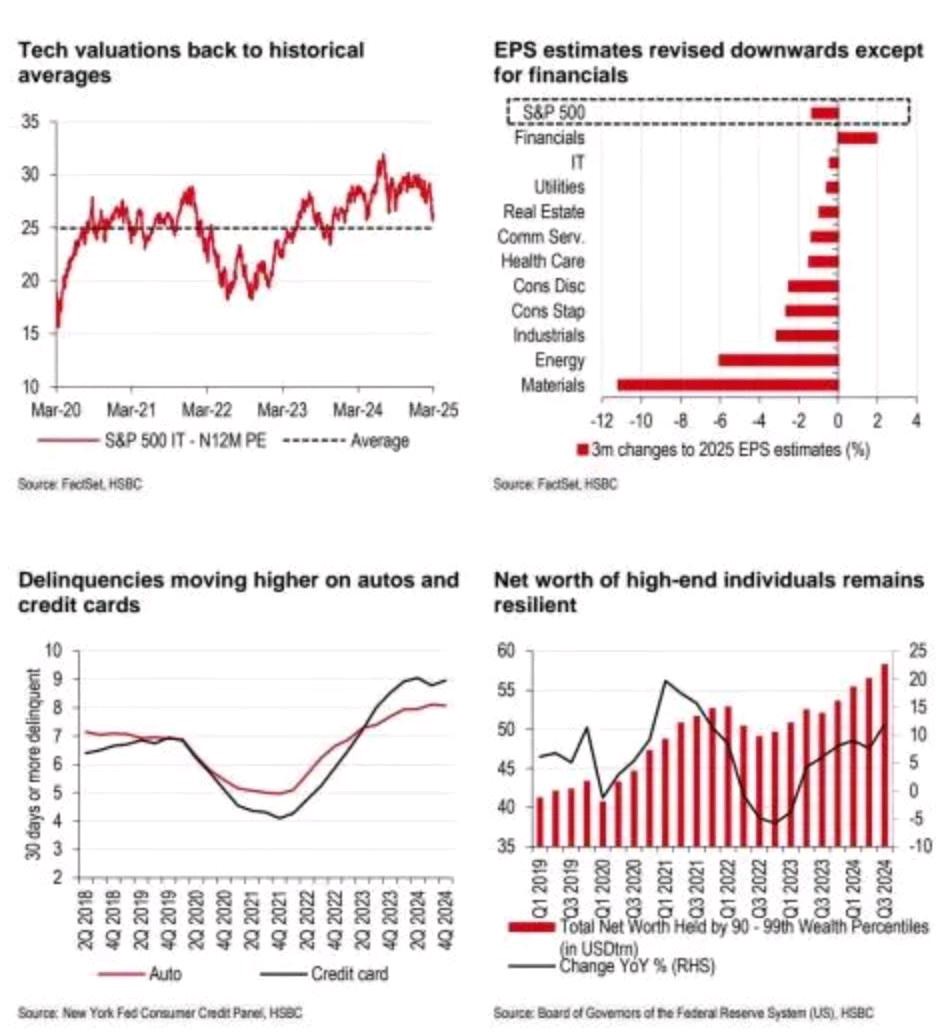
HSBC highlights key investment opportunities in high-quality names such as $MSFT , $NVDA , $AMZN , $ABNB , $MCD , $BAC , and $C —all of which are well-positioned to benefit as the market stabilizes.
Growth Potential in Tech and Financial Sectors
Despite recent declines, the technology and financial sectors remain areas of strong long-term growth. Tech valuations have reset to historical averages, and many companies continue to demonstrate high returns on equity. Financial stocks, while impacted by recession fears, have limited exposure to trade conflicts and still stand to gain from economic resilience and a relatively favorable regulatory environment.
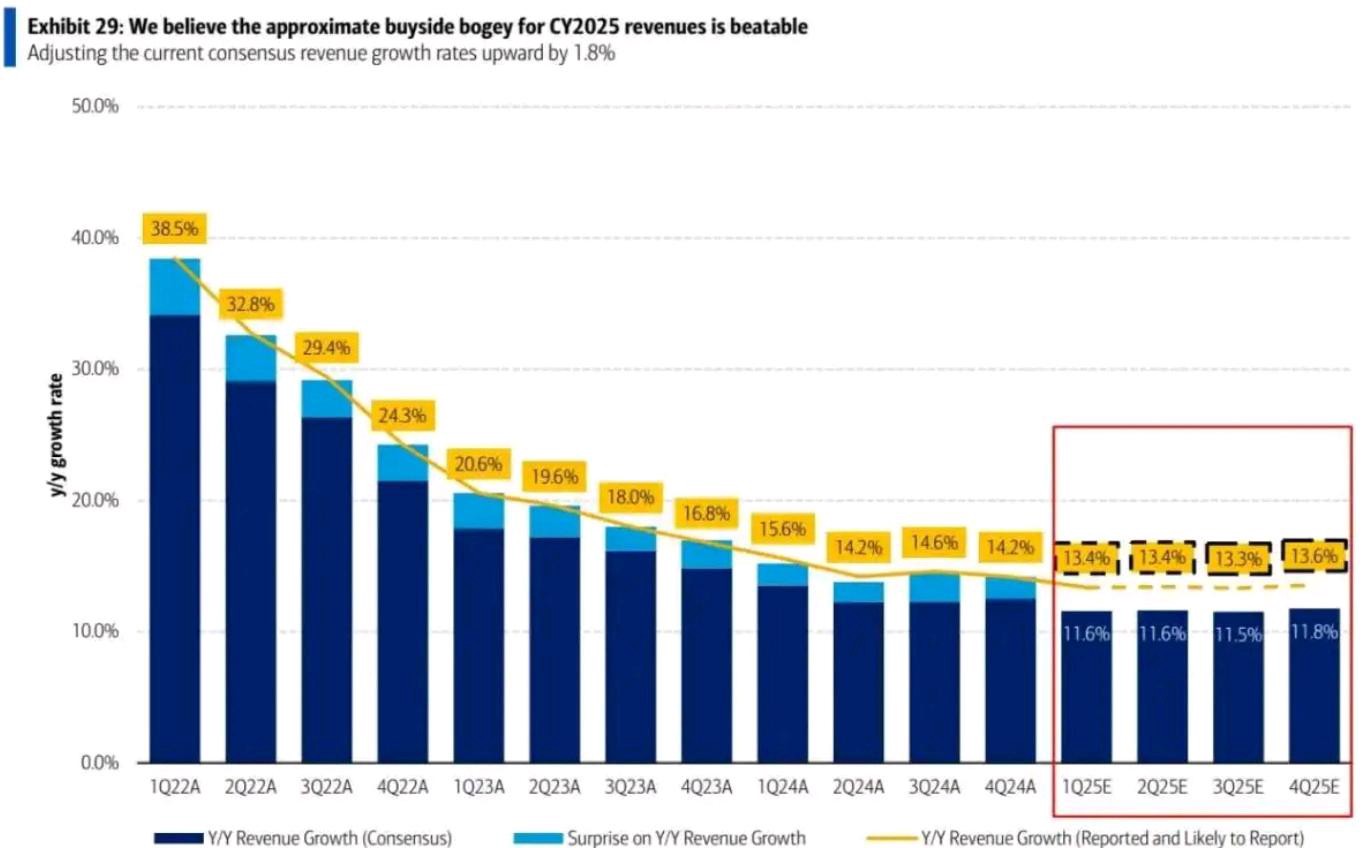
Bank of America (BofA) highlights that software stocks have declined 18% since February 18 but remain above the average historical pullback of 27%. The software industry’s enterprise value-to-sales (EV/Sales) multiple has dropped to 5.5x, well below historical bottoms. Moreover, demand indicators remain solid—cloud computing activity and enterprise software usage have sustained growth despite macroeconomic pressures. Notably, year-over-year cloud usage grew 8% in February, improving from 6.6% in January, while desktop applications rebounded strongly.
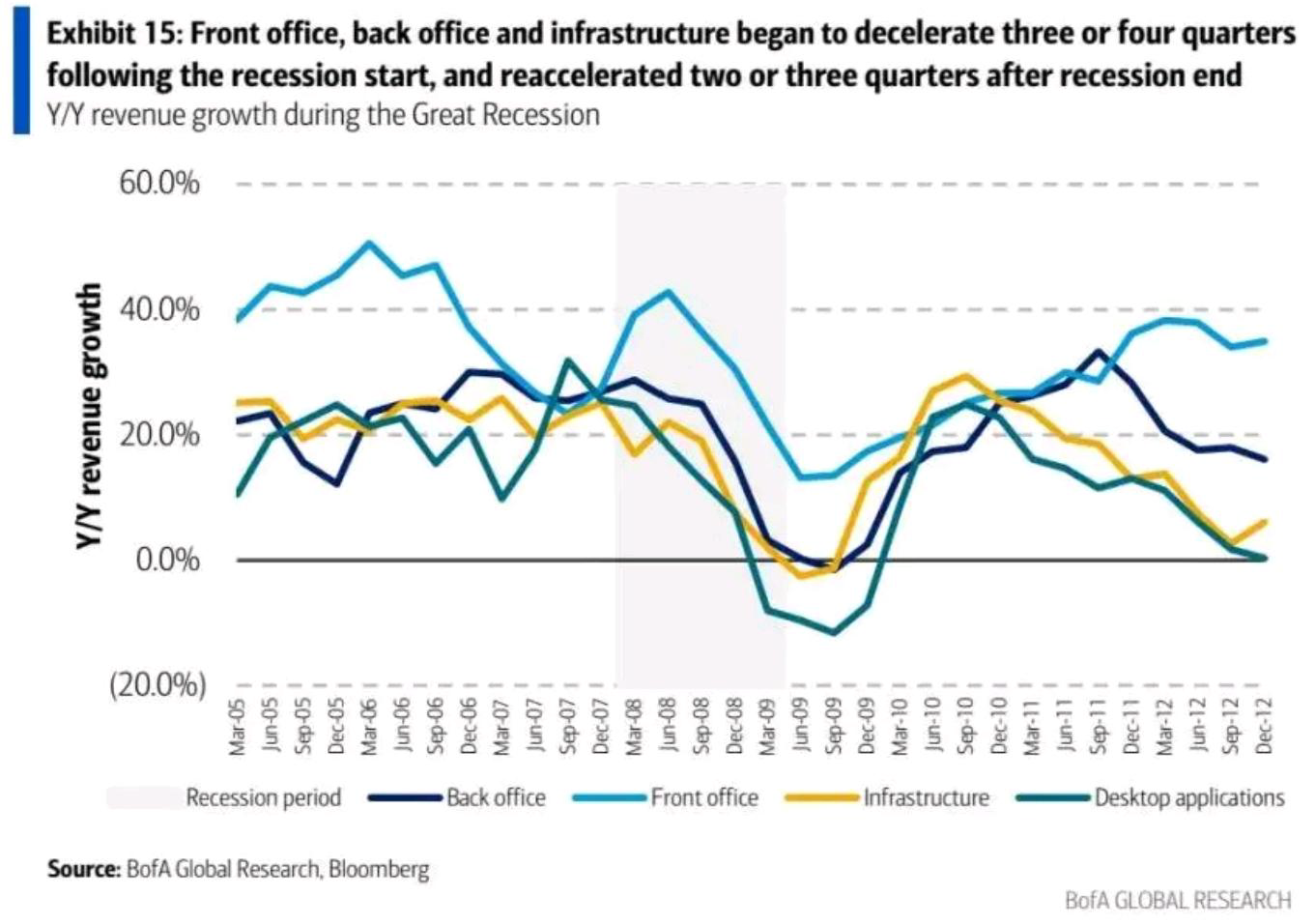
Historically, software stocks have delivered strong post-recession rebounds. Following the 2008 financial crisis, the software sector saw a staggering 113% return within a year after the market bottomed in March 2009, outperforming the Nasdaq by 56 percentage points. This pattern underscores the sector's resilience and ability to thrive as economic conditions improve.
Software Industry’s Unique Resilience in Recessions
One of the key reasons the software sector remains an attractive investment during economic downturns is its unique business model. Unlike other industries, software companies benefit from high renewal rates and strong customer retention, leading to a more stable revenue stream even in challenging times.
During the 2008 recession, operating margins in the software sector actually expanded—front-end application providers saw a 300-basis-point margin increase, while infrastructure software margins improved by 150 basis points. This was largely due to the recurring revenue model, which allows companies to maintain cash flow while reducing customer acquisition costs.
Additionally, software companies have a cost structure advantage, with high fixed costs and low marginal costs. Once a software product is developed, distributing additional units requires minimal expense, enabling firms to sustain profitability even in a slow-growth environment. This fundamental characteristic gives software stocks strong downside protection while positioning them for outsized gains during recoveries.
Structural Risks in a Complex Economic Environment
Despite the sector’s long-term appeal, investors must remain aware of structural risks facing the technology and software industries. One of the biggest headwinds is trade policy uncertainty, which disproportionately affects e-commerce software companies. $SHOP , $GLBE , and $BIGC are particularly exposed to fluctuations in cross-border trade, while $LSPD , with 63% of its revenue tied to retail, could face significant challenges if economic conditions deteriorate further.
Additionally, recent trends in tech-sector layoffs raise concerns. February 2025 saw the highest job cuts since 2023, prompting speculation about whether these reductions are purely efficiency-driven or a signal of deeper demand slowdowns. If layoffs transition from cost-cutting measures to indicators of weak demand, earnings estimates may need to be revised downward, affecting stock valuations.
However, there are positive signs as well. Small and medium-sized business (SMB) payment volumes increased from 2.2% in Q3 to 3.8% in Q4, with January growth reaching 5.9% year-over-year. This suggests that while macroeconomic risks persist, underlying business activity remains relatively stable.
Investment Strategy: Balancing Risk and Reward
Given these dynamics, BofA suggests a balanced investment approach, focusing on high-quality defensive plays in the software sector while selectively targeting growth opportunities in artificial intelligence (AI) and enterprise infrastructure. Companies like $MSFT , $ORCL , $WDAY , and $CCCS benefit from strong enterprise demand, making them resilient even in economic downturns. AI-driven leaders such as $CRM and $NOW also offer compelling long-term growth opportunities as businesses accelerate their adoption of AI-powered solutions.
Meanwhile, mid-cap software stocks, including $BILL , $GTLB , and $INFA , may offer valuation upside, as current market pricing does not fully reflect their growth potential.
In conclusion, while the technology and software industries face near-term headwinds, their fundamental strengths position them well for long-term gains. As recession risks loom, investors should focus on companies with strong business models, defensive characteristics, and exposure to AI-driven growth. Keeping an eye on Q2 earnings reports, Federal Reserve policy, and trade developments will be key to identifying the right entry points in this evolving market landscape.