
Intel Soars Nearly 15%, TSMC Drops 3% — What's Going On?

Shearing sheep
March 14, 2025
GoGPT Summarizes Articles
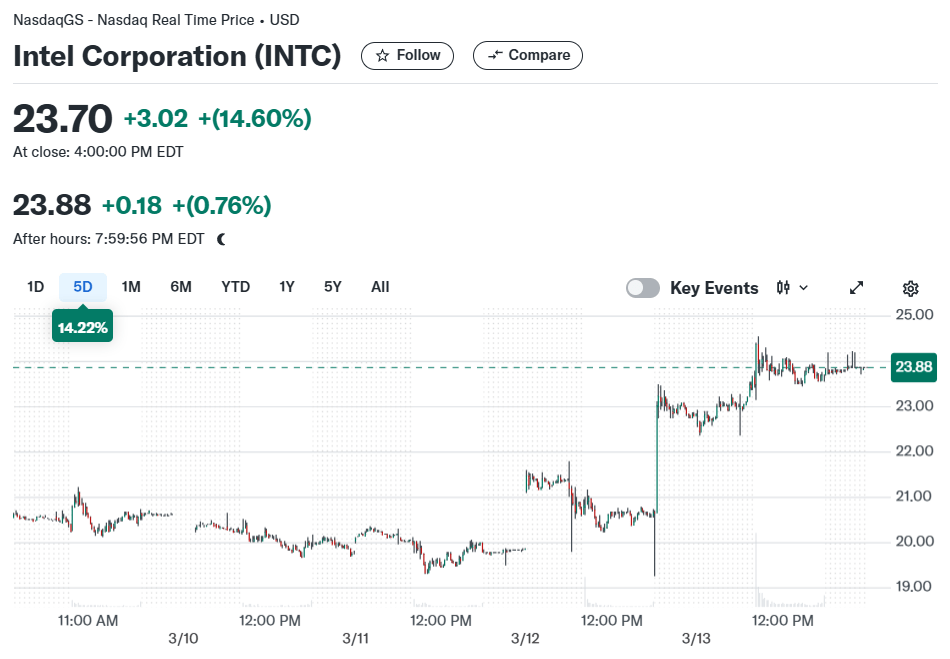
On Thursday, Intel ($INTC) stock skyrocketed nearly 15%, closing at $23.7, making it the top performer in the S&P 500. Meanwhile, TSMC ($TSM) slipped over 3%. So, what exactly is going on here?
What's Driving Intel's Surge?
Intel's rebound seems to be driven by two major catalysts.
First, Intel has appointed Lip-Bu Tan, former CEO of Cadence Design Systems, as its new CEO. Wall Street is excited about this move. Tan has a strong track record in the semiconductor ecosystem, and his experience with Cadence—a company that's worked closely with Intel—suggests he might be the right person to steer Intel through its current challenges.
However, Tan's background is more in investment and EDA software than in semiconductor manufacturing. Still, his reputation for making tough decisions (including, allegedly, telling three Intel VPs that he’d fire two of them if he ran the company) has investors hopeful. After all, Intel's stock has lost nearly half its value over the past year, so any sign of change is welcome.
Second, TSMC is reportedly in talks with NVIDIA, AMD, Broadcom, and Qualcomm to form a joint venture that would take over Intel's foundry operations, with TSMC holding a 50% stake. This move has the backing of the U.S. government, which is keen to keep Intel afloat.
For Intel, this could be a game-changer. If the joint venture takes off, Intel could potentially exit the foundry business altogether, saving billions in losses. Analysts estimate that by 2026-2027, Intel could generate $6-8 billion in profits if they fully exit manufacturing. That’s a big “if,” though.
Why Did TSMC Drop Then?
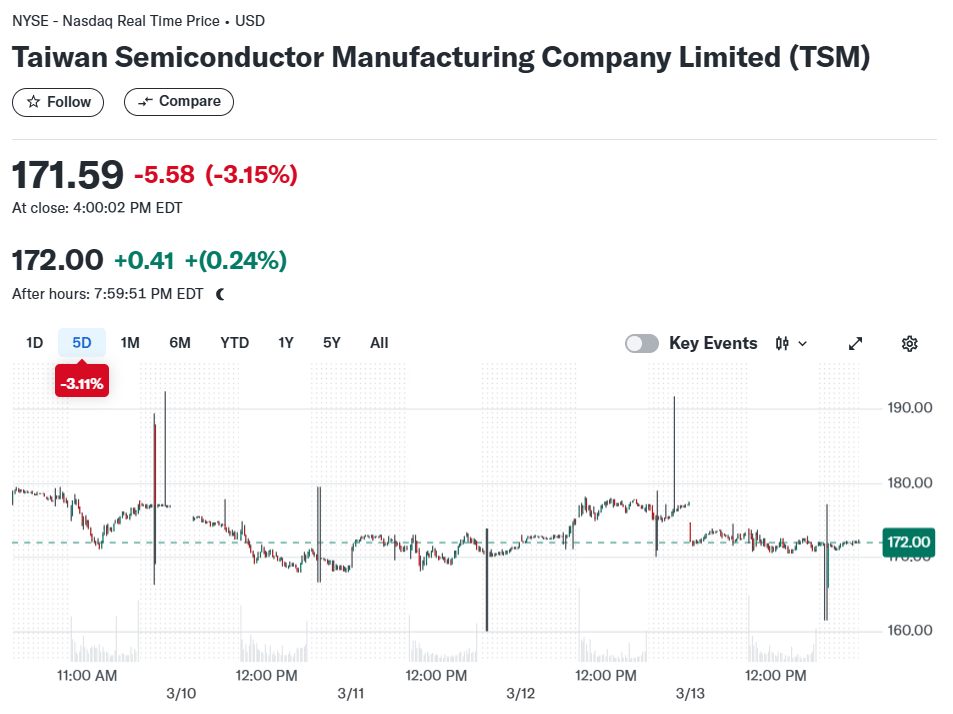
While Intel investors are celebrating, TSMC shareholders are worried. The potential joint venture raises concerns about its impact on TSMC’s interests.
The crux of the issue lies in uncertainty around Intel's future role in the foundry business. If Intel does not fully exit, it could create a conflict of interest and undermine TSMC's market dominance.
Moreover, this joint venture involves other chip giants like Nvidia, AMD, Broadcom, and Qualcomm. While this collaboration might seem like a win-win on paper, it poses significant risks for TSMC. If TSMC throws its full weight behind the venture, it could inadvertently create a formidable competitor. On the other hand, if it takes a passive approach, it risks disappointing the U.S. government, which has been pushing TSMC to support Intel's turnaround efforts.
Let’s not forget, Intel's foundry business has been a drag for years. They’ve fallen behind TSMC and Samsung in technology, and their financials are grim. With annual capex of $240-250 billion and only $8 billion in cash expected by end of 2024, Intel is in a tight spot. They may need to raise $150-200 billion just to stay afloat until 2027.
A High-Stakes Gamble
This joint venture is a high-stakes gamble for both Intel and TSMC.
For Intel, it’s a chance to offload a struggling business and focus on chip design, which might be their best shot at competing with AMD and others.
But for TSMC, this deal is fraught with risks. They’re being asked to help a competitor while also maintaining dominance in the foundry space.
Plus, Intel’s turnaround won’t happen overnight — real results may not show until 2026 or later, and they still need $150-200 billion in new funding to survive until then.
So, while yesterday’s stock surge is a nice boost for Intel, the company’s long-term challenges are far from over. And as for TSMC, they’re walking a fine line between helping a competitor and protecting their own turf.
What to Watch Next?
Going forward, investors should keep an eye on two key developments.
First, will Lip-Bu Tan push for a full spin-off of Intel’s fabs? If he does, Intel could finally shed its struggling manufacturing unit and focus solely on chip design — giving it a real shot at competing with AMD, NVIDIA, and others in the high-performance chip space. A fabless Intel would be a completely different company: leaner, more competitive, and potentially profitable again.
Second, how will TSMC structure the joint venture? If TSMC takes on too much risk or too large a stake, it could undermine its own leadership in the global foundry business. But if TSMC stays too passive, it might disappoint the U.S. government, which is keen on keeping Intel in the game. Striking the right balance will be crucial for TSMC to protect its interests while navigating geopolitical pressures.
#intel#tsmc#$Intel Corp(INTC)#$Taiwan Semiconductor Manufacturing Company Ltd.(TSM)