
China’s Tech-Led Market Revival Attracts Global Capital Amid Policy Push

China’s financial markets are experiencing a powerful resurgence, driven by a potent mix of surging investor confidence, state-backed tech funding, and Wall Street’s growing bullishness. As international capital flows return and domestic institutions deploy massive innovation-focused funds, the stage is set for a transformative phase in China’s economic trajectory.
IPO Boom Signals Investor Confidence The revival of China’s offshore equity markets is gaining momentum, with Hong Kong’s IPO pipeline leading the charge. Goldman Sachs Asia ex-Japan equity capital markets co-head James Wong noted that overseas Chinese stock issuances doubled year-on-year to $44.8 billion in 2024, accelerating further in early 2025. By mid-March, Hong Kong had already raised $13 billion in IPOs—a 23-fold increase over 2024’s sluggish start—putting it on track to near its historical annual average of $75 billion.

High-profile listings like beverage giant Mixue Group ($510 million IPO), tea chain Gu Ming ($260 million), and toy maker Buluke ($250 million) saw post-debut surges of up to 100%, attracting heavyweight participation from long-term institutional investors absent during 2022–2023. “Their return isn’t speculative—it’s a structural shift reflecting confidence in China’s fundamentals,” Wong emphasized. The momentum extends to blockbuster secondary offerings, exemplified by BYD’s record $5.6 billion H-share placement in March 2025, surpassing its 2021 peak.
State Banks Unleash Billions for Tech Sovereignty
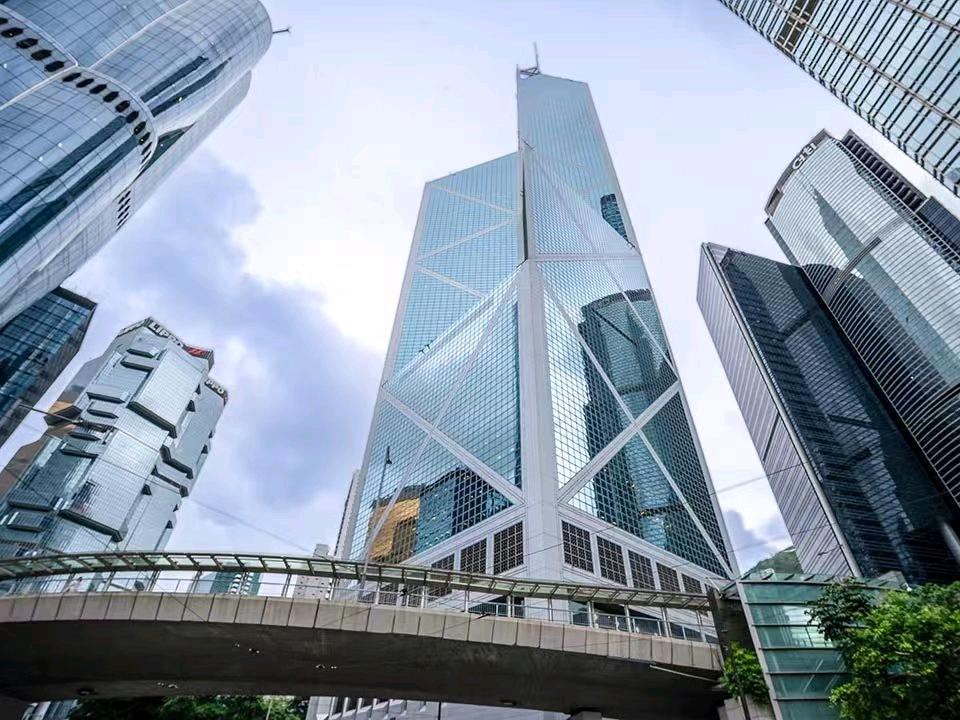
Parallel to market activity, China’s state lenders are turbocharging support for strategic sectors. The Industrial and Commercial Bank of China (ICBC) launched an 80 billion yuan ($11 billion) tech innovation fund, branding it “patient capital” to back hard-tech ventures and private enterprises. This follows Bank of China’s expanded $6.9 billion tech fund and aligns with Beijing’s parliamentary directives to achieve technological self-reliance amid U.S. tensions.
Policy tailwinds are amplifying these efforts. Recent regulatory reforms, including expanded equity investment pilot programs across 18 cities and eased rules for insurers to participate, have unlocked over 330 billion yuan ($45.6 billion) in bank-linked funds since late 2023. Notably, six major state banks collectively invested 114 billion yuan ($15.8 billion) in China’s third semiconductor mega-fund, underscoring their role as pillars of national tech ambitions.
Wall Street’s Pivot to Chinese Tech
Global institutions are recalibrating portfolios to capitalize on China’s shifting dynamics. Citi recently downgraded U.S. stocks to “neutral” while upgrading Chinese equities, citing undervalued tech leaders and breakthroughs like DeepSeek’s AI advancements. Goldman Sachs highlighted China’s “strongest-ever January rally,” predicting this cycle will outlast 2024’s short-lived rebound due to institutional inflows and policy momentum.
Morgan Stanley urged investors to increase exposure, calling current conditions “optimal” for re-entry, while JPMorgan projected 7.8% annualized returns over the next decade, driven by AI and sustainable tech growth. “China’s tech sector isn’t just catching up—it’s setting benchmarks,” noted a JPMorgan analyst, pointing to generative AI innovations rivaling Western counterparts.
A Structural Rebound Takes Shape
This revival differs from past rallies. Long-term investors—not speculative capital—are driving inflows, while state banks and regulatory reforms provide stability. With the Hang Seng and Tech indexes rebounding sharply from multi-year lows and valuations still trailing global peers, analysts argue China’s tech-led resurgence marks a lasting inflection point.
As Wong concluded, “This isn’t just a recovery—it’s the foundation for China’s next growth chapter.” With trillions in state-backed funding, global capital rotation, and policy resolve, China’s markets are reasserting their role as a critical pillar of 21st-century portfolios.